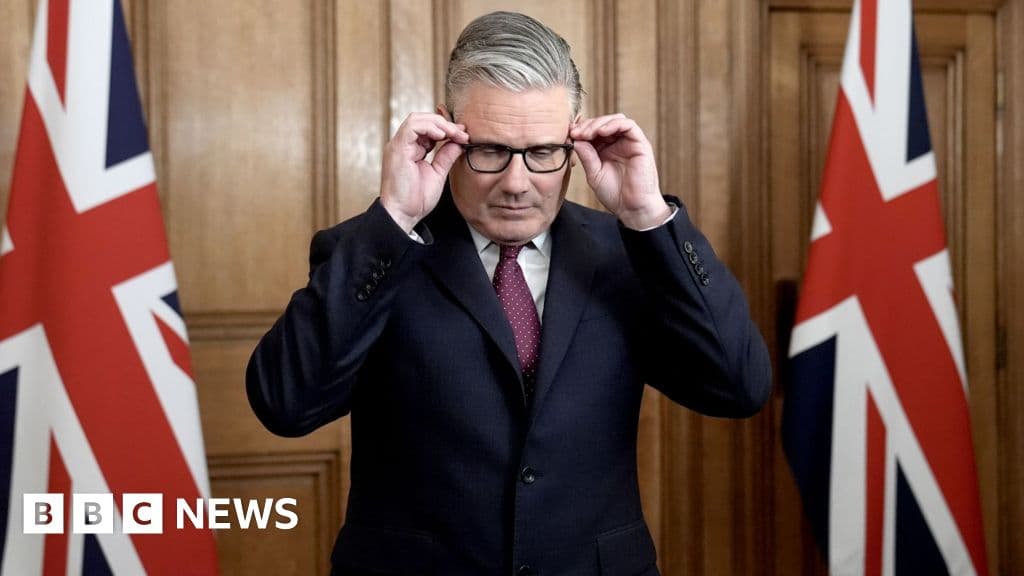
Labour MPs revolt against Starmer as party faces electoral collapse
Intra-Party Split Detected
Nearly 90 of Labour's 400+ MPs calling for Starmer to resign or set departure timeline, with cabinet ministers resigning and senior advisers urging him to announce transition plans
Left says
- •The surge of Nigel Farage's far-right Reform UK party represents a dangerous shift toward anti-immigrant populism inspired by Trump's movement
- •Labour's electoral losses stem partly from its crackdown on pro-Palestine activism, which drove supporters to the Green Party
- •The political fragmentation reflects a generational shift away from the traditional two-party system toward more diverse representation
- •Starmer's struggles highlight the broader challenge of governing amid rising populist sentiment across Europe
Right says
- •Starmer's catastrophic electoral performance proves he has lost the confidence of voters and cannot effectively lead the country
- •Reform UK's massive gains demonstrate that ordinary citizens are rejecting Labour's policies and demanding real change
- •Like Joe Biden, Starmer refuses to acknowledge political reality and step aside despite clear evidence his leadership has failed
- •The loss of Wales after 100 years of Labour dominance shows the party is completely out of touch with working-class voters
Common Take
High Consensus- Labour suffered devastating losses, losing over 1,300 council seats and control of Wales for the first time in a century
- Reform UK made significant gains, winning over 1,400 local seats under Nigel Farage's leadership
- At least 90 Labour MPs have called for Starmer to resign or set a timeline for departure
- The results represent a major shift in British politics away from traditional two-party dominance
The Arguments
Right argues
Starmer's catastrophic loss of Wales after 100 years of Labour dominance, combined with losing over 1,300 council seats, demonstrates he has fundamentally lost the confidence of working-class voters who form Labour's traditional base.
Left counters
These losses reflect broader European trends of political fragmentation and rising populist sentiment that transcend individual leadership, as seen across multiple democracies facing similar challenges to traditional party systems.
Left argues
Reform UK's surge represents a dangerous shift toward Trump-inspired anti-immigrant populism that threatens democratic norms and social cohesion, making this moment about more than just electoral politics.
Right counters
Reform UK's gains demonstrate that ordinary citizens are rejecting Labour's policies and demanding real change on issues like immigration - dismissing these concerns as 'dangerous populism' shows exactly the kind of elite disconnect that drove voters away.
Right argues
Like Joe Biden's refusal to acknowledge political reality, Starmer's determination to fight a leadership challenge despite clear evidence of failure shows he prioritizes personal ambition over his party's and country's interests.
Left counters
A leadership contest during a period of political instability would create chaos and further fragment an already divided political landscape, potentially making governance even more difficult.
Left argues
Labour's electoral struggles partly stem from its crackdown on pro-Palestine activism, which alienated progressive supporters who moved to the Green Party, highlighting how the party's centrist positioning has cost it key constituencies.
Right counters
Blaming losses on Palestine activism ignores the fundamental reality that Labour has lost touch with mainstream voters on core issues like the economy and immigration, as evidenced by Reform UK's gains in traditional Labour heartlands.
Left argues
The political fragmentation reflects a generational shift away from the traditional two-party system toward more diverse representation, suggesting these changes may be permanent features of modern democracy rather than temporary setbacks.
Right counters
While fragmentation may be occurring, Starmer's specific leadership failures - including poor approval ratings and inability to communicate effectively - are distinct problems that require immediate action rather than acceptance of systemic change.
Challenge Questions
These questions target genuine internal contradictions — meant to provoke honest reflection.
Right asks Left
“If Labour's losses are truly due to broader European populist trends beyond Starmer's control, why are you simultaneously arguing that the party's crackdown on pro-Palestine activism specifically drove supporters to the Greens - doesn't this suggest Labour's own policy choices, rather than unstoppable external forces, are driving the electoral failures?”
Left asks Right
“If Reform UK's success represents genuine democratic expression of voter concerns about immigration and change, why do you also argue that Starmer should step aside like Biden did - doesn't this suggest you believe leadership changes can address voter concerns, contradicting the claim that the issues are fundamentally about policy rather than personnel?”
Outlier Report
Left Fringe
Progressive commentators like Cenk Uygur of The Young Turks and some Democratic Socialist voices who frame any electoral losses as evidence of insufficient leftward movement rather than acknowledging centrist voter preferences. Represents roughly 15% of the left.
Right Fringe
MAGA influencers like Steve Bannon and some Trump-aligned commentators who see Starmer's struggles as validation of their global populist movement narrative, making it primarily about anti-establishment sentiment rather than specific policy failures. Represents about 20% of the right.
Noise Assessment
Moderate noise level - while partisan commentators amplify their preferred narratives, the core story of electoral losses and leadership challenges translates clearly to American political understanding without excessive performative framing.
Sources (6)
The prime minister is fighting to stay on in No 10 as heavy election losses trigger a Labour revolt.
How could MPs who want to see Sir Keir Starmer replaced force a leadership contest?
Andy Burnham, Angela Rayner and Wes Streeting are all potential candidates for the top job.
This year’s local election results from the United Kingdom are in. The far-right, anti-immigrant Reform UK party made substantial gains, while the ruling Labour Party suffered heavy losses, signaling what London-based journalist Daniel Trilling calls a “wider fragmenting of politics” and a generational shift away from the two-party political system. We get an overview of major developments to the U.K. political scene from Trilling, including how Donald Trump’s transformation of the U.S. right-wing movement has inspired Nigel Farage’s Reform UK party, and how the Labour Party’s crackdown on pro-Palestine activism led to rising support for the left-wing Green Party. Trilling also discusses how populist sentiment continues to influence other countries in Europe after Hungary’s extremist leader Viktor Orbán suffered a major election defeat last month.
Britain’s PM can't contain the damage after disastrous election. But ousting him will create a huge mess