Left and Right Unite Against Flock Surveillance Cameras
Left says
- •Bernie Sanders frames Flock's national camera network as a profit-driven surveillance apparatus benefiting 'AI oligarchs' at the expense of ordinary Americans' privacy.
- •Mass location tracking without judicial oversight or a warrant requirement threatens civil liberties, particularly for people seeking reproductive healthcare, immigrants, and political activists.
- •Documented cases of officers stalking ex-partners through the system, including checking whether one woman visited an abortion clinic, show the technology enables intimate-partner surveillance and abuse of power.
- •Local governments approved these sprawling data-sharing networks with little public debate or oversight before residents understood what they were agreeing to.
Right says
- •Josh Hawley's Senate Judiciary investigation demands that Flock account for how it collects, retains, searches, and potentially sells Americans' driving data, invoking constitutional protections against unchecked government search power dating back to colonial-era writs of assistance.
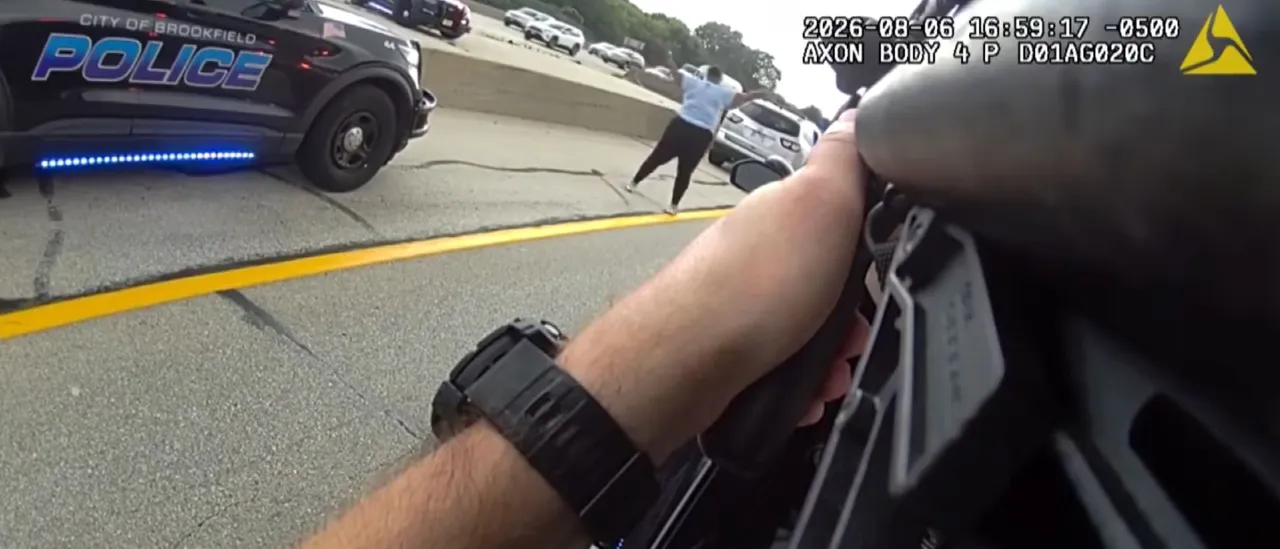
- •Wrongful arrests at gunpoint, a 71% false-alert rate in one California department, and officers abusing the system to track personal contacts hundreds of times demonstrate real-world harm to innocent people.
- •Texas Gov. Greg Abbott and local officials from Arizona to Tennessee are cutting off funding and canceling contracts because the technology outpaced legal safeguards and oversight.
- •Grassroots conservative activists and everyday citizens, not just politicians, are showing up at local council meetings to demand cameras be removed, arguing the surveillance state threatens freedoms regardless of who's in power.
Common Take
High Consensus- Flock operates more than 120,000 cameras across roughly 6,000 U.S. communities, conducting about 20 billion vehicle scans monthly.
- Documented misuse cases include officers searching plates tied to ex-partners hundreds of times and a wrongful arrest of an innocent Wisconsin woman at gunpoint due to a data error.
- Both Hawley and Sanders, despite differing politics, are pursuing federal action against Flock's data practices.
- Dozens of cities and counties across the political spectrum, including Tempe, Asheville, and several Arizona jurisdictions, have already canceled or suspended their Flock contracts.
The Arguments
Left argues
Bernie Sanders argues that Flock's national camera network represents a profit-driven surveillance apparatus that lets 'AI oligarchs' monetize mass location tracking of ordinary Americans without any warrant requirement or judicial oversight, threatening people seeking reproductive healthcare, immigrants, and political activists.
Right counters
Hawley's own investigation shares this concern almost entirely, framing it not as a partisan profit critique but as a Fourth Amendment issue dating to colonial writs of assistance — the problem is unchecked government search power, regardless of who profits from it.
Right argues
Josh Hawley's investigation demonstrates that Flock's technology has caused concrete, documented harm — a 71% false-alert rate in one California department, a woman jailed for 13 days after a misidentification, and a woman arrested at gunpoint twice due to a data-entry failure — proving the system is unreliable even on its own crime-fighting terms.
Left counters
These failures reinforce the left's deeper point: the danger isn't just technical error but the absence of any legal framework or oversight structure that would catch such errors before they ruin innocent people's lives, which is exactly what happens when profit-driven companies self-regulate.
Left argues
Documented cases — like a Wisconsin officer allegedly searching plates 179 times to check if his ex-girlfriend visited an abortion clinic, and a Georgia police chief searching for his ex 600 times — prove that unrestricted access to location data inevitably enables stalking and abuse of power by the very officials entrusted with it.
Right counters
Flock's own CEO concedes misuse is inevitable, which is precisely why cities like Asheville and Tempe are ripping the cameras out entirely rather than trusting company-imposed safeguards that only arrived after billions of scans had already been logged.
Right argues
Local and state officials across the political spectrum — Greg Abbott in Texas, Knox County's Republican mayor, and city councils in Arizona, Oregon, and Wisconsin — are canceling contracts and cutting funding because the technology was deployed faster than any legal safeguards, contracts, or oversight mechanisms could keep pace with it.
Left counters
This bipartisan backlash validates Sanders' original warning that these networks were approved with little public debate before residents understood what they were agreeing to — the difference is progressives were sounding the alarm on civil liberties and corporate profit motives well before it became a cross-partisan cause.
Left argues
Local governments approved sprawling data-sharing networks — like Knox County's 143 cameras purchased in batches deliberately priced below the threshold requiring mayoral review — with minimal transparency, showing that the surveillance state expanded through bureaucratic evasion rather than informed consent.
Right counters
Grassroots conservative activists, like the beekeeper who testified in North Carolina, show that ordinary citizens across the ideological spectrum are now forcing this transparency at the local level themselves, proving the corrective mechanism is civic engagement and federalism, not necessarily new federal legislation.
Challenge Questions
These questions target genuine internal contradictions — meant to provoke honest reflection.
Right asks Left
“If Sanders' primary objection is corporate profit motive and 'AI oligarchs,' would he support this same surveillance network if it were run as a nonprofit or fully public utility, or is the core objection actually about government search power itself regardless of who operates it?”
Left asks Right
“If conservatives' objection is rooted in constitutional limits on government search power, why did so many Republican-led states and departments adopt Flock in the first place, and why is Abbott's response merely to redirect funding rather than to seek a statewide ban or warrant requirement?”
Outlier Report
Left Fringe
Some abolitionist/defund-police-aligned activists and groups like the ACLU's more radical wing frame this purely as an argument for eliminating predictive policing entirely rather than reforming oversight; this represents maybe 10-15% of the left.
Right Fringe
Pro-law-enforcement hardliners and some Blue Lives Matter-aligned conservatives (e.g., certain police union voices) dissent from the anti-Flock consensus, arguing the cameras are essential crime-fighting tools and privacy concerns are overblown; this represents roughly 15-20% of the right, plus tech-optimist figures who see Flock as unambiguously good for public safety.
Noise Assessment
Moderate noise: local council meeting protests and viral moments (like the 'Barry the Beekeeper' speech) get outsized media attention relative to how many Americans are actively engaged, but the underlying bipartisan elite consensus (Hawley, Sanders, Abbott, local Democratic and Republican officials all acting similarly) suggests genuine cross-partisan public concern rather than purely manufactured outrage.
Sources (7)
<img src="https://www.theblaze.com/media-library/americans-deserve-answers-hawley-opens-flock-investigation-with-damning-new-evidence.png?id=67691146&width=1245&height=700&coordinates=0%2C0%2C1%2C0" /><br /><br /><p>Missouri Republican Senator Josh Hawley is not sympathetic to the surveillance state.</p><p>With evidence that would frighten any American, Hawley made an announcement on Wednesday that will affect thousands of U.S. neighborhoods.</p><p class="pull-quote">'The American people want to know who has access to their personal data and how.'</p><p>As license plate reading cameras spy from seemingly every corner of the United States, with some even hiding in <a href="https://www.theblaze.com/tech/traffic-cones-hidden-cameras-az" target="_self">traffic cones and barrels</a>, Senator Hawley stated on Wednesday that Americans' privacy rights do not stop when they get in their cars.</p><p>"Americans do not surrender their privacy rights when they drive to work, drop their kids off at school, or go to church," Hawley <a href="https://x.com/HawleyMO/status/2092685230465245645?s=20" target="_blank">wrote</a> on X. </p><p>With that, Hawley said he is opening an investigation into Flock, the manufacturer behind over an alleged 120,000 cameras across 49 states, a number consistent with license plate camera tracker <a href="https://maps.deflock.org/?lat=38.0443&lng=-93.1440&zoom=3.59" target="_blank">DeFlock</a>.</p><p>"Americans deserve answers," Hawley <a href="https://x.com/HawleyMO/status/2092685237599793374" target="_blank">added</a>.</p><p>In <a href="https://www.hawley.senate.gov/wp-content/uploads/2026/08/2026-08-26-Hawley-Letter-to-Flock-CEO.pdf" target="_blank">letter</a> to Flock CEO Garrett Langley, Hawley demanded answers surrounding Flock's safeguards for Americans' data.</p><p>Noting that the company conducts "more than 20 billion vehicle scans every month," Hawley said that "the overwhelming majority of the Americans captured in those records did nothing wrong." </p><p>Then, Hawley listed some recent horrifying examples of abuse using Flock systems.</p><p><strong>RELATED: <a href="https://www.theblaze.com/tech/arizona-surveillance-camera-polling-0826" target="_blank">This state's citizens now oppose Flock cameras — despite agreeing they help police</a></strong></p> <blockquote class="rm-embed twitter-tweet"> <a href="https://twitter.com/HawleyMO/status/2092685230465245645"></a> </blockquote> <p>Just days before Hawley sent the letter, a Missouri man was found to have <a href="https://www.kcur.org/news/2026-08-23/flock-cameras-misuse-missouri-st-charles-county-police" target="_blank">engaged</a> in "egregious misuse" of Flock's "data system" by using it for personal reasons.</p><p>Two weeks prior, prosecutors <a href="https://reason.com/2026/08/13/flock-cameras-and-license-plate-readers-are-everywhere-can-we-trust-cops-with-them/" target="_blank">charged</a> a police officer in Milwaukee for allegedly searching the Flock system for his girlfriend's license plate 124 times, along with her former boyfriend's plate 55 times. He reportedly entered "investigation" as his justification each time.</p><p>Other examples cited by Hawley included a Florida woman <a href="https://www.yahoo.com/news/us/articles/florida-woman-spent-13-days-170100471.html" target="_blank">spending 13 days in jail</a> over eight possible felony counts after she was arrested through a Flock network search.</p><p>The charges were eventually dismissed when it was concluded that she was the wrong person.</p><p>Moreover, a California police department found that Flock <a href="https://www.businessinsider.com/flock-camera-misread-license-plate-reader-california-roseville-police-2026-7" target="_blank">misread license plates</a> in 71% of its issued alerts, leading to the LAPD dropping its contract with the company.</p><p><strong>RELATED: <a href="https://www.theblaze.com/shows/kibbe-on-liberty/what-the-flock-knoxville-mayor-explains-the-dark-truth-about-flock-cameras-not-your-grandmas-license-plate-readers" target="_blank">What the Flock? Knoxville mayor explains the dark truth about Flock cameras: ‘Not your grandma's license plate readers’</a></strong></p> <p class="shortcode-media shortcode-media-rebelmouse-image"> <img alt="" class="rm-shortcode" id="d770e" src="https://www.theblaze.com/media-library/image.jpg?id=67686328&width=1245&height=700&quality=50&coordinates=0%2C53%2C0%2C53" /> <small class="image-media media-photo-credit">Graeme Sloan/Bloomberg/Getty Images</small></p> <p>Senator Hawley also said there was "uncertainty" around whether or not Flock can sell or use customer data. </p><p>"Flock's $8.3 billion valuation comes with enormous pressure to find new commercial applications. Americans demand a full accounting for how their driver data is stored or sold."</p><p>Hawley also said, "These camera networks harness artificial intelligence to pool what they capture into a national database that customers can search."</p><p>"The American people want to know who has access to their personal data and how. This investigation will seek those answers," the letter concluded.</p><p>As Blaze Media previously reported, there are also growing concerns about how the license plate readers can be enhanced to to capture any "unique signals" emitted from devices in cars.</p><p>The <a href="https://www.theblaze.com/tech/digital-id-license-plate-tracking">SignalTrace</a> upgrade captures unique identifiers from cell phones, smart watches, Bluetooth devices, earbuds, and Wi-Fi signals and ultimately gives the ability to create a dossier on the driver and all his smart devices.</p><p><em>Like Blaze News? Bypass the censors, sign up for our newsletters, and get stories like this direct to your inbox. </em><em><a href="https://www.theblaze.com/newsletters/theblaze-articlelink" target="_self">Sign up here</a></em><em>!</em></p>
<img src="https://www.theblaze.com/media-library/cities-are-kicking-out-flock-the-surveillance-might-be-here-to-stay.jpg?id=67686532&width=1245&height=700&coordinates=28%2C0%2C28%2C0" /><br /><br /><p>Flock Safety spent years selling license plate cameras faster than local officials could ask questions. Now cities are shutting them off. On Wednesday, <a href="https://www.azfamily.com/2026/08/26/tempe-turns-off-flock-cameras-ends-contract-with-company/" target="_blank">Tempe, Arizona, shut off all 33 of its Flock license plate readers and announced that it would end its contract</a>. The city won't hire another company to replace them.</p><p>That wasn't always the plan. On March 26, the Tempe City Council <a href="https://tempe.granicus.com/GeneratedAgendaViewer.php?clip_id=4004&view_id=4" rel="noopener noreferrer" target="_blank">approved a trial of Axon's Outpost plate readers</a>. The free, 60-day pilot included three fixed cameras and was <a href="https://www.abc15.com/news/local-news/investigations/tempe-tests-axon-license-plate-readers-amid-flock-backlash" rel="noopener noreferrer" target="_blank">described at the time as a test of an alternative to Flock</a>. Wednesday's announcement went further. Councilman Bobby Nichols said Tempe needed to "stop looking for other ALPR providers."</p><p class="pull-quote">'These cameras need to be deactivated immediately.'</p><p>So Tempe isn't merely changing the logo on the pole. At least for now, it's walking away from fixed plate readers altogether.</p><p>Tempe Mayor Corey Woods (D) acknowledged that the cameras helped police but said the potential for abuse was too great. "For Tempe, that means taking these cameras down," Woods said.</p><p>That same day, Sen. Josh Hawley (R-Mo.) <a href="https://www.hawley.senate.gov/chairman-hawley-investigates-ai-powered-flock-cameras-amidst-privacy-concerns/" rel="noopener noreferrer" target="_blank">launched a Senate investigation into Flock</a>, demanding records from CEO Garrett Langley about data access, camera placement, retention, and sharing. Hawley gave the company until September 8 to respond.</p><p>"Americans do not surrender their privacy rights when they drive to work, drop their kids off at school, or go to church," Hawley wrote.</p><p>Hawley wasn't alone. Sen. Bernie Sanders (I-Vt.) <a href="https://x.com/SenSanders/status/2092667322695635447" rel="noopener noreferrer" target="_blank">said the same day that he would soon introduce legislation</a> to "stop Flock and AI mass surveillance." Sanders warned that the network was pushing the country toward a surveillance state run for the profit of "AI oligarchs."</p><p>Flock sold local police departments roadside cameras and connected them to a nationwide system capable of reconstructing where ordinary Americans drive. Most of the people entered into that system aren't suspects. They're going to work, church, school, the gun store, the doctor, or wherever else free people go without asking the government for permission.</p><h2>Knox County may be next</h2><p>In Tennessee, the Knox County Sheriff's Office has operated Flock cameras since 2020 and now has 143 of them, according to <a href="https://www.aol.com/articles/exasperated-knox-county-commissioners-demand-090955000.html" rel="noopener noreferrer" target="_blank">reporting by the Knoxville News Sentinel</a>. The department planned to install another 270 with state grant money.</p><p>County officials then started asking basic questions. Is there a valid contract? Who approved it? Where are the cameras? Who can search the data?</p><p>Knox County Mayor Glenn Jacobs (R) says the original agreement expired in 2024 and that there's no valid service contract governing the current cameras. Records reviewed by county officials also showed the sheriff's office repeatedly purchasing Flock equipment in batches priced just below the threshold that would have triggered mayoral review.</p><p><strong>RELATED: <a href="https://www.theblaze.com/columns/opinion/when-did-we-agree-to-be-watched" target="_blank">When did we agree to be watched?</a></strong></p><p class="shortcode-media shortcode-media-rebelmouse-image"> <img alt="" class="rm-shortcode" id="92306" src="https://www.theblaze.com/media-library/image.jpg?id=67615083&width=980" /> <small class="image-media media-photo-credit"> Justin Sullivan/Getty Images </small> </p><p>"These cameras need to be deactivated immediately," Commissioner Kim Frazier said during an August 24 meeting. "You don't have an active agreement."</p><p>Jacobs has <a href="https://www.wvlt.tv/2026/08/25/knox-county-mayor-disputes-validity-flock-camera-contract/" target="_blank">told Flock that the county will not renew the deal even if the company maintains that it is valid</a>. Existing cameras remain active for now, but installation of new ones has stopped. The County Commission is scheduled to vote August 31 on an ordinance regulating the cameras. A proposed amendment would <a href="https://commission.knoxcountytn.gov/forums/topic/amendment-to-o-26-8-102/" rel="noopener noreferrer" target="_blank">order Flock's equipment removed within 30 days</a>, though its sponsor says final passage would require a second reading in September.</p><p>Knox County hasn't pulled the plug. Yet. But the county installed 143 cameras before commissioners could get straight answers about whether the contract was valid, where the cameras had been placed, or who inside the sheriff's office controlled them. That should bother even people who like the cameras.</p><h2>The cancellations are piling up</h2><p>By mid-August, the Associated Press reported that <a href="https://apnews.com/article/2a93bc075e2f7ffcca9e04a35d75a3fe" rel="noopener noreferrer" target="_blank">more than 50 agencies or jurisdictions had canceled, suspended, rejected, or deactivated a Flock system since the beginning of the year</a>, according to a tracker maintained by the anti-Flock group <a href="https://deflock.org/" rel="noopener noreferrer" target="_blank">DeFlock</a>.</p><p>The day before Tempe's announcement, the <a href="https://www.foxcarolina.com/2026/08/26/asheville-city-council-votes-terminate-contract-with-flock-safety/" rel="noopener noreferrer" target="_blank">Asheville City Council voted 5-2 to terminate its Flock contract</a>, remove the hardware, and stop employees from accessing or sharing the data.</p><p>In Missouri, the <a href="https://www.sccmo.org/m/newsflash/home/detail/2771" rel="noopener noreferrer" target="_blank">St. Charles County Police Department discontinued Flock and began terminating its contract</a> after an audit found that a civilian employee had searched the system for a personal, non-law-enforcement purpose. The employee resigned after receiving notice of termination.</p><p>Arizona has become a particularly bad market for the company:</p><ul><li><a href="https://www.azfamily.com/2026/08/07/chandler-ends-use-flock-license-plate-readers-after-audit-finds-anomaly/" rel="noopener noreferrer" target="_blank">Chandler ended its Flock partnership</a> after an audit found an unexplained anomaly in how an employee used the system.</li><li><a href="https://www.kjzz.org/politics/2026-08-26/flock-cameras-in-arizona-tempe-wont-replace-system-cave-creek-cancels-contract" rel="noopener noreferrer" target="_blank">Cave Creek terminated its contract and removed its cameras</a> after officials concluded that local privacy rules could not control a system designed for data sharing between agencies.</li><li>Pinal County Sheriff Ross Teeple said <a href="https://www.hawaiinewsnow.com/video/2026/08/06/why-pinal-county-is-ending-its-flock-camera-contract/" rel="noopener noreferrer" target="_blank">the county won't renew its contract</a> when it expires in September because he has "serious Fourth Amendment concerns" about the technology.</li></ul><p>The <a href="https://ebs.publicnow.com/view/EAE188D566379226C17BB258B927F33159F4FE7A" rel="noopener noreferrer" target="_blank">Josephine County Sheriff's Office in Oregon canceled its contract and deactivated 10 cameras</a> after residents objected on Fourth Amendment grounds. The sheriff's office said the technology had helped solve crimes but conceded that much of the county was not willing to accept it.</p><p>In Massachusetts, <a href="https://www.salemma.gov/m/newsflash/Home/Detail/427" rel="noopener noreferrer" target="_blank">Salem declined to renew its contract</a>, citing insufficient protections for locally generated data. Salem plans to replace Flock with a system that keeps the data under local control, which is an improvement but hardly the end of automated plate tracking.</p><p>Stoughton, Wisconsin, shut the whole thing down. Its council <a href="https://www.wmtv15news.com/video/2026/07/29/stoughton-ends-agreement-with-flock-safety/?outputType=amp" rel="noopener noreferrer" target="_blank">unanimously terminated a two-year contract only months after the cameras were installed</a>. <a href="https://deflockdane.org/stoughton-alpr/" rel="noopener noreferrer" target="_blank">The resolution called for</a> shutting down and removing the cameras, deleting collected data, and barring the city from buying a replacement without a new public oversight process.</p><p><strong>RELATED: <a href="https://www.theblaze.com/news/flock-camera-student-comments-online" target="_blank">Student accused of destroying Flock cameras — his community comes out to defend him</a></strong></p><p class="shortcode-media shortcode-media-rebelmouse-image"> <img alt="" class="rm-shortcode" id="31058" src="https://www.theblaze.com/media-library/image.jpg?id=67582785&width=980" /> <small class="image-media media-photo-credit"> L-R: Monongalia County Sheriff's Office press release; Justin Sullivan/Getty Images </small> </p><p><a href="https://www.redmond.gov/2400/Automated-License-Plate-Reader-Program" target="_blank">Redmond, Washington, canceled its contract in a unanimous July vote and ended the city's plate-reader program</a> after deactivating the cameras months earlier. The <a href="https://www.latimes.com/california/story/2026-07-11/lapd-suspends-use-of-flock-surveillance-cameras-over-privacy-issues" rel="noopener noreferrer" target="_blank">LAPD stopped using Flock when its agreement expired</a>, pending stronger terms for data ownership, privacy, security, and sharing. Officials left open the possibility of a new contract. <a href="https://www.axios.com/local/denver/2026/04/01/axon-license-plate-reader-contract-approved" rel="noopener noreferrer" target="_blank">Denver</a> and <a href="https://www.axios.com/local/douglas/2026/07/23/douglas-county-sheriff-drops-flock-for-axon" rel="noopener noreferrer" target="_blank">Colorado's Douglas County</a> are replacing Flock with Axon.</p><h2>Flock's loss may be Axon's gain</h2><p>Axon has noticed the opportunity. CEO Rick Smith told investors that the company was seeing <a href="https://www.opb.org/article/2026/08/22/flock-competitors-seek-to-benefit-from-public-backlash/" rel="noopener noreferrer" target="_blank">"a significant number of agencies" switch from other plate-reader systems to Axon</a>. While Knox County is debating getting rid of its 143 Flock cameras, in January, the Knoxville City Council approved a <a href="https://www.knoxvilletn.gov/news/2026/k_p_d_now_fully_staffed" rel="noopener noreferrer" target="_blank">$9.4 million expansion of the police department's Axon contract</a>. The package included plate readers along with additional body cameras, in-car cameras, and drones. The Knoxville Police Department now says it operates <a href="https://knoxvilletnpolice.gov/real-time-information-center/" rel="noopener noreferrer" target="_blank">19 fixed Axon plate readers and 30 mobile readers built into police dashcams</a>. It keeps plate data for 30 days. Searches must be tied to an incident report number and are logged for auditing.</p><p>Those controls are better than a free-for-all. They don't make the cameras stop recording innocent drivers.</p><p>Axon's fixed Outpost cameras combine <a href="https://www.axon.com/products/axon-outpost" rel="noopener noreferrer" target="_blank">plate reading, vehicle identification, and live video</a>. In July, the company also began rolling out <a href="https://www.axon.com/help/fusus/software/fusus/alpr/alpr-sharing.htm" rel="noopener noreferrer" target="_blank">cross-agency ALPR sharing</a>. Axon's version isn't identical to Flock's national network. Sharing is off by default, initiated by the agency that owns the data, and subject to offense categories and audit logs. But an agency can still let another department search its plate records.</p><h2>Flock built the network first and the guardrails later</h2><p>Flock now says it operates more than 120,000 cameras across roughly 6,000 communities. Together, they produce about 20 billion vehicle scans every month.</p><p>A <a href="https://www.washingtonpost.com/technology/2026/08/02/how-police-officers-used-vast-network-cameras-spy-their-exes/" rel="noopener noreferrer" target="_blank">Washington Post investigation</a> found at least 50 officers who had been charged with or accused of misusing automated plate-reader systems, often to track current or former romantic partners.</p><p>One former Georgia police chief allegedly searched for his ex-girlfriend and her teenage daughter roughly 600 times. In Wisconsin, an officer allegedly searched plates connected to his ex-girlfriend and her partner 179 times, including checking whether she had visited an abortion clinic.</p><p>Flock's CEO has said human misuse is inevitable and that the company's job is to provide tools that catch it. In August, the company announced new safeguards that will make several previously optional controls mandatory by January 1. Law-enforcement customers will have to tie searches to case numbers, use software intended to flag abnormal search behavior, and review emergency overrides. Flock also shortened its standard retention period from 30 days to seven, though <a href="https://www.flocksafety.com/blog/how-does-flock-handle-license-plate-data-deletion" rel="noopener noreferrer" target="_blank">customers may configure it differently under their own laws and policies</a>. The <a href="https://apnews.com/article/2a93bc075e2f7ffcca9e04a35d75a3fe" rel="noopener noreferrer" target="_blank">Associated Press has a useful summary of the changes</a>.</p><p>Any check on abuse is better than none. But Flock added these rules only after its network was recording billions of vehicle movements every month. Local officials were sold a crime-fighting tool. What they got was access to a national location-search system. Its limits depended on company policy and department rules, plus the honesty of every employee handed a login.</p><p>There isn't a clean partisan story here. Hawley and Sanders agree on very little, but both are now calling for federal action against Flock. Asheville, Tempe, and county sheriffs in Arizona and Oregon have reached similar conclusions for different reasons. A government camera network that records everyone by default and sorts out abuse afterward has the presumption backward.</p><p>Most of these towns never had a real debate until the cameras were already watching them. They should have.</p>
“It was a nightmare. It is a nightmare”
Local Hero Barry The Beekeeper Electrifies Room With Anti-Flock Speech At Council Meeting
Every month, AI-powered cameras take 20 billion snapshots of cars in America. In almost every case, these photos capture drivers who did nothing wrong. These are regular folks on their way to work, picking up kids at school, or driving to church. Now, they are understandably asking what happens to the data captured by a ...
Greg Abbott ordered Texas agencies to pause funding for Flock Safety's AI-powered license plate readers as cities cancel contracts over privacy.
Corey Woods (D), the mayor of Tempe, Ariz., on Thursday defended his decision to cancel the city police department’s $80,000 contract with Flock Safety, a top automated license plate reader company, amid reported misuse of its products. “The concern that we had was just that the potential for misuse was too great,” he told NewsNation’s…