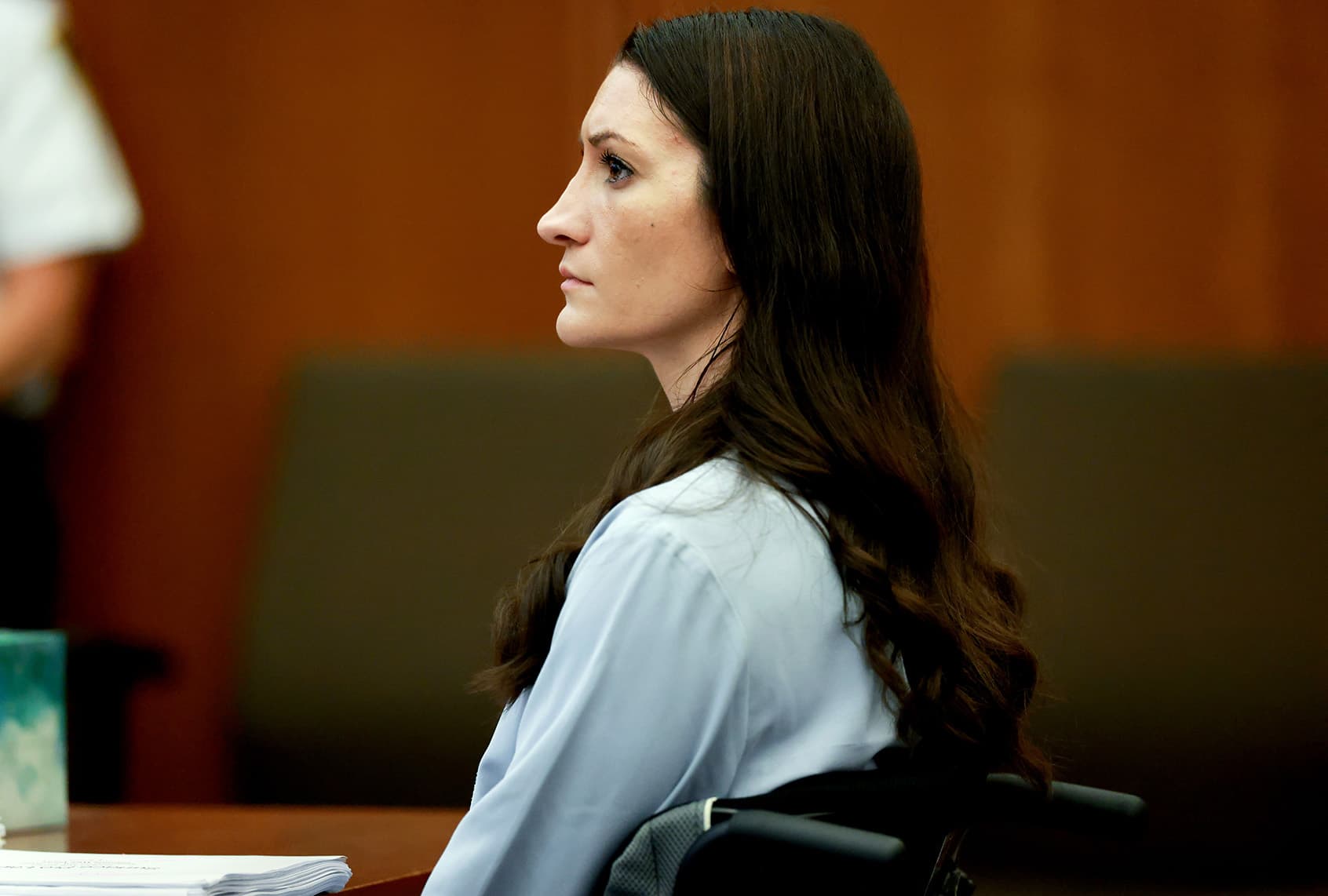
 Lindsay Clancy sits in courtroom during her murder trial proceedings.
Madness or Murder? Clancy Trial Divides Opinion on Insanity Defense
Left says
- •Postpartum psychosis is a rare, severe, and biologically real psychiatric condition distinct from postpartum depression, and testimony from Clancy's own treatment history shows repeated, documented attempts to seek help that the mental health system failed to adequately address.
- •Women who have experienced postpartum psychosis or severe postpartum mental illness see their own struggles reflected in Clancy's case, fueling public advocacy around inadequate screening, treatment access, and provider education for maternal mental health.
- •Mocking or dismissing postpartum psychosis as an excuse reflects broader cultural resistance to acknowledging that pregnancy and motherhood can produce genuine, disabling illness rather than being uniformly joyful or easy.
- •Even legal observers who initially assumed criminal responsibility have shifted toward viewing this as a case of genuine madness after hearing extensive expert and treatment-history testimony.
Right says
- •Prosecution experts, including a forensic psychiatrist who has worked with the FBI, testified that Clancy's methodical, sequential actions during the killings demonstrate control and awareness inconsistent with someone acting purely on uncontrollable hallucinations.
- •The forensic psychiatrist's professional assessment, based on direct evaluation, concluded Clancy understood right from wrong at the time of the killings, supporting the view that she remains criminally responsible despite serious mental illness.
- •Skepticism exists that Clancy's account of hearing a commanding voice is credible, given the specificity and coordination required to carry out the killings without any described external instruction.
- •Legitimate concern exists that turning a child-murder trial into a cultural cause or social media 'fandom' risks trivializing the deaths of three young children and undermining serious legal and clinical scrutiny of the insanity defense.
Common Take
High Consensus- Clancy has admitted to killing her three children and attempting suicide in January 2023.
- Both sides agree she was experiencing serious mental health problems at the time, differing only on whether those problems rose to the level of legal insanity.
- Postpartum psychosis is recognized as a real, though rare, medical condition distinct from postpartum depression.
- The case has drawn intense public and media attention, and the verdict will hinge on the jury's assessment of competing expert testimony about her mental state.
The Arguments
Left argues
Postpartum psychosis is a rare, biologically real psychiatric condition, and Clancy's documented history of repeatedly seeking help shows a mental health system that failed to catch a woman in acute crisis rather than a calculated killer.
Right counters
The prosecution's own forensic psychiatrist noted that Clancy's care included repeated medication changes and provider contact, which he characterized as consistent with someone seeking a 'quick fix' rather than someone so detached from reality she couldn't understand her actions were wrong.
Right argues
A forensic psychiatrist who directly evaluated Clancy testified that the methodical, sequential nature of the killings—choosing where, how, and in what order to kill each child without any described external direction—demonstrates control and awareness inconsistent with pure command-hallucination psychosis.
Left counters
Psychosis does not require chaotic or disorganized behavior; command hallucinations can compel someone to carry out highly specific, sequential actions while the person remains genuinely unable to perceive the wrongfulness of what they're doing, which is precisely what distinguishes psychosis from mere impulsivity.
Left argues
The shift of even skeptical legal observers, like attorney Shari Karney, toward viewing this as 'madness winning' after hearing extensive expert and treatment-history testimony suggests the weight of evidence favors genuine insanity over calculated murder.
Right counters
One commentator's changed opinion is not dispositive; the prosecution's final and most credentialed witness, an FBI-affiliated forensic psychiatrist who directly interviewed Clancy, concluded she knew right from wrong, and juries are tasked with weighing expert testimony, not media narratives.
Right argues
Skepticism is warranted about Clancy's account of hearing a commanding voice, since the forensic psychiatrist testified it is 'surprising' she could execute such a coordinated killing—selecting location, method, and order for three children—without any described instruction guiding those choices.
Left counters
That psychiatrist has only treated two women with postpartum psychosis, decades earlier, raising real questions about whether he has the depth of clinical experience with this specific rare condition to authoritatively judge what a genuine psychotic episode should look like.
Right argues
Turning a trial over the murder of three young children into a social media 'fandom' with hashtags and viral advocacy risks trivializing the victims' deaths and substituting cultural sentiment for the serious clinical and legal scrutiny the insanity defense demands.
Left counters
The public advocacy isn't trivializing the deaths but channeling grief and recognition into concrete demands for better postpartum screening and provider education, which could prevent future tragedies rather than merely spectating on this one.
Challenge Questions
These questions target genuine internal contradictions — meant to provoke honest reflection.
Right asks Left
“If postpartum psychosis is being framed as a systemic failure of screening and access to care, how does that framework account for testimony suggesting Clancy had significant contact with providers and medication changes—does the 'broken system' narrative risk overstating neglect where treatment attempts were in fact ongoing?”
Left asks Right
“If the prosecution's forensic psychiatrist has only directly treated two cases of postpartum psychosis, both decades ago, how much weight should his judgment about what 'authentic' psychotic behavior looks like carry against the defense experts with more contemporary, specialized experience in this rare condition?”
Outlier Report
Left Fringe
Writers like Salon's contributor framing this explicitly as exposing 'MAGA lies,' and hardcore online 'Free Lindsay' advocacy communities who argue she should face no punishment at all — likely under 10% of the left.
Right Fringe
Commentators dismissing postpartum psychosis entirely as an excuse or 'liberal pathologizing' of murder, similar to fringe reactions seen with Matt Walsh-style rhetoric mocking parenting struggles — likely under 15% of the right, as most conservatives accept mental illness exists but still favor accountability.
Noise Assessment
High — true crime social media fandoms, TikTok theorizing, and ideological op-eds (like Salon's) amplify extreme framings far beyond what typical jurors, moderates, or the general public actually express in polling or casual conversation.
Sources (7)
Heather Berlin, a neuroscientist, clinical psychologist and clinical professor at the Icahn School of Medicine at Mount Sinai, joins "The Daily Report" to explain the difference between postpartum depression and psychosis and what it means for Lindsay Clancy's murder trial.
Testimony in Lindsay Clancy's trial is finished after jurors in the Massachusetts murder case heard from 85 witnesses.
As Lindsay Clancy’s murder trial nears its close, an attorney says weeks of testimony have changed her mind about the case.
Lindsay Clancy's murder trial hasn't just dominated headlines for its tragic story and true crime fascination. For many, it has prompted a groundswell of recognition and outrage around the barriers women face when seeking care, the lack of research on postpartum mental health conditions and little education for providers.
Why many right-wing men can't admit that postpartum disorders are real
Even for true crime, the clickbait and conspiracies are out of control.
<p>FBI psychiatrist Gregory Saathoff says he has treated only two women with postpartum psychosis, both decades earlier</p><p>Testimony finished in the <a href="https://www.theguardian.com/us-news/2026/aug/22/lindsay-clancy-trial-what-happened-this-week">Lindsay Clancy trial</a> on Wednesday, as a final witness for the prosecution laid out that he believed the <a href="https://www.theguardian.com/us-news/massachusetts">Massachusetts</a> mother knew right from wrong when she took the lives of her three young children before attempting to commit suicide in 2023.</p><p>Closing arguments are expected to begin on Thursday. The jury will then start deliberating.</p> <a href="https://www.theguardian.com/us-news/2026/aug/26/lindsay-clancy-trial-fbi-psychiatrist-final-witness">Continue reading...</a>