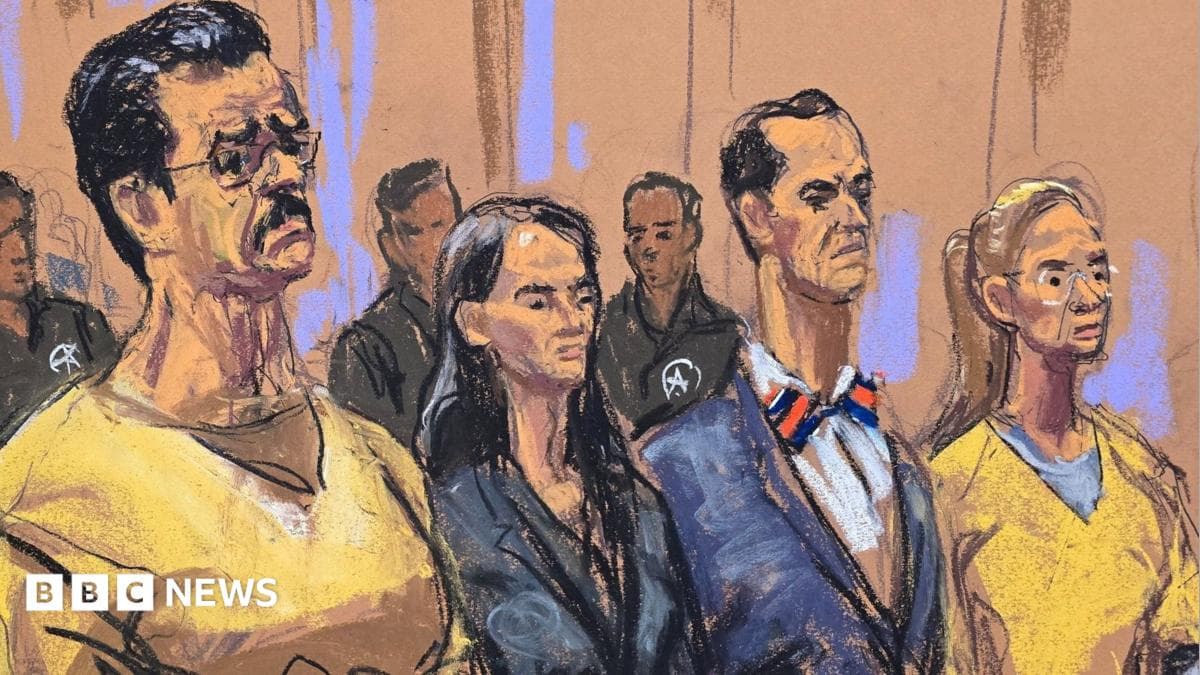
Maduro Pleads Not Guilty to Torturing Americans, Venezuelans
Left says
- •The indictment details a documented system of state repression, including electrocution, asphyxiation, forced nudity, and psychological torture used to crush political dissent.
- •American citizens were allegedly targeted as negotiating tools, with victims subjected to electric shocks and forced injections causing seizures, underscoring the stakes of holding foreign leaders accountable for crimes against US nationals.
- •Testimonies from former detainees, including the CITGO-6 and others freed in prisoner swaps, corroborate a pattern of abuse that predates this indictment, lending credibility to the charges.
- •Due process is being respected even for a widely accused strongman, with the court properly entering pleas and scheduling a trial date rather than rushing to judgment.
Right says
- •Maduro's forceful denial and claim of sovereign immunity reflect a broader argument that this prosecution may be as much about political theater as justice.
- •The case against a sitting or former head of state, captured via military raid, raises legitimate questions about the bounds of US extraterritorial law enforcement power.
- •The successful capture and prosecution of Maduro demonstrates resolve in confronting narco-terrorism and authoritarian regimes that have long evaded accountability.
- •The visible toll on Maduro and his wife during detention, including significant weight loss and health issues, is worth noting as the legal process unfolds.
Common Take
High Consensus- Maduro and Flores were captured during a US military operation in Caracas in January and have remained in US custody since.
- Both pleaded not guilty to the new conspiracy to commit torture charges added in a superseding indictment.
- The trial is scheduled for mid-2027, meaning the legal process will take years to resolve.
- The indictment alleges specific torture methods, including electric shock and asphyxiation, were used against both Venezuelans and American citizens.
The Arguments
Left argues
The indictment documents a systematic apparatus of torture—electrocution, asphyxiation, forced nudity—used specifically to crush political opposition, and corroborating testimony from previously freed detainees like the CITGO-6 lends independent credibility to these allegations beyond prosecutorial claims.
Right counters
Prior testimony from individuals already engaged in civil litigation against Maduro's government carries inherent incentive to corroborate state narratives, and an indictment's allegations, however detailed, remain unproven claims rather than established facts until tested at trial.
Right argues
Capturing and prosecuting Maduro via military raid sets a significant precedent for extraterritorial law enforcement power, and legitimate questions remain about whether a head of state—even an ousted one—can be seized and tried under a legal framework that bypasses normal diplomatic or sovereign immunity channels.
Left counters
Sovereign immunity does not shield a de facto strongman who illegitimately clung to power through electoral fraud and repression; courts allowing this case to proceed to trial rather than summarily dismissing it suggests the immunity argument lacks merit.
Left argues
The alleged targeting of American citizens for torture and use as negotiating leverage represents a direct assault on US nationals abroad, making accountability for these specific charges a matter of protecting American lives, not merely intervening in Venezuelan internal affairs.
Right counters
If protecting Americans were the central motive, the operation and charges would have been framed primarily around hostage-taking and American victims from the outset, rather than being layered on after the fact atop narco-terrorism charges that serve a broader geopolitical agenda against Maduro's regime.
Right argues
The timing and sequencing of charges—narco-terrorism first, torture added only after capture—combined with Maduro's forceful courtroom denials, raise reasonable questions about whether this prosecution is being used as political theater to justify the extraction of a foreign leader rather than a straightforward pursuit of justice.
Left counters
Superseding indictments that add charges as investigations uncover more evidence are standard prosecutorial practice, and the methodical pace—with a trial date set more than a year out—suggests careful case-building rather than theater.
Right argues
The reported significant weight loss and health deterioration of both Maduro and Flores during detention deserves scrutiny as the case proceeds, since due process protections should extend to the humane treatment of defendants regardless of the severity of charges against them.
Left counters
Concern over detention conditions for individuals accused of orchestrating starvation and punishment cells against their own political prisoners risks a troubling moral equivalence that minimizes the scale and nature of the alleged crimes.
Challenge Questions
These questions target genuine internal contradictions — meant to provoke honest reflection.
Right asks Left
“If testimony from individuals who have already filed civil lawsuits against Maduro is treated as strong corroboration for criminal charges, what standard would you apply to ensure financially interested witnesses aren't shaping the narrative before a trial has even begun?”
Left asks Right
“If the concern is that this prosecution oversteps US extraterritorial authority, how do you reconcile that with simultaneously praising the capture as a demonstration of resolve against narco-terrorism and authoritarian impunity?”
Outlier Report
Left Fringe
Figures like Jacobin writers and some DSA-aligned commentators (e.g., associated with outlets like The Grayzone) who frame US action against Maduro as imperialist overreach rather than legitimate accountability represent roughly 5-10% of the left.
Right Fringe
Libertarian-leaning commentators such as those at Reason magazine and figures like Rand Paul who object to the military raid and extraterritorial prosecution on sovereignty/rule-of-law grounds represent roughly 10-15% of the right.
Noise Assessment
Overall amplification is moderate; most mainstream commentary across the spectrum treats Maduro's prosecution as justified, with only fringe voices on both sides raising substantive objections to the process itself.
Sources (5)
"I reject this document entirely," Maduro said in court, responding to newly added torture-related charges.
Ousted Venezuelan leader Nicolas Maduro and his wife, Cilia Flores, each pleaded not guilty to new charges accusing them of torturing people to help them cling to power.
<p>Prosecutors accused former Venezuelan President <a href="https://www.axios.com/2026/01/03/maduro-capture-reasons-us-venezuela" target="_blank">Nicolás Maduro</a> and his wife of orchestrating the torture of people held in his regime's custody, piling onto the narcoterrorism charges they already face in a fresh indictment unveiled Thursday.</p><p><strong>The big picture: </strong>The charges add new fuel to the historic prosecution seeking to hold the strongman-turned-prisoner accountable for alleged crimes against Americans and alleged abuse of power.</p><hr /><ul><li>Maduro and his wife, Cilia Flores, pleaded not guilty in January to drug- and weapon-related charges. They have been held in the U.S. since their stunning capture from Caracas earlier this year.</li><li>Maduro's <a href="https://www.axios.com/2026/01/05/maduro-lawyer-attorney-barry-pollack-assange" target="_blank">attorney</a> did not immediately respond to Axios' request for comment.</li></ul><p><strong>Driving the news: </strong>Maduro "authorized the use of torture against specific individuals and oversaw a system designed to use torture, arbitrary detention, and violence as a means of repression against the political opposition," a superseding <a href="https://content.govdelivery.com/attachments/USDOJUSAO/2026/10/08/file_attachments/3810272/S5%20Indictment%20U.S.%20v.%20Nicol%C3%A1s%20Maduro%20Moros%20and%20Cilia%20Adela%20Flores%20De%20Maduro.pdf" target="_blank">indictment</a> filed in the Southern District of New York alleged.</p><ul><li>The new indictment charges Maduro and Flores with conspiracy to commit torture, alleging they engaged in a conspiracy to inflict "severe physical and mental pain and suffering to repress and punish political opposition."</li></ul><p><strong>What's inside: </strong>The indictment outlines a series of disturbing torture tactics — including electrocution, beatings, isolation and simulated drowning — allegedly employed at Maduro's direction to quell political opposition. </p><ul><li>"As opposition to the ruling regime intensified," Maduro allegedly "continued to oversee the development of a more systematic approach to unlawfully arresting and torturing dissidents," per the indictment, ordering who would be arrested and tortured.</li><li>One unnamed victim who the indictment described as "friendly" with "a famous opponent of the regime" was told by his captors that they would kill his young child, whose hair color they referenced. </li><li>It also details abuse against Americans, including one who was allegedly falsely accused of participating in a conspiracy to kill Maduro. That victim was allegedly tortured with electric shocks, asphyxiation and forced injection of a substance that made him have seizures.</li></ul><p><strong>Catch up quick: </strong>Americans who were formerly imprisoned in Venezuela have<a href="https://apnews.com/article/americans-imprisoned-venezuela-lawsuit-maduro-d3584fdff764f419ec35953fa0cacb3d" target="_blank"> accused</a> Maduro of heading a web of corruption that used Americans as negotiating tools.</p><ul><li>In a<a href="https://www.motleyrice.com/sites/default/files/documents/AT_HR/2025.01.06%20ECF%20%23%201%20%20Complaint.pdf" target="_blank"> lawsuit</a> filed last year, Matthew Heath and Osman Khan, two Americans<a href="https://ve.usembassy.gov/the-release-of-u-s-nationals-from-venezuela/" target="_blank"> freed</a> in a 2022 prisoner swap, alleged they were subjected to electrocution, suffocation, severe beatings and food and water deprivation, among other threats and forms of torture.</li><li>Members of a group of oil executives, <a href="https://2017-2021-translations.state.gov/2020/11/21/anniversary-of-the-wrongful-detention-of-the-citgo-6-in-venezuela/" target="_blank">known</a> as the CITGO-6, also released in October 2022,<a href="https://www.houstonpublicmedia.org/articles/court/2024/05/30/489180/houston-area-brothers-sue-citgo-for-400-million-over-imprisonment-in-venezuela/" target="_blank"> alleged</a> they faced physical and emotional torture while in Venezuelan custody.</li></ul><p><strong>What's next: </strong>Their trial is set to begin on June 1, 2027. </p><ul><li>Flores' legal team has sought her release ahead of the trial, citing her heart issues and saying that since she's entered custody, she's lost two molars and more than 25 pounds.</li></ul><p><strong>Go deeper:</strong><em> </em><a href="https://www.axios.com/2026/09/15/maduro-ally-alex-saab-money-laundering-venezuela-guilty" target="_blank">Maduro ally pleads guilty to money laundering</a></p><p><em>Editor's note: This story has been updated with additional information throughout. </em></p>
Former Venezuelan President Nicolás Maduro and his wife, Cilia Flores, are slated to return to a U.S. court amid a new torture indictment. CBS News' Katrina Kaufman reports.
His appearance in court saw the former Venezuelan leader repeatedly assert his innocence and denounce the claims against him.