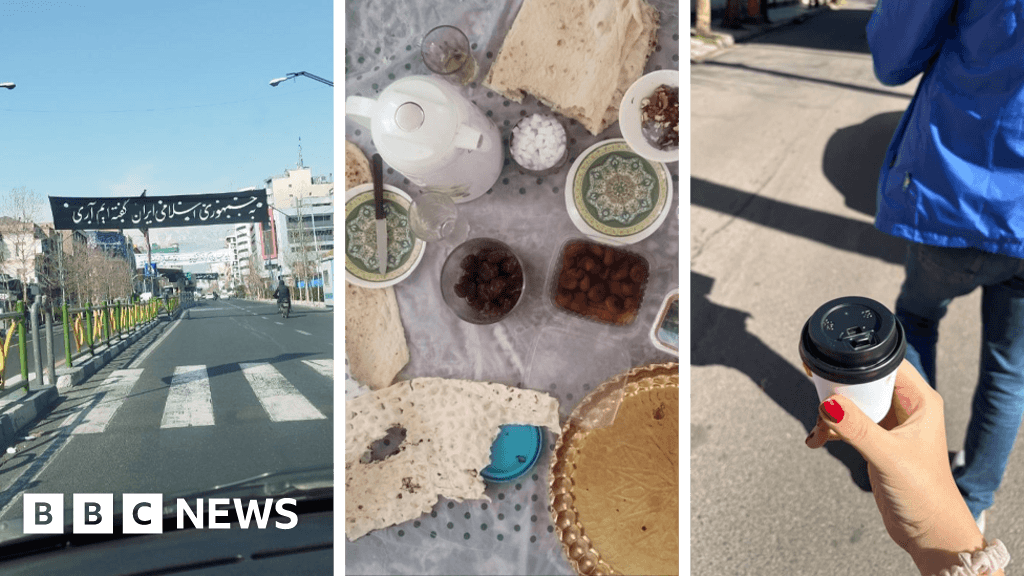
 Young Iranians continue daily life amid conflict, sharing food and coffee
MAGA devotees split over going to war with Iran
Intra-Party Split Detected
MAGA supporters are divided over what America First means regarding Iran war, with some opposing military intervention
Left says
- •War with Iran represents another costly military intervention that will drain American resources while failing to achieve lasting peace or stability in the Middle East
- •The Iranian people are already suffering under bombardment and deserve humanitarian consideration rather than escalated military action that primarily harms civilians
- •America First should mean prioritizing domestic needs like healthcare, education, and infrastructure over foreign military adventures that benefit defense contractors
- •Military escalation risks drawing the United States into a prolonged conflict that could destabilize the entire region and create new refugee crises
Right says
- •Iran's regime poses a genuine threat to American interests and allies through its nuclear program, support for terrorism, and disruption of global oil supplies
- •Decisive military action now can prevent a larger, more costly conflict later while demonstrating American strength to other adversaries like China and Russia
- •The Iranian government oppresses its own people and sponsors violence across the Middle East, making regime change a moral imperative
- •America First requires projecting strength abroad to protect American economic interests and prevent threats from reaching American soil
Common Take
High Consensus- The Iranian regime is authoritarian and oppresses its own people, as evidenced by civilians fleeing to Turkey and expressing desire for regime change
- Any military action should distinguish between the Iranian government and innocent Iranian civilians who are already suffering
- The conflict is disrupting global oil supplies through the Strait of Hormuz, which carries about one-fifth of world oil shipments
- American foreign policy decisions should ultimately serve American national interests and security
The Arguments
Right argues
Iran's nuclear program and support for terrorism across the Middle East pose an existential threat that requires decisive action now, before the regime develops nuclear weapons and becomes exponentially more dangerous to American interests and allies.
Left counters
Military intervention will likely accelerate Iran's nuclear program rather than stop it, while creating regional chaos that makes diplomatic solutions impossible and pushes Iran closer to nuclear-armed allies like Russia and China.
Left argues
The Iranian people are already suffering under bombardment, with civilians sheltering in empty cities and young people losing their lives, making escalated military action a humanitarian catastrophe that contradicts American values.
Right counters
The Iranian regime's oppression of its own people and sponsorship of violence across the region makes regime change a moral imperative that will ultimately liberate Iranians from decades of authoritarian rule.
Right argues
Projecting American strength through decisive military action demonstrates resolve to other adversaries like China and Russia, while protecting vital economic interests including global oil supplies that flow through the Strait of Hormuz.
Left counters
Military adventures abroad drain resources that should be invested in domestic priorities like healthcare, education, and infrastructure, weakening America from within while enriching defense contractors at taxpayers' expense.
Left argues
America First should mean avoiding costly foreign military interventions that risk drawing the United States into prolonged conflicts, creating new refugee crises, and destabilizing entire regions without achieving lasting peace.
Right counters
True America First policy requires preventing threats from reaching American soil by addressing them abroad, and allowing Iran to develop nuclear weapons would create far greater long-term costs and risks to American security.
Right argues
Swift military action now can prevent a larger, more costly conflict later by eliminating Iran's capacity to threaten shipping lanes, develop nuclear weapons, and sponsor terrorist networks before these capabilities mature.
Left counters
Military escalation historically leads to prolonged occupations and nation-building commitments that cost trillions of dollars and thousands of American lives while failing to create stable, democratic governments in the Middle East.
Challenge Questions
These questions target genuine internal contradictions — meant to provoke honest reflection.
Right asks Left
“If America First means prioritizing domestic needs over foreign interventions, how do you reconcile this principle with the reality that Iran's disruption of global oil supplies and potential nuclear weapons directly threaten American economic prosperity and security at home?”
Left asks Right
“If the goal is to liberate the Iranian people from an oppressive regime, how do you explain supporting military actions that are currently forcing young Iranians to shelter in empty cities while their friends are killed, seemingly punishing the very people you claim to want to help?”
Outlier Report
Left Fringe
Insufficient data from provided articles to identify specific left-wing figures taking extreme positions on Iran war policy. Articles focus primarily on Iranian civilian perspectives and right-wing divisions.
Right Fringe
The Economist headline indicates MAGA devotees are internally divided, suggesting figures like Tucker Carlson or other America First isolationists may oppose war while establishment Republicans support it, but specific names are not provided in the available article summaries. Estimated 30-40% of MAGA base may oppose intervention.
Noise Assessment
Moderate noise ratio - the 'split' among MAGA devotees appears to reflect genuine ideological tension between isolationist and interventionist wings rather than performative positioning.
Sources (6)
Iranians say they are sheltering at home and rarely venturing out on near-empty streets as the US-Israeli bombing campaign continues.
Dan Johnson hears from Iranians at a crossing in north-west Iran about their thoughts on the war and regime.
President Trump says Iran war will be over “very soon”.
The Iranian diaspora cheered Khamenei’s death. They are divided over what should come next
The public is opposed, but Republicans are falling in line
A fight over what America First means and who gets to define it