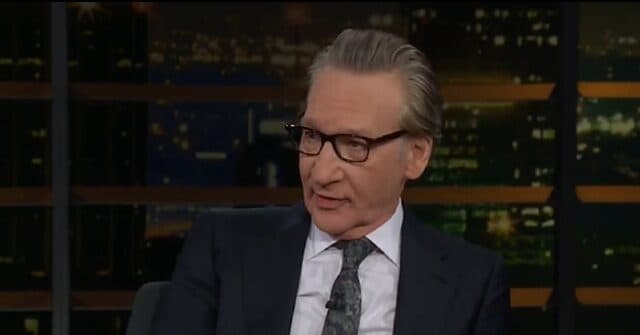
 Bill Maher speaking during a panel discussion on his talk show.
Maher Clashes with Tarlov: Are Democrats Really 'Less Crazy'?
Intra-Party Split Detected
Maher, a self-identified liberal, and Tarlov, a Democratic commentator, publicly disagree over whether the Democratic Party has moderated or is still dominated by its progressive/DSA fringe, with Maher arguing establishment Democrats like Ossoff and Cooper aren't confronting the left flank.
Left says
- •Democratic candidates like Ossoff and Cooper are successfully focusing campaign messaging on cost of living, healthcare, and administration corruption, which is resonating with voters.
- •The shift in rhetoric toward kitchen-table economic issues and away from divisive social messaging represents genuine strategic evolution, even if internal party divisions remain unresolved.
- •Acknowledging that DSA-aligned candidates hold more radical views doesn't negate the fact that the party's mainstream messaging has moderated in tone and focus.
- •Elections should be judged as a referendum on Trump and the current economic conditions rather than on intra-party ideological debates.
Right says
- •Democrats have not actually changed their underlying positions or beliefs, only their public messaging and campaign wardrobe choices to appear more moderate.
- •Mainstream Democrats like Ossoff and Cooper have failed to publicly confront or distance themselves from their party's socialist and far-left fringe, including the Democratic Socialists of America.
- •The party's continued embrace of contested gender ideology and refusal to recant prior progressive positions shows there has been no real ideological retreat.
- •Claiming to be 'less crazy' while admitting the underlying views haven't changed reveals a cynical rebranding strategy rather than authentic moderation.
Common Take
High Consensus- Some Democratic candidates, including Ossoff and Cooper, are campaigning primarily on cost of living, healthcare, and corruption rather than social issues.
- Tarlov herself acknowledges that DSA-aligned candidates hold views she considers extreme.
- Both sides agree the Democratic Party contains a significant ideological divide between moderate and far-left factions.
- Bill Maher frames the upcoming election as fundamentally a referendum on Trump rather than on either party's internal ideological battles.
The Arguments
Left argues
Democratic candidates like Ossoff and Cooper are winning by focusing on cost of living, healthcare, and administration corruption, and that message is demonstrably resonating with voters regardless of what happens in intra-party ideological debates.
Right counters
A winning message doesn't erase the underlying record — if the party's substantive positions haven't changed, then adopting kitchen-table rhetoric is a marketing strategy rather than proof of moderation.
Right argues
Mainstream Democrats have not publicly confronted or distanced themselves from the DSA and their party's far-left flank, which means the 'moderation' is confined to talking points rather than any actual repudiation of unpopular positions.
Left counters
Silence on internal factional disputes isn't the same as endorsement; candidates can run on their own platforms and records without being obligated to litigate every fringe element of a big, diverse political coalition.
Right argues
Tarlov's own admission that Democrats are 'maybe not' less crazy 'inside' but only in their public messaging confirms the core conservative critique: this is a cosmetic rebrand, not a genuine ideological retreat.
Left counters
Politicians adjusting public emphasis and tone in response to what voters actually care about is normal democratic responsiveness, not some uniquely damning admission of insincerity — every party recalibrates messaging between election cycles.
Left argues
Elections should be judged as a referendum on Trump and current economic conditions, not as an ideological audit of every wing of the Democratic coalition, since that's how most voters actually decide their votes.
Right counters
If Democrats want the election to be purely a referendum on Trump, they should be willing to clearly reject the socialist and gender-ideology positions that voters find disqualifying, rather than hoping the frame conveniently shields those positions from scrutiny.
Right argues
The party's refusal to recant prior progressive positions on gender ideology, even while campaigning on economic anxiety, shows there's been no real substantive walk-back — just a shift in emphasis away from topics that poll badly.
Left counters
Not recanting a position isn't the same as centering it in a campaign; parties are allowed to prioritize the issues voters say matter most without being forced into loyalty tests on every social issue conservatives want litigated.
Challenge Questions
These questions target genuine internal contradictions — meant to provoke honest reflection.
Right asks Left
“If the party's underlying beliefs on contested social and economic issues genuinely haven't changed, as Tarlov herself conceded, what distinguishes this shift from a purely tactical rebrand designed to win elections rather than a good-faith reassessment of policy?”
Left asks Right
“If the standard for 'real moderation' requires candidates to publicly denounce every fringe element of their own coalition, does the Republican party hold its own candidates to the same standard regarding its more extreme factions?”
Outlier Report
Left Fringe
DSA-aligned figures like Zohran Mamdani and progressive activists represent roughly 15-20% of the Democratic coalition but receive outsized media attention relative to their share of actual primary voters.
Right Fringe
Commentators like Chris Rufo who frame all Democrats as 'communists' or crypto-radicals represent a vocal but not universal segment (~20-25%) of the right, as many moderate Republicans acknowledge Democrats' shifting messaging without such extreme rhetoric.
Noise Assessment
High — this is largely a cable/podcast personality clash (Maher vs. Tarlov vs. Rufo) amplified by partisan outlets like Breitbart, RedState, and PJ Media for engagement, and does not reflect a nuanced or representative sampling of broader public opinion.
Sources (5)
<p>On Friday’s broadcast of HBO’s “Real Time,” host Bill Maher stated that while there are Democrats like Sen. Jon Ossoff (D-GA) and Democratic U.S. Senate nominee Roy Cooper who aren’t on the fringe, they aren’t exactly fighting their party’s fringe</p> <p>The post <a href="https://www.breitbart.com/clips/2026/09/19/maher-dems-like-ossoff-roy-cooper-not-fighting-left-fringe/" rel="nofollow">Maher: Dems Like Ossoff, Roy Cooper Not Fighting Left Fringe</a> appeared first on <a href="https://www.breitbart.com" rel="nofollow">Breitbart</a>.</p>
<p>On Friday’s broadcast of HBO’s “Real Time,” host Bill Maher argued that Democrats have not gotten less crazy than they were in prior elections. Maher said that elections in recent years have been about Democrats being “crazy on social issues,</p> <p>The post <a href="https://www.breitbart.com/clips/2026/09/19/maher-dems-havent-gotten-less-crazy/" rel="nofollow">Maher: Dems Haven’t Gotten Less Crazy</a> appeared first on <a href="https://www.breitbart.com" rel="nofollow">Breitbart</a>.</p>
<p>On Friday’s broadcast of HBO’s “Real Time,” “Raging Moderates” podcast co-host and co-host of the Fox News Channel’s “The Five” Jessica Tarlov said that Democrats are less crazy in terms of what they talk about, but it might not actually</p> <p>The post <a href="https://www.breitbart.com/clips/2026/09/19/fncs-tarlov-dems-less-outwardly-crazy-but-maybe-not-inside/" rel="nofollow">FNC’s Tarlov: Dems Less Outwardly Crazy, But ‘Maybe Not Inside’</a> appeared first on <a href="https://www.breitbart.com" rel="nofollow">Breitbart</a>.</p>