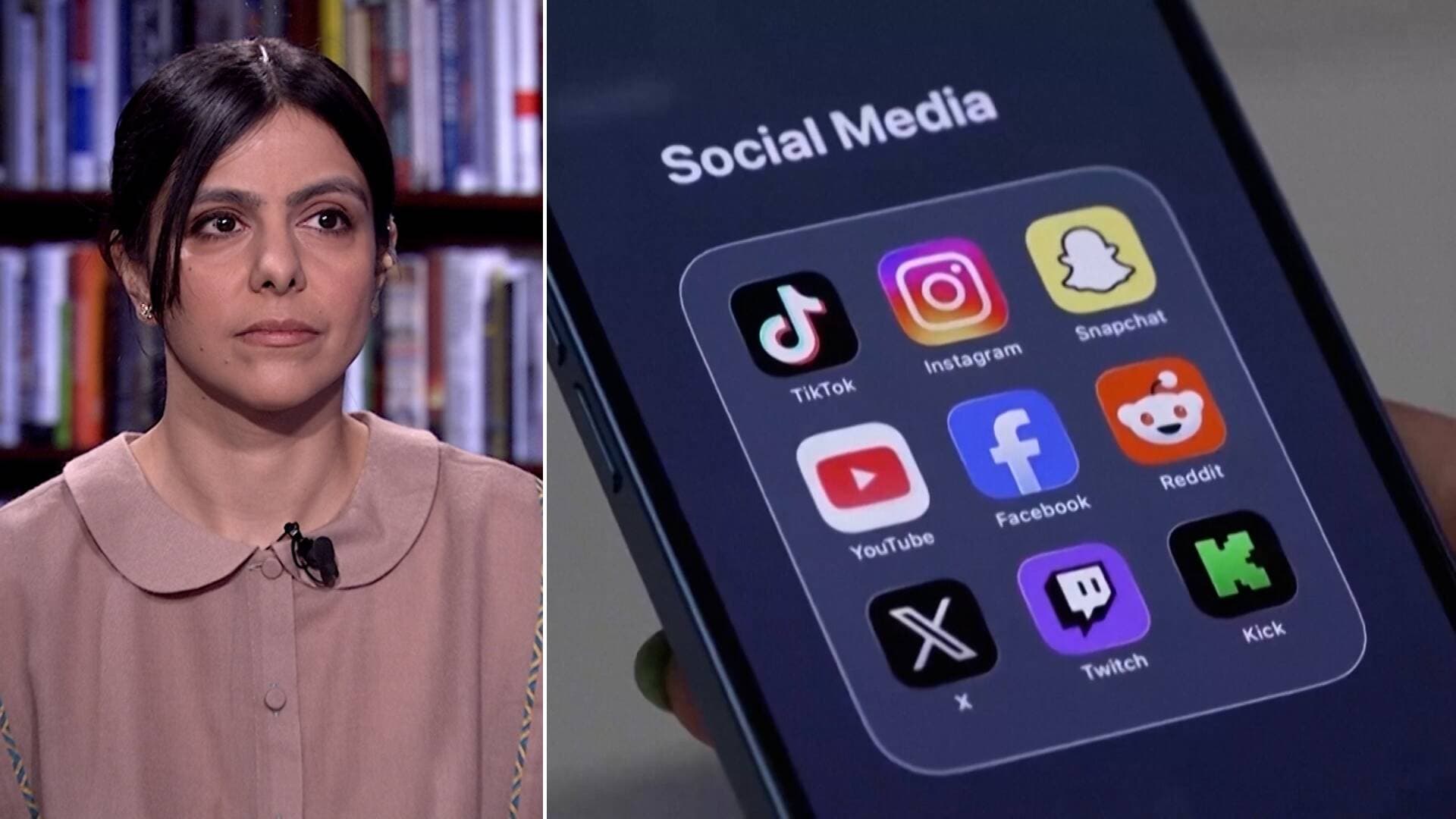
Meta's $17B Child Safety Deal: Reform or Tobacco-Style Loophole?
Intra-Party Split Detected
Some conservative and libertarian-leaning voices (e.g., Washington Times, FIRE) criticize the settlement's age-verification mandates as threats to privacy and free speech, while other right-leaning coverage (Just The News) focuses on antitrust-style concerns that the deal entrenches Meta's market dominance, diverging from a simple pro-regulation or anti-regulation stance.
Left says
- •The settlement is described as the bare minimum given documented harms, including suicides linked to addictive platform design, and shouldn't be treated as a finish line.
- •Fines and litigation only address damage after the fact; real protection requires binding regulation that targets the underlying engagement-driven business model, not just settlements negotiated after years of harm.
- •Relying on tech executives to voluntarily fix problems they profited from is insufficient — these are social and political questions that require government-set rules, especially as AI introduces new risks.
- •The funding directed toward crisis intervention, youth mental health programming, and after-school activities is a tangible, if partial, acknowledgment of the psychological toll on children.
Right says
- •The deal's structure mirrors the 1998 tobacco settlement closely enough to raise concern that it could entrench Meta's market dominance while burdening smaller or future competitors with the same costly compliance requirements.
- •Financial incentives tied to whether TikTok, YouTube, and Snap adopt matching restrictions suggest an industry-wide cartelization of rules rather than a genuine safety fix, echoing how tobacco settlement terms ultimately protected incumbent firms like Philip Morris.
- •Mandated 'enhanced age-assurance measures' amount to a de facto national age-verification system imposed through litigation rather than passed by legislatures, bypassing the usual democratic and constitutional debate over privacy and free speech.
- •Requiring adults who decline age verification to be treated as default teen users raises real concerns about surveillance creep and diminished anonymity for all users, not just minors.
Common Take
High Consensus- Meta will pay up to roughly $17 billion combined to settle claims that its platforms were designed in ways that harmed children's mental health.
- The deal imposes concrete restrictions on minors, including a two-hour daily usage cap, nighttime blackouts, limited notifications during school hours, and options for chronological feeds without visible like counts.
- An additional $5 billion depends on whether TikTok, YouTube, and Snap adopt similar restrictions and payments, structurally linking Meta's full penalty to industry-wide adoption.
- The settlement is widely compared to the 1998 tobacco Master Settlement Agreement, both in scale of impact and in structural design.
The Arguments
Left argues
The settlement is only the bare minimum given documented harms, including suicides linked to addictive design, and real protection requires binding government regulation targeting the underlying engagement-driven business model, not just after-the-fact fines negotiated with the companies that profited from the harm.
Right counters
Litigation-driven settlements like this one effectively legislate national policy — including de facto age-verification mandates — without the democratic debate and constitutional scrutiny that actual legislation would require, which is a poor substitute for genuine regulatory reform even if it produces faster results.
Right argues
The settlement's structure, which reduces Meta's payments if TikTok, YouTube, and Snap don't adopt matching restrictions and penalizes new entrants with over 5 million users, mirrors the 1998 tobacco Master Settlement Agreement closely enough to suggest it could entrench Meta's dominance by imposing costly compliance burdens that smaller competitors and future entrants can't easily absorb.
Left counters
Even if incumbents benefit incidentally, the alternative — no industry-wide standard at all — leaves children exposed on whichever platform lacks restrictions, since kids simply migrate to the least-regulated app; a coordinated baseline is a reasonable trade-off against a hypothetical competitive harm.
Right argues
Requiring 'enhanced age-assurance measures' and treating adults who decline verification as default teen users amounts to a backdoor national age-verification and identity system imposed through a legal settlement rather than passed by elected legislatures, raising serious privacy, anonymity, and First Amendment concerns for all users, not just minors.
Left counters
Legislative gridlock has left children unprotected for years while platforms profited from engagement-driven design; when legislatures fail to act on a documented public health harm, using litigation to force baseline protections is a legitimate stopgap, not an illegitimate end-run.
Left argues
The money directed toward crisis intervention, youth mental health programming, and after-school activities is a tangible, if partial, acknowledgment of the real psychological toll on children and provides concrete resources beyond just design changes.
Right counters
At roughly $17 billion versus tobacco's $200+ billion, and with billions contingent on rival companies also settling, the payout is a small fraction of what was at stake in a jury trial (up to $1.4 trillion) and functions more as a favorable, capped resolution for Meta than a true reckoning with the scale of harm.
Left argues
Relying on tech executives to voluntarily self-correct the harms they profited from is insufficient, especially as AI introduces new and unpredictable risks; these are fundamentally social and political questions requiring government-set rules of the road, not settlements negotiated case by case.
Right counters
Handing the state attorneys general the power to dictate product design and verification systems through settlement terms — without the deliberation of legislatures — risks codifying rules shaped by litigation incentives and industry lobbying (as seen with tobacco) rather than genuine democratic consensus on privacy and speech tradeoffs.
Challenge Questions
These questions target genuine internal contradictions — meant to provoke honest reflection.
Right asks Left
“If binding government regulation is the real solution, does celebrating a litigation-driven settlement that bypasses legislative debate — the same structural shortcut the right criticizes for age verification — undermine the argument that these rules should be democratically set rather than negotiated by attorneys general and a single company?”
Left asks Right
“If the concern is that this settlement entrenches Meta's dominance and burdens smaller competitors like a cartel, what alternative enforcement mechanism would compel industry-wide child safety standards without either penalizing non-compliant rivals or leaving children exposed on whichever platform declines to act?”
Outlier Report
Left Fringe
Groups like Fairplay and some AI Now Institute-aligned advocates (e.g., Amba Kak) push for aggressive structural regulation of the business model itself, viewing settlements as fundamentally inadequate; this represents maybe 15-20% of the left, with most Democrats/progressives simply wanting stronger enforcement rather than radical restructuring.
Right Fringe
Libertarian-leaning figures like Nico Perrino (FIRE) and outlets like Reason emphasize free speech/privacy alarm over age verification as the dominant frame, a view held intensely by maybe 20-25% of the right, while more populist conservatives (e.g., some in Trump-aligned media) are more supportive of tech crackdowns generally and less concerned about libertarian objections.
Noise Assessment
Moderate-to-high: the tobacco-settlement comparison and antitrust/cartelization framing are largely elite media and policy-wonk discourse that most ordinary parents aren't engaging with; the public's actual sentiment is simpler and more focused on 'is this good for my kid's mental health' than on regulatory-capture theory.
Sources (6)
<p><a href="https://www.axios.com/2026/08/18/meta-trial-social-media-children-facebook-instagram" target="_blank">Meta</a> agreed to settle with U.S. states for up to $16.7 billion in a landmark deal over allegations Facebook and Instagram were designed in ways that harm children.</p><ul><li>The company is calling on its <a href="https://www.axios.com/technology/big-tech" target="_blank">peers</a> to sign on to the pact as well, saying it won't work unless they jointly line up behind broad reform.</li></ul><p><strong>Why it matters: </strong>This is <a href="https://www.axios.com/technology/social-media" target="_blank">social</a> media's version of the landmark 1990s tobacco settlement, a settlement that effectively reshapes the industry and the way young Americans experience some of their favorite platforms.</p><hr /><p><strong>Driving the news: </strong>Meta agreed to provide compensation to the states for a variety of public <a href="https://www.axios.com/health" target="_blank">health</a> purposes, including crisis intervention services, after-school programs, outdoor activities and youth mental health programming.</p><ul><li>Meta also agreed to limited under-18 users to 2 hours per day on Facebook and Instagram, block them from accessing the platforms from midnight to 6 a.m., and limit notifications to them during school hours.</li><li>Youth will also be given the option to have a chronological feed, not an algorithmic one — and parents can make it the default option.</li><li>Kids also won't be able to see likes and other reactions on posts.</li></ul><p><strong>The intrigue: </strong>Alongside the settlement, Meta issued an open letter to <a href="https://www.axios.com/technology/tiktok-news" target="_blank">TikTok</a> and YouTube calling on them to join in the deal.</p><ul><li>"We want to ensure teens benefit from this new industry standard, but we cannot do it alone. These protections will only be truly effective if we work with our peers - TikTok and YouTube - to put the same measures in place," the letter says, per a source to Axios.</li><li>"All platforms should empower parents and support teens in these ways because we know that when teens are restricted on one app, they simply move to another. For meaningful progress to happen, we urge our peers to join us."</li></ul><p><strong>About $5 billion</strong> of the Meta settlement kicks in only if YouTube and TikTok also settle with states on two conditions:</p><ol><li>Imposing a one-hour daily usage limit, night restrictions, and age assurance features;</li><li>Paying about $5 billion each. </li></ol><p><strong>By the numbers: </strong>Meta shares edged up slightly after the deal.</p><ul><li>Investors had been bracing for the possibility of a much larger payout if the ongoing trial went to a jury verdict, with penalties ranging up to $1.4 trillion.</li><li>The company said it expects to take a $10 billion charge in the current quarter for the settlement, which was not part of its prior guidance. </li></ul><p><strong>Follow the money: </strong>At roughly $17 billion, the Meta settlement is on par with historic federal civil settlements like the Volkswagen "<a href="https://www.axios.com/2018/04/10/vw-ceo-matthias-muller-herbert-diess" target="_blank">Dieselgate</a>" scandal and the BP <a href="https://www.axios.com/local/new-orleans/2025/04/22/15-years-later-deepwater-horizon-spill-remains-largest-in-history" target="_blank">Deepwater Horizon</a> deal. </p><ul><li>But it's a small fraction of the 1998 tobacco deal, under which states collected more than $200 billion. </li></ul><p><strong>The other side: </strong>"This is not just about money — it's about changing how these platforms operate so they stop exploiting the developing brains of our kids," Indiana Attorney General Todd Rokita said in a statement.</p><ul><li>"Indiana will continue working with other states to secure similar protections from companies like Discord, Roblox, Snapchat, TikTok, and YouTube. Our children deserve better, and we will keep fighting until they get it."</li></ul><p><strong>What's next: </strong>The deal is expected to end the trial with a judge's approval.</p><p><em>This is breaking news. Check back for updates.</em></p>
Prosecutors across 47 states, Washington, D.C., and U.S. territories have announced a groundbreaking legal settlement with technology giant Meta over accusations that the social media company deliberately designed addictive products they knew to be harmful to children. Meta, the parent company of Instagram and Facebook, is set to pay at least $12 billion and up to $17.1 billion in financial penalties, in addition to implementing design changes for underage users. “This is the least they can do to prevent harms that have metastasized and have already caused suicides … [but] we cannot be relying on fines, or certainly even on litigation, after harms have already transpired. What we need are rules of the road. And we need rules that go to the root cause of the business model,” says Amba Kak, the co-executive director of AI Now Institute, who joins us for a wide-ranging discussion on tech policy and regulation. Kak, who advises various governments on AI regulatory guidelines, adds, “The era of looking to tech CEOs or tech luminaries to give us answers for what are fundamentally social and political questions, I think, is gone.”
The federal lawsuit was brought by the attorneys general of 29 U.S. states.
Agreement places restrictions on how Facebook and Instagram can place advertisements in front of teens and children.
Meta, the social media giant, will pay $1 billion and implement new child safety regulations on its platforms as part of a settlement with the state of Texas.
The landmark settlement state attorneys general secured against Meta will require more robust age verification methods, alarming First Amendment advocates who worry it will intrude on users' privacy and lead to dangerous crackdowns on free speech.