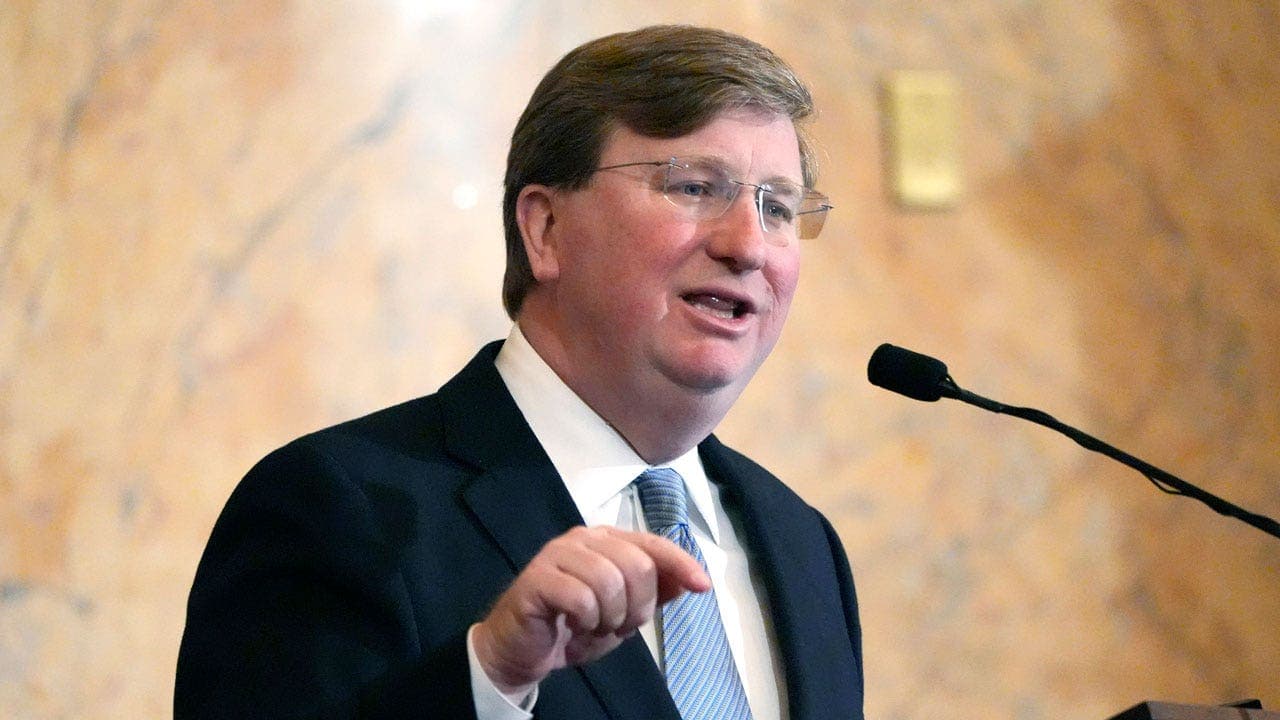
Mississippi governor calls special session to redraw maps after Supreme Court ruling
Left says
- •The current Mississippi Supreme Court district maps dilute Black voting power in violation of federal civil rights protections, according to civil rights organizations including the SPLC and ACLU
- •Reeves is strategically timing this redistricting effort to potentially benefit from a Supreme Court ruling that could weaken Voting Rights Act protections for minority voters
- •Federal courts have already determined that Mississippi's current maps are discriminatory and need to be redrawn to ensure fair representation
- •This represents another attempt by Republican-led states to roll back decades of civil rights progress in electoral representation
Right says
- •The Mississippi Legislature deserves the constitutional right to draw their own electoral maps rather than having courts impose redistricting solutions
- •The Supreme Court's pending Callais decision could establish important new precedents about race-based redistricting that should guide how maps are drawn
- •Reeves is ensuring Mississippi lawmakers have the opportunity to comply with whatever new legal standards emerge from the Supreme Court ruling
- •The governor is following proper constitutional procedures by allowing the legislative branch to handle redistricting once legal clarity is provided
Common Take
High Consensus- The Supreme Court's decision in Louisiana v. Callais will significantly impact how electoral maps are drawn nationwide
- Mississippi's current Supreme Court district maps are subject to ongoing federal litigation
- The special legislative session will occur 21 days after the Supreme Court issues its ruling
- Both state legislatures and federal courts have roles in ensuring electoral maps comply with applicable laws
The Arguments
Right argues
The Mississippi Legislature has the constitutional authority to draw electoral maps, and Governor Reeves is properly ensuring they can exercise this right once the Supreme Court provides legal clarity through the Callais decision.
Left counters
Federal courts have already determined that Mississippi's current maps violate civil rights protections by diluting Black voting power, making immediate remedial action necessary rather than waiting for potential changes to federal law.
Left argues
The timing of this redistricting effort appears strategically designed to benefit from a Supreme Court ruling that could weaken Voting Rights Act protections, potentially rolling back decades of civil rights progress in electoral representation.
Right counters
Governor Reeves is following proper legal procedure by waiting for Supreme Court guidance on redistricting standards rather than proceeding under potentially outdated legal frameworks that may soon be changed.
Right argues
The legislature deserves a fair opportunity to draw maps under clear legal standards, which they haven't had due to the pending Callais decision that could fundamentally change redistricting requirements.
Left counters
Civil rights organizations have already proven in federal court that the current maps discriminate against Black voters, and delaying remedial action perpetuates this constitutional violation.
Left argues
The current Mississippi Supreme Court district maps have been found by federal courts to dilute Black voting power in violation of the Voting Rights Act, requiring immediate correction to ensure fair representation.
Right counters
The proper constitutional process requires allowing the elected legislature to address redistricting first, rather than having courts impose solutions that may not align with emerging Supreme Court precedents.
Challenge Questions
These questions target genuine internal contradictions — meant to provoke honest reflection.
Right asks Left
“If federal courts have already determined the maps are discriminatory, how can you justify allowing continued use of unconstitutional maps while waiting for a Supreme Court decision that might not even directly address Mississippi's specific violations?”
Left asks Right
“If you believe in following proper constitutional procedures and respecting legislative authority, why do you support court-imposed redistricting solutions over allowing the democratically elected legislature to draw maps under whatever legal standards the Supreme Court establishes?”
Outlier Report
Left Fringe
Progressive activists like Stacey Abrams and organizations like Fair Fight who frame any redistricting delay as voter suppression represent about 15-20% of the left, pushing for immediate federal intervention regardless of pending Supreme Court decisions.
Right Fringe
Hard-right figures like Steve Bannon and some America First commentators who celebrate this as completely dismantling minority voting protections represent about 10-15% of the right, going beyond the mainstream conservative position of supporting legislative authority.
Noise Assessment
Moderate noise level - most discourse focuses on legitimate constitutional and procedural questions, though some amplification occurs around racial voting rights themes that don't reflect nuanced public opinion on redistricting processes.
Sources (4)
Mississippi's governor announces a special session to redraw district lines, saying the Supreme Court's ruling in a key case could change electoral maps.
"I am using my constitutional authority to allow the Mississippi Legislature to use their constitutionally recognized right to draw these maps once the new rules of the game are known following Callais," Reeves says
Mississippi Gov. Tate Reeves (R) announced on Friday that he will call a special session to consider new voting maps after the U.S. Supreme Court rules on a landmark redistricting case.   Reeves said state legislators will return to Jackson, Miss., 21 days after the U.S. Supreme Court rules on Louisiana v. Callais to redraw electoral…