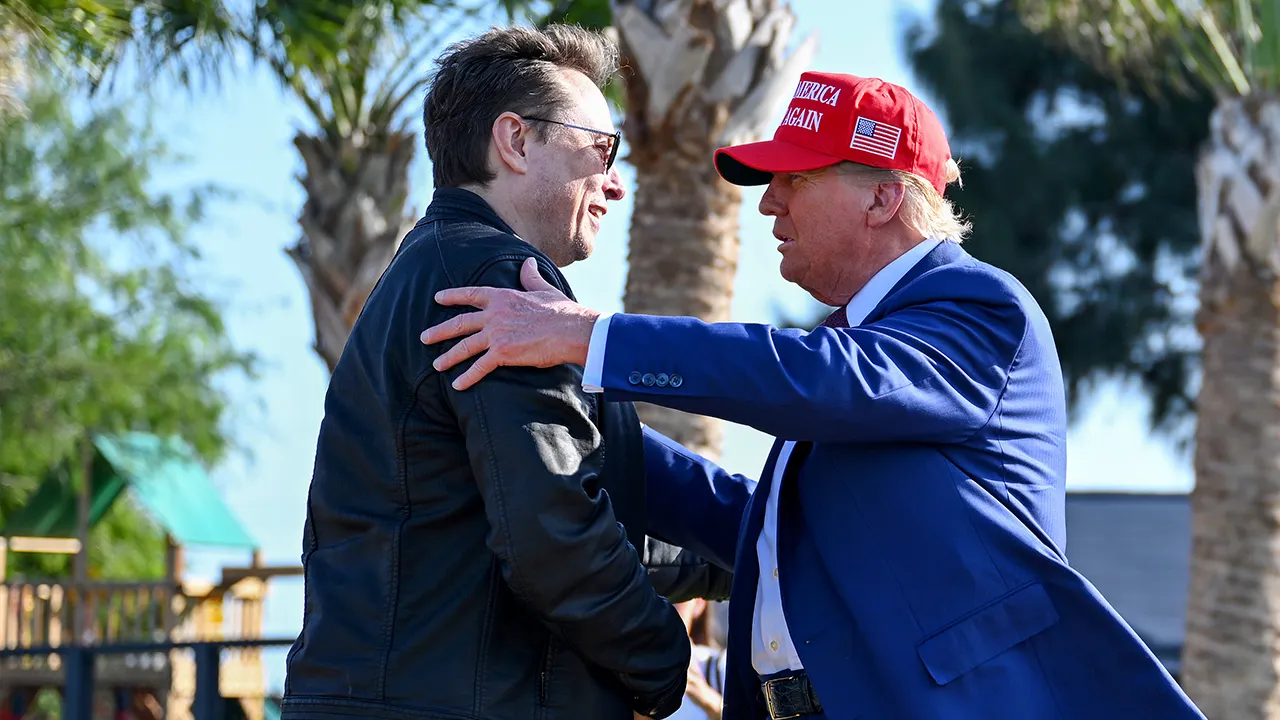
 Elon Musk greets Donald Trump, who wears a red 'America Again' cap
Musk Returns to Trump's Orbit to Shape Future U.S. Warfare
Left says
- •Musk's reinstatement into an official advisory role raises conflict-of-interest concerns given SpaceX's extensive national-security launch contracts, which could grow under recommendations he himself helps shape.
- •Handing long-term military strategy to billionaire executives and a political figure like Gingrich, rather than career defense experts or Congress, risks prioritizing private industry interests over independent oversight.
- •The rapid, informal reconciliation between Trump and Musk after their public feud suggests personal and financial alliances are driving major defense policy decisions.
- •Concentrating forecasting power over decades of weapons development in a small, unelected group sidesteps the normal checks that typically shape Pentagon strategy.
Right says
- •Bringing in proven innovators like Musk and Luckey, who have real track records building cutting-edge technology, injects outside expertise and urgency into Pentagon planning that career bureaucracy often lacks.
- •Project Meridian is framed as forward-looking and apolitical, focused on identifying future warfare domains and technologies rather than writing policy, which limits concerns about undue influence.
- •Hegseth's approach reflects a broader push to modernize the military by leveraging America's private-sector advantage in technology over adversaries who lack comparable innovation ecosystems.
- •Musk's return signals a mended relationship with Trump and reinforces his ongoing willingness to contribute expertise to national priorities despite past disagreements.
Common Take
High Consensus- Elon Musk, Palmer Luckey, and Newt Gingrich will co-lead Project Meridian, a new Pentagon initiative studying the future of warfare.
- The project, announced by Defense Secretary Pete Hegseth at Marine Corps Base Quantico, is tasked with producing findings within 120 days, including a public rollout and a classified report.
- Both Musk's SpaceX and Luckey's Anduril hold significant existing Pentagon contracts relevant to the project's focus areas.
- This marks Musk's first official advisory role in the Trump administration since his departure from DOGE and subsequent public falling-out with Trump.
The Arguments
Left argues
Musk's role on Project Meridian creates a direct conflict of interest, since SpaceX holds major national-security launch contracts that could expand based on recommendations he helps author.
Right counters
The project is explicitly framed as forward-looking analysis rather than contract-writing or policy-setting, and Musk's expertise is precisely why he can identify capability gaps that career officials might miss.
Right argues
Pairing Musk and Luckey's proven records of building cutting-edge defense technology with Pentagon planning injects real-world innovation urgency that slow-moving bureaucracies often lack.
Left counters
Track records in private industry don't substitute for independent oversight, and relying on executives whose companies stand to benefit from the outcomes undermines the credibility of any 'apolitical' framing.
Left argues
Concentrating decades-long military forecasting power in a small, unelected group of billionaires and political insiders bypasses the normal congressional and institutional checks that typically shape defense strategy.
Right counters
Meridian is advisory and time-limited to 120 days with a public rollout and classified report, meaning its findings still flow through existing Pentagon and congressional processes rather than replacing them.
Right argues
Musk's willingness to return to a Trump administration role despite last year's public feud shows a results-oriented focus on national priorities over personal grievances.
Left counters
A sudden, informal reconciliation between two powerful figures raising eyebrows about personal and financial alliances is exactly the kind of back-channel dynamic that should concern anyone focused on transparent governance.
Left argues
The rapid patch-up between Trump and Musk, followed immediately by a prominent defense appointment, suggests personal relationships—not merit-based vetting—are driving who gets access to shape military strategy.
Right counters
Musk's qualifications, from SpaceX's role as the national-security launch backbone to his broader technology leadership, stand independently of his personal relationship with Trump and justify his inclusion on technical merit alone.
Challenge Questions
These questions target genuine internal contradictions — meant to provoke honest reflection.
Right asks Left
“If the concern is unelected billionaires shaping defense strategy, does the left apply the same skepticism to tech executives and outside consultants advising on other government initiatives, or only when the individuals are politically disfavored?”
Left asks Right
“If Project Meridian is genuinely apolitical and limited to technical forecasting, why include a former political figure like Gingrich whose primary expertise is in politics and messaging rather than defense technology?”
Outlier Report
Left Fringe
Figures like Elizabeth Warren and progressive commentators (e.g., writers at The American Prospect) who frame this as outright corruption and demand investigations represent roughly 15-20% of the left, pushing for Musk's removal rather than just oversight concerns.
Right Fringe
MAGA-aligned commentators and accounts like those amplifying RedState's enthusiastic framing (e.g., Eric Daugherty-style pro-Musk boosters) represent an enthusiastic 20-25% of the right that treats Musk's return as an unambiguous patriotic win with zero skepticism about conflicts of interest.
Noise Assessment
High noise ratio — X/Twitter reactions are dominated by partisan tribal framing (either 'corrupt billionaire cabal' or 'patriot hero returns'), while most Americans likely have only passing awareness of Project Meridian specifics, making actual informed public opinion thinner than the online discourse volume suggests.
Sources (6)
<p>SpaceX CEO Elon <a href="https://www.axios.com/business/elon-musk" target="_blank">Musk</a>, Anduril Industries founder <a href="https://www.axios.com/2026/03/16/axios-show-palmer-luckey-anduril-ai" target="_blank">Palmer Luckey</a> and former House Speaker <a href="https://www.axios.com/2018/10/25/newt-gingrich-news-media-earned-enemy-of-the-people" target="_blank">Newt Gingrich</a> will lead a Pentagon study of the future of warfare dubbed "Project Meridian," Defense Secretary Pete Hegseth announced Wednesday.</p><p><strong>Why it matters: </strong>It's Musk's first official role advising the Trump administration since his <a href="https://www.axios.com/2025/06/05/trump-musk-bromance-dispute" target="_blank">very public feud</a> last year with President <a href="https://www.axios.com/politics-policy/donald-trump" target="_blank">Trump </a>after departing DOGE. He has since reconciled with Trump.</p><hr /><p><strong>Driving the news: </strong>Hegseth unveiled Meridian during <a href="https://www.axios.com/2026/09/30/pete-hegseth-pentagon-media-treason" target="_blank">his second address</a> at Marine Corps Base Quantico, Virginia.</p><ul><li>"We are leveraging a unique source of American advantage, one our adversaries do not have: our innovators, our senior leaders and our technologists — big thinkers and doers who will forecast the creative solution for tomorrow's conflicts," <a href="https://x.com/DeptofWar/status/2105371338114269361?s=20" target="_blank">Hegseth said</a>.</li><li>Meridian, he added, is not meant to produce new policy documents. Instead, it will examine "the domains we must conquer, and capabilities we must master."</li><li>"Their work will be focused on discovering, developing and fielding the <a href="https://www.axios.com/2024/11/13/trump-pentagon-defense-transformation" target="_blank">weapons and systems</a> that our children and our grandchildren will need in their lifetimes."</li></ul><p><strong>Zoom in: </strong>Pentagon technology chief Emil Michael will help facilitate the project.</p><ul><li>Michael, speaking to reporters <a href="https://www.axios.com/2025/12/10/emil-michael-defense-private-capital-pentagon" target="_blank">in December</a> about America's industrial base, said he would like to see "five more Andurils and Palantirs and SpaceXs" flourish.</li></ul><p><strong>What they're saying: </strong>"Americans have always been at our best when we bring our smartest scientists, engineers and technologists together to solve the hardest problems in national security," Luckey told Axios.</p><ul><li>"Together, we will not only study the wars being fought today but also think seriously about the wars we cannot afford to fight in 2030, 2050, and 2100 — and what America needs to build now to prevent them."</li></ul><p><strong>Follow the money: </strong>Musk's and Luckey's respective companies have big Pentagon contracts. </p><ul><li>SpaceX serves as America's national-security launch backbone, while Anduril furnishes jammers, interceptors, rocket motors and robo-wingmen.</li></ul><p><strong>What's next: </strong>The Meridian leadership was expected to meet for the first time on Wednesday. Final findings are expected in 120 days, Hegseth said.</p><ul><li>A public rollout is planned, along with a classified report.</li></ul><p><strong>Go deeper: </strong><a href="https://www.axios.com/2025/09/30/hegseth-quantico-military-changes-woke" target="_blank">Hegseth to generals: Embrace MAGA military or quit</a></p>
Elon Musk will co-lead Project Meridian with Palmer Luckey and Newt Gingrich to map future warfare domains and military technologies for the Pentagon.
Secretary of War Pete Hegseth announced Wednesday that Elon Musk, Anduril Industries founder Palmer Luckey, and former House Speaker Newt Gingrich will co-lead a Pentagon initiative to study the future of warfare and "forecast the solutions to tomorrow's conflicts."
Hegseth’s Revamped Military: Drone Command, New Base and a New Musk Role
Defense Secretary Pete Hegseth on Wednesday announced that SpaceXAI CEO Elon Musk, Anduril co-founder Palmer Luckey and former Speaker Newt Gingrich (R-Ga.) will lead a new Pentagon effort to study the future of warfare, dubbed “Project Meridian.” The Pentagon chief said the project is meant to harness America’s innovators, senior leaders and technologists to look…