NATO allies reject Trump's call for help in Strait of Hormuz
Left says
- •Trump launched this war without consulting allies and now expects them to clean up the mess he created
- •European leaders are rightfully skeptical of joining a conflict they had no voice in starting
- •Trump's hostile rhetoric toward NATO allies over the past year has damaged relationships and made cooperation more difficult
- •The president's erratic decision-making based on 'gut feelings' undermines international confidence in U.S. leadership
Right says
- •NATO allies are failing to support America despite decades of U.S. protection and financial commitment to their security
- •The operation against Iran serves global interests by preventing nuclear weapons development and dismantling terror networks
- •America has the military capability to secure the Strait of Hormuz independently without needing reluctant allies
- •European reluctance exposes NATO as a one-way relationship where America provides security but receives little support in return
Common Take
High Consensus- The Strait of Hormuz blockade is causing significant economic disruption with oil prices rising to around $100 per barrel
- About 20% of the world's oil travels through this critical waterway, making its closure a global concern
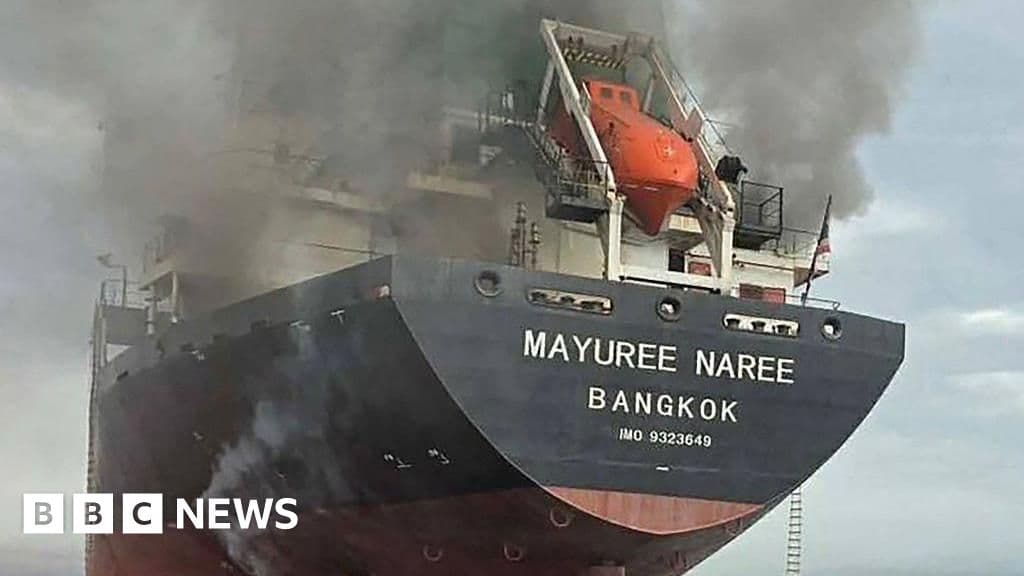
- Multiple commercial cargo ships have been hit by projectiles during the conflict, with at least one fatality reported
- The conflict has been ongoing for over two weeks with reverberations across the global economy
The Arguments
Left argues
Trump launched this military operation without meaningful consultation with NATO allies, then expects them to risk their forces and resources to resolve a crisis he unilaterally created. His year of hostile rhetoric, tariffs, and threats toward these same allies has severely damaged the trust and cooperation necessary for effective coalition building.
Right counters
The operation serves vital global interests by preventing Iran from acquiring nuclear weapons and dismantling terror networks that threaten international security. America has carried the burden of protecting these allies for decades through massive defense spending, yet they refuse to contribute when their own energy security is at stake.
Right argues
NATO has proven to be a fundamentally one-sided relationship where America provides hundreds of billions in security guarantees but receives minimal support when facing genuine threats. The U.S. has the military capability to secure the Strait of Hormuz independently, making reluctant allies irrelevant to achieving strategic objectives.
Left counters
Effective international coalitions require consultation and shared decision-making from the outset, not demands for support after unilateral action. European leaders reasonably question committing military resources to a conflict where they had no voice in the initial decision to engage.
Left argues
Trump's decision-making based on 'gut feelings' rather than comprehensive strategic planning undermines international confidence in U.S. leadership. European leaders are justifiably skeptical of joining a military operation that appears driven by personal instinct rather than careful diplomatic and military analysis.
Right counters
Iran's support for terrorism, pursuit of nuclear weapons, and destabilization of the region created an urgent threat that required decisive action. The blockade of the Strait of Hormuz directly threatens global energy supplies that European economies depend on, making their reluctance to act against their own interests.
Right argues
The Strait of Hormuz carries 20% of the world's oil, making its security a global imperative that transcends national boundaries. European allies who benefit from stable energy markets but refuse to contribute to securing this vital waterway expose their willingness to free-ride on American military power.
Left counters
Military coalitions built on coercion and resentment rather than genuine partnership are inherently unstable and less effective. Trump's public attacks on allies for not joining his operation further damages the diplomatic relationships necessary for long-term regional stability.
Challenge Questions
These questions target genuine internal contradictions — meant to provoke honest reflection.
Right asks Left
“If European allies genuinely believe the Strait of Hormuz blockade threatens their energy security and economic interests, how can they justify refusing to contribute even minimal military assets like minesweepers while expecting America to bear the full cost and risk of reopening this vital shipping lane?”
Left asks Right
“If NATO is truly a mutual defense alliance based on shared values and collective security, how does America's massive financial and military investment in European defense not create any reciprocal obligation for allies to support U.S. operations that serve broader international security interests?”
Outlier Report
Left Fringe
Anti-war progressives like potential Squad members who might call for immediate ceasefire rather than just refusing coalition participation represent roughly 15% of the left, taking a more absolutist anti-intervention stance than mainstream Democratic reluctance.
Right Fringe
Isolationist America First figures who might actually support NATO allies' refusal to join foreign entanglements represent approximately 20% of the right, contradicting Trump's expectation of allied support despite their general opposition to overseas commitments.
Noise Assessment
Moderate noise level - Trump's Truth Social posts and defensive rhetoric amplify the story beyond typical diplomatic disagreements, but the underlying policy positions reflect genuine strategic differences rather than pure performance.
Sources (10)
<p>Most NATO members have informed the U.S. that they don't want to get involved in the Strait of Hormuz coalition the Trump administration is trying to put together, President Trump said on Tuesday. </p><p><strong>Why it matters:</strong> The strait closure has become the main crisis in the war for the White House. As long as the <a href="https://www.axios.com/2026/03/13/iran-war-mines-strait-of-hormuz" target="_blank">Iranian blockade</a> holds and Gulf <a href="https://www.axios.com/energy-climate/oil-companies" target="_blank">oil</a> remains trapped, Trump can't end the war and declare victory even if he wants to.</p><hr /><ul><li>While the U.K. has circulated a plan among potential coalition members, responses from several other countries have ranged from skepticism to "hell no," according to sources familiar with the diplomatic talks.</li></ul><p><strong>What he's saying: </strong>"I am not surprised by their action, however, because I always considered NATO, where we spend Hundreds of Billions of Dollars per year protecting these same Countries, to be a one way street — We will protect them, but they will do nothing for us, in particular, in a time of need," Trump wrote on Truth Social. </p><ul><li>He then claimed that because the Iranian military has been decimated by the U.S., he no longer needs or wants assistance from NATO countries. He also criticized Japan, Australia and South Korea for not joining the coalition. </li><li>"WE DO NOT NEED THE HELP OF ANYONE!" he wrote. </li></ul><p><strong>State of play:</strong> The White House is trying both military and diplomatic means to unlock the crisis.</p><ul><li>The U.S. military is conducting strikes on Iranian anti-ship positions along the shores of the Strait of Hormuz to decimate <a href="https://www.axios.com/2026/03/17/strait-hormuz-iran-blockade-oil-trump-coalition" target="_blank">Iran's</a> ability to attack oil tankers. </li><li>Meanwhile, the White House and State Department are <a href="https://www.axios.com/2026/03/14/trump-iran-war-ships-strait-hormuz" target="_blank">trying to build a coalition</a> of countries to provide ships, other military assets and political backing for a mission to escort ships or otherwise provide a secure route for shipping in and out of the Gulf.</li></ul><p><strong>Zoom in:</strong> A source with knowledge said the <a href="https://www.axios.com/politics-policy/donald-trump" target="_blank">Trump</a> administration wanted the U.K., France, Germany, Italy, Australia, Canada, the Gulf countries and Jordan to be part of the coalition. The U.S. also approached Japan and South Korea.</p><ul><li>But the leaders of countries including Germany, Italy and Japan have already ruled out sending naval vessels.</li><li>Trump spoke on Sunday with U.K. Prime Minister Keir Starmer and French President Emmanuel Macron about joining the coalition. </li><li>Trump said Macron was "8 out of 10" in terms of willingness to help. He also said the U.K. would join. </li><li>But a source with knowledge said that while Starmer was forward-leaning, Macron was noncommittal. "Macron didn't give a final no, but at the moment it's a no," a second source said. </li></ul><p><strong>Behind the scenes: </strong>The U.K. has drafted a plan for how a multinational task force could be constructed and shared it with the U.S. and several other countries, two sources said.</p><ul><li>But the U.K. draft hasn't been shared with all the countries Trump has asked to join, and any consensus about how the coalition would work appears a ways off.</li><li>"It's a mess. A lot of people are confused," a European diplomat said.</li><li>European foreign policy chief Kaja Kallas said after a meeting with foreign ministers of the 27 member states that "there is no appetite" in the EU to join Trump's Hormuz coalition. "This is not Europe's war," she said.</li></ul><p><strong>Driving the news:</strong> Trump told reporters on Monday that he was "greatly disappointed" in some countries that were skeptical of partnering with the U.S. to open the strait.</p><ul><li>On Tuesday, Trump called the Hormuz coalition "a test" for NATO countries and claimed they made a "foolish mistake" by not joining. "We are going to remember."</li><li>He stressed that instead the U.S. will use the help of Israel and Gulf countries to secure the strait.</li><li>"It won't be too long," Trump said, when asked when he thinks the strait will be reopened. </li></ul><p><strong>Between the lines:</strong> Trump has fueled tensions with many of the same allies he's now calling upon over a year of tariffs, insults and threats.</p><ul><li>Many U.S. allies were also skeptical of Trump's case for war with Iran.</li><li>But they will face steep consequences if oil and other goods like semiconductors can't traverse the strait. </li></ul><p><strong>Go deeper... </strong><a href="https://www.axios.com/2026/03/17/witkoff-to-brief-small-bipartisan-group-of-senators-tuesday" target="_blank">Scoop: Witkoff to brief bipartisan group of senators Tuesday on Iran</a></p><p><em>This is a developing story and has been updated throughout.</em></p>
US allies have either pushed back or remained cautious on Trump's initial request to send ships to the crucial oil route.
President Trump said the United States does not need help with securing the Strait of Hormuz amid the conflict with Iran but also said NATO allies "don't want to help us."
Trump says U.S. does not need help with Strait of Hormuz
Trump calls on nations to help secure Strait of Hormuz
President Donald Trump said Tuesday NATO and most other allies have rejected his calls to help secure the Strait of Hormuz, complaining that he has been unable to rally support behind his war of choice in Iran that he insists he's conducting for the good of the world, even...
French President Emmanuel Macron said his country “will never take part” in operations to open the Strait of Hormuz as President Trump pushes for other countries to do so amid the conflict with Iran. “We are not party to the conflict and therefore France will never take part in operations to open or liberate the…
President Trump tore into NATO allies on Tuesday over reluctance from “most” of them to get involved in the U.S.-Israeli military operation in Iran. “The United States has been informed by most of our NATO ‘Allies’ that they don’t want to get involved with our Military Operation against the Terrorist Regime of Iran, in the…
Trump has expressed frustration over a lack of military assistance from allies, but European leaders are reluctant to join a conflict he started without consulting them.
President Trump said Tuesday he doesn't need NATO allies' help in breaking Iran's blockade of the Strait of Hormuz, though he complained about their lack of initial enthusiasm for assisting America.