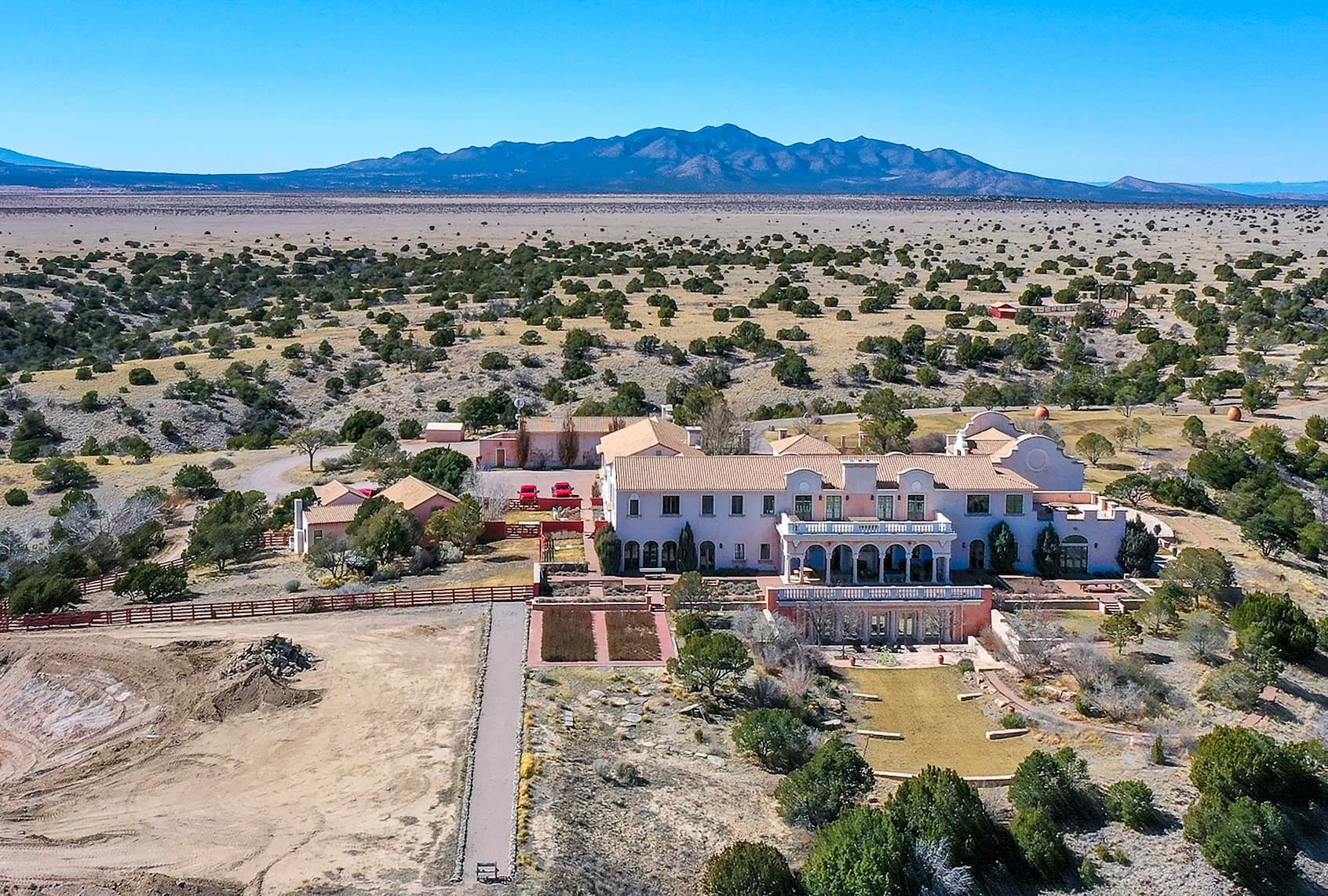
 Aerial view of Jeffrey Epstein's Zorro Ranch in New Mexico, central to the state's probe.
New Mexico Sues DOJ, Accuses Trump Officials of Hiding Epstein Files
Left says
- •Survivors of Epstein's abuse at Zorro Ranch have waited years for accountability, and federal foot-dragging compounds their trauma by denying them a path to justice.
- •The DOJ's selective cooperation raises suspicion that the Trump administration is protecting powerful associates named in the files rather than genuinely safeguarding victim privacy.
- •New Mexico represents one of the last jurisdictions where Epstein's co-conspirators could still face legal consequences, making the DOJ's obstruction especially consequential.
- •The administration's public claims of cooperation contradict what Torrez describes as a pattern of stonewalling, suggesting a deliberate effort to mislead Congress and the public.
Right says
- •The Justice Department is bound by federal court orders that restrict disclosure of victim-identifying information, and it cannot simply hand over unredacted files without a lawful basis.
- •Protecting the privacy and safety of Epstein's survivors is a legitimate priority that must be balanced against a state's investigative demands.
- •The DOJ maintains it remains willing to assist New Mexico's investigation within the bounds of the law, suggesting this is a legal disagreement over process rather than a cover-up.
- •Filing a lawsuit rather than continuing negotiations may reflect political theater as much as a genuine breakdown in cooperation.
Common Take
High Consensus- Jeffrey Epstein owned the 10,000-acre Zorro Ranch near Santa Fe, and it appears extensively in released Epstein files.
- New Mexico Attorney General Raúl Torrez reopened a state investigation into alleged abuse at the ranch earlier this year.
- The DOJ acknowledges New Mexico's requests for records and says it remains available to assist within legal limits.
- Survivors have given testimony describing sexual and physical abuse at the ranch, and all parties agree victims deserve protection and justice.
The Arguments
Left argues
New Mexico may be one of the last jurisdictions with an opportunity to hold Epstein's co-conspirators accountable, so DOJ's refusal to share files forecloses a real avenue to justice for survivors who have already waited years.
Right counters
DOJ says it remains willing to assist within the bounds of binding federal court orders, and a state's investigative urgency does not override legal restrictions on disclosing victim-identifying information.
Right argues
Federal court orders explicitly bar disclosing victim-identifying information 'carte blanche,' and DOJ cannot lawfully hand over unredacted files just because a state attorney general asserts he needs them.
Left counters
Torrez says his office has already provided ample legal justification for the specific disclosures sought, and ten unanswered requests over months suggests process obstruction rather than genuine legal constraint.
Left argues
The gap between DOJ's public claims of cooperation and Torrez's account of ten unmet requests suggests the administration is misleading Congress and the public about the true state of its engagement.
Right counters
Disagreements over the scope and pace of information-sharing don't automatically mean anyone was lying; DOJ may reasonably view partial cooperation within legal limits as cooperation, even if New Mexico wanted more.
Right argues
Filing a lawsuit — rather than continuing negotiations or seeking a narrower court order for specific records — may reflect a political statement timed to a high-profile 'truth commission' report release as much as a genuine breakdown in cooperation.
Left counters
Torrez set a public deadline of July 31 that passed without DOJ action, meaning the lawsuit followed months of unanswered requests and a clear ultimatum rather than being an impulsive first resort.
Left argues
Protecting victim privacy is being used as a shield by an administration whose selective disclosures raise suspicion it is protecting powerful associates named in the files rather than the survivors themselves.
Right counters
There is no evidence presented that specific powerful individuals are being shielded; the stated legal basis is a court order restricting victim-identifying disclosures, which is a a distinct and legitimate concern separate from protecting any particular associate.
Challenge Questions
These questions target genuine internal contradictions — meant to provoke honest reflection.
Right asks Left
“If DOJ's stated reason for withholding some records is a binding federal court order protecting victim-identifying information, what specific evidence beyond suspicion supports the claim that the real motive is shielding powerful associates rather than complying with that order?”
Left asks Right
“If DOJ genuinely wants to assist New Mexico's investigation within legal bounds, why did it let a publicly stated July 31 deadline pass without responding to ten separate requests, rather than proposing a narrower, lawful disclosure process before the lawsuit was filed?”
Outlier Report
Left Fringe
Progressive voices and outlets like Salon and some social media accounts assert with near-certainty that DOJ is deliberately shielding powerful named associates, treating this as confirmed cover-up rather than legal dispute; roughly 20-25% of the left holds this more absolutist view.
Right Fringe
Some Trump-aligned defenders and DOJ spokespeople treat this purely as a technical legal disagreement over victim privacy and dismiss any cover-up implication entirely; roughly 25-30% of the right holds this framing, though many MAGA-base voters actually side with transparency advocates on Epstein specifically.
Noise Assessment
High — Epstein-related stories generate intense, performative outrage on social media across the spectrum, often amplified by influencers and conspiracy-adjacent accounts far beyond what the underlying legal dispute (over document redaction procedures) would normally warrant.
Sources (11)
The New Mexico AG has sued the DOJ to force the release of unredacted Epstein files he says are necessary to investigate Jeffrey Epstein's alleged crimes in his state.
Investigations into alleged crimes that took place at Jeffrey Epstein's former ranch in New Mexico appear to be ramping up, adding even more pressure to the US Justice Department and its acting attorney general, Todd Blanche, over how they handled matters related to the late child sex offender.
New Mexico sued the U.S. Justice Department on Wednesday, accusing federal officials of stonewalling the state's criminal investigation into the late Jeffrey Epstein and breaking a years-old promise to share evidence about alleged crimes at his Zorro Ranch.
New Mexico on Tuesday filed a lawsuit against the Department of Justice and acting Attorney General Todd Blanche, stymying the state's investigation into the late convicted sex offender Jeffrey Epstein.
New Mexico is suing the Trump administration for access to files related to Jeffrey Epstein as it investigates the convicted sex offender's Zorro Ranch property. New Mexico Attorney General Raúl Torrez joins "The Takeout" to discuss.
The lawsuit was filed the day New Mexico is releasing a report of its preliminary findings from an ongoing probe into Epstein and his ranch in Stanley.
The state of New Mexico sued the Department of Justice and Acting Attorney General Todd Blanche on Wednesday, saying the federal government blocked the state's ability to investigate the sex crimes of financier Jeffrey Epstein at a ranch there.
The lawsuit accuses Todd Blanche and the DOJ of perpetuating “that disgrace” of failing to investigate Epstein
<p>Filing by attorney general Raúl Torrez comes after DoJ appears to have ignored deadline for key Epstein ranch files</p><p>New Mexico filed a lawsuit against the US Department of Justice and the acting attorney general, Todd Blanche, on Wednesday for “stonewalling” its criminal investigation into the activities of the late financier and sex offender Jeffrey Epstein at a remote ranch in the state.</p><p>Raúl Torrez, the New Mexico attorney general, had said he was mulling the possibility of legal action if the justice department did not share with him by 31 July information about the alleged <a href="https://www.theguardian.com/us-news/2026/feb/08/epstein-files-new-mexico-ranch">historical abuse</a> of girls and young women at Epstein’s Zorro ranch about 30 miles south of Santa Fe.</p> <a href="https://www.theguardian.com/us-news/2026/aug/05/new-mexico-sues-doj-epstein-investigation">Continue reading...</a>
New Mexico is suing the Department of Justice (DOJ) for access to a set of unredacted Jeffrey Epstein records, alleging the agency is withholding documents that could aid the state’s investigation into the convicted sex offender’s alleged crimes at a remote ranch outside Santa Fe. The 40-page complaint, which also names acting Attorney General Todd…
New Mexico's attorney general sued the U.S. Department of Justice on Wednesday, accusing it of blocking the state from investigating sex crimes at Jeffrey Epstein's sprawling ranch near Santa Fe.