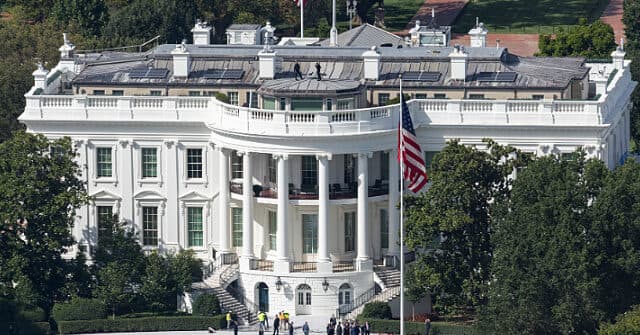
New White House Helipad Debuts as Networks Boycott Coverage
Left says
- •The timing draws attention because the helipad unveiling coincided with the administration barring CNN, Politico, and MS NOW from White House access, raising concerns about retaliation against critical press coverage.
- •The five major networks' decision to boycott video coverage of the ribbon-cutting reflects a broader First Amendment dispute over press access rather than indifference to the helipad itself.
- •Questions remain about whether a $5-6 million infrastructure project funded through a defense contractor represents an appropriate use of resources amid other priorities.
- •The lack of clear audio or press access to the president's remarks during a public event on government grounds underscores concerns about transparency.
Right says
- •The helipad solves a genuine operational problem, since the heavier VH-92A Patriot helicopter was scorching and tearing up the South Lawn turf, a limitation acknowledged even during the prior administration.
- •Reducing the president's ground transfer time and exposure on an open lawn reflects standard security practice rather than extravagance.
- •The project was funded by Sikorsky/Lockheed Martin rather than taxpayers, and follows a long line of White House infrastructure upgrades pursued by presidents of both parties.
- •The media's decision to boycott coverage and focus on press-access grievances rather than reporting a straightforward infrastructure milestone shows misplaced priorities.
Common Take
High Consensus- The VH-92A Patriot helicopter's rotor wash and heat had been damaging the South Lawn grass, a problem officials wanted to fix.
- The new granite helipad cost between $5-6 million and was funded by Lockheed Martin/Sikorsky rather than taxpayers.
- Monday's flight marked the first operational use of both the new helipad and the VH-92A for presidential transport from the White House.
- The event occurred alongside the administration's decision to revoke White House access for CNN, Politico, and MS NOW, prompting five major networks to boycott video coverage of the ceremony.
The Arguments
Left argues
The helipad unveiling occurred just days after the administration revoked press credentials for CNN, Politico, and MS NOW, making the timing and lack of clear audio for a public presidential event on government grounds look like retaliation against critical coverage.
Right counters
The credential dispute and the helipad ribbon-cutting are separate events that merely happened to overlap in the news cycle; the networks chose to boycott coverage entirely rather than send crews, so any absence of clear audio reflects their own protest decision, not administration suppression.
Right argues
The VH-92A Patriot's rotor wash and engine heat were documented to tear up and scorch the South Lawn turf even under the prior administration, so the granite helipad addresses a real, bipartisan-acknowledged operational problem rather than serving as a vanity project.
Left counters
Acknowledging a maintenance issue doesn't require a $5-6 million granite installation featuring the presidential seal; a simpler reinforced landing surface could have solved the turf damage without the ornamental scale and cost.
Right argues
The project was funded by Sikorsky/Lockheed Martin rather than taxpayer dollars, and follows a long tradition of presidents modifying White House infrastructure to meet evolving security and technological needs.
Left counters
A defense contractor voluntarily funding a $5-6 million addition to the White House grounds raises its own questions about influence and access, even if no direct taxpayer money changed hands.
Left argues
The five major networks' boycott reflects a legitimate institutional stand on press freedom, since covering a ribbon-cutting normally while access to other outlets is being punitively restricted would normalize a troubling precedent for retaliatory credentialing.
Right counters
Choosing to withhold coverage of a genuinely newsworthy infrastructure and security milestone shows the networks prioritizing their own institutional grievance over informing the public, which is itself a disservice to transparency.
Right argues
Reducing the president's ground transfer time and time spent exposed on an open lawn is a standard, apolitical security rationale that any administration would pursue given the newer helicopter's capabilities.
Left counters
Security rationales have been used to justify all manner of expensive discretionary projects, and the ornate granite-and-seal design suggests aesthetic and image considerations played as large a role as pure security logic.
Challenge Questions
These questions target genuine internal contradictions — meant to provoke honest reflection.
Right asks Left
“If the networks believe covering the ribbon-cutting would normalize retaliatory press restrictions, why did they cover other administration events during the same access dispute, and doesn't skipping a genuinely newsworthy infrastructure story undercut their own claim to be acting in the public's interest?”
Left asks Right
“If the helipad is purely a practical, security-driven fix, why does its design prominently feature the presidential seal in black-and-white granite rather than a purely functional surface, and why publicly credit a specific defense contractor CEO by name in a celebratory social media post?”
Outlier Report
Left Fringe
Figures like Brian Stelter or press freedom advocacy groups (e.g., Reporters Without Borders commentary) who frame this as an authoritarian escalation akin to state media control represent perhaps 10-15% of the left, most of whom see it as a serious but not existential concern.
Right Fringe
Commentators who dismiss press access concerns entirely as illegitimate grievance-mongering (e.g., some RedState/Townhall opinion writers) represent maybe 15-20% of the right; most conservatives likely have mixed feelings about banning outlets even while disliking their coverage.
Noise Assessment
High noise ratio - the story is largely a niche media-industry controversy amplified by journalists and political commentators on X/Twitter; the general public likely has low awareness of and engagement with either the helipad cost or the network boycott specifics.
Sources (6)
<p>President Donald Trump made use of the newly installed White House helipad for the first time on Monday after a ribbon-cutting ceremony on the South Lawn.</p> <p>The post <a href="https://www.breitbart.com/politics/2026/09/21/trump-white-house-helipad-first-time-ribbon-cutting/" rel="nofollow">Trump Uses White House Helipad for First Time After Ribbon Cutting</a> appeared first on <a href="https://www.breitbart.com" rel="nofollow">Breitbart</a>.</p>
Trump used the new helipad to take off in Marine One, which is the call sign for a vehicle transporting the U.S. president, and travel to the assembly.
<p>The event also marked the first time the VH-92 carried out its core mission of transporting the president to and from the White House grounds.</p> <p>The post <a href="https://www.twz.com/air/marine-one-vh-92a-makes-first-operational-use-of-new-white-house-helipad">Marine One VH-92A Makes First Operational Use Of New White House Helipad</a> appeared first on <a href="https://www.twz.com">TWZ</a>.</p>
President Donald Trump showed off his new White House helicopter landing pad on Monday, attempting to brush aside a First Amendment firestorm even as major television networks kept their cameras away in protest of CNN being banned from the grounds.