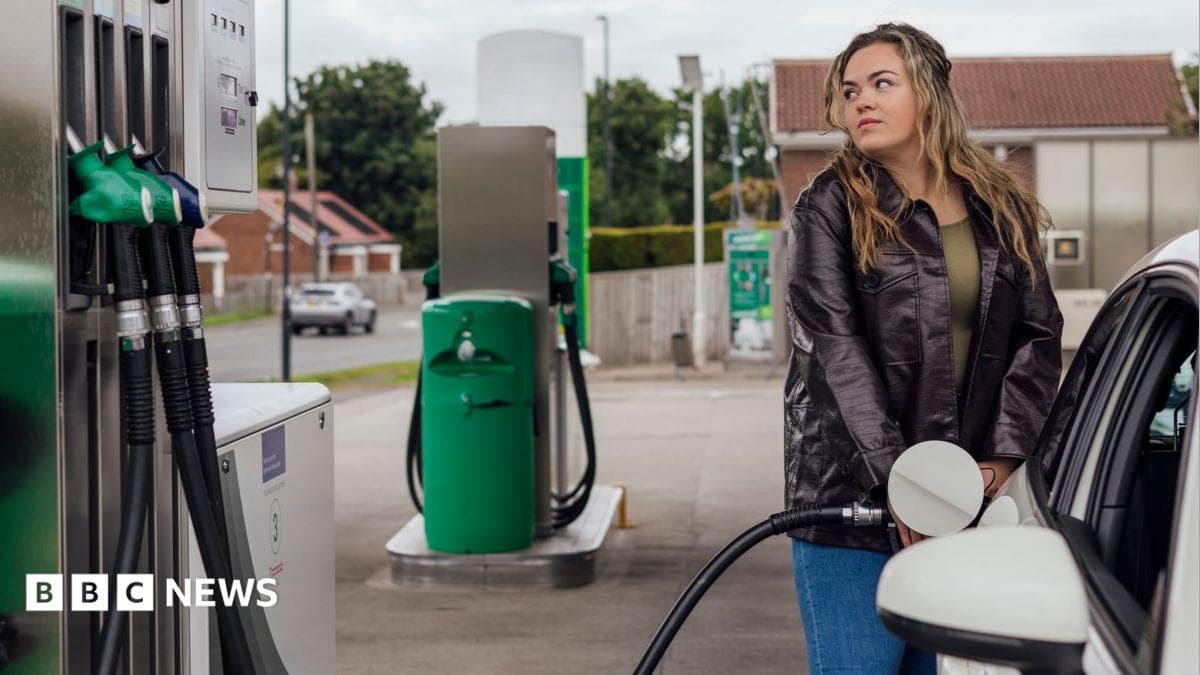
Oil Tops $100 a Barrel as US-Iran War Escalates
Left says
- •Rising energy costs from the war are fueling inflation and put upward pressure on interest rates, deepening financial strain on working households already stretched thin.
- •Escalating tit-for-tat military strikes, including the destruction of tankers and attacks on U.S. assets, illustrate the dangers of an open-ended conflict without a clear diplomatic off-ramp.
- •The Houthi attacks on Saudi cities and reported civilian casualties, including women and children at a prison, highlight the humanitarian toll spreading beyond the direct U.S.-Iran confrontation.
- •Higher gas and diesel prices disproportionately burden lower-income consumers and could complicate central banks' efforts to manage inflation without further rate hikes.
Right says
- •The destruction of Iranian tankers reflects a necessary and proportionate military response to Tehran's attempted attack on a U.S. warship, showing resolve rather than provocation.
- •Rising oil prices ahead of the midterms create political pressure, but the underlying blame lies with Iran's aggression and its Houthi proxies attacking Saudi oil infrastructure and shipping lanes.
- •Energy price spikes underscore the risks of overreliance on Middle Eastern supply routes like the Strait of Hormuz, reinforcing arguments for greater U.S. energy independence.
- •Stability in the Gulf ultimately requires continued firm deterrence against Iran and its allied militias rather than concessions that could be seen as weakness.
Common Take
High Consensus- Brent crude oil surpassed $100 a barrel for the first time since July after the U.S. destroyed five Iranian tankers and Iran retaliated with strikes on U.S. assets.
- Houthi attacks on Saudi oil facilities and cities have contributed to the price spike and broader regional instability.
- Consumers in the UK and U.S. are facing higher gas and diesel prices as a direct result of the conflict.
- Oil prices remain below the $120 peak reached earlier in the war but are well above pre-war levels near $70.
The Arguments
Left argues
Rising oil and gas prices are squeezing working households through higher fuel costs and inflationary pressure, with central banks like the Bank of England already warning of upside inflation risk tied directly to energy prices.
Right counters
The price spike stems from Iranian aggression against a U.S. warship and Houthi attacks on Saudi infrastructure, not from the U.S. response; blaming the war response rather than the instigators obscures who is actually driving the economic pain.
Right argues
The destruction of the five Iranian tankers was a proportionate reprisal after Tehran attempted to strike a U.S. Navy warship, demonstrating necessary deterrence rather than reckless escalation.
Left counters
Calling it 'proportionate' ignores that each round of tit-for-tat strikes has escalated rather than de-escalated the conflict, with Iran responding by targeting U.S. vessels and a base in Jordan, and Houthis expanding attacks on Saudi cities — suggesting deterrence is not working and there's no diplomatic off-ramp in sight.
Left argues
The humanitarian toll is spreading well beyond the direct U.S.-Iran confrontation, as seen in the Houthi allegations of a Saudi strike killing women and children at a prison, illustrating how regional proxy conflicts compound the human cost.
Right counters
The Saudi-Houthi conflict predates and is separate from the U.S.-Iran war, reignited by Houthi territorial aggression; attributing this humanitarian toll to the broader U.S. confrontation with Iran conflates distinct conflicts and lets Houthi aggression off the hook.
Right argues
The crisis exposes the danger of relying on chokepoints like the Strait of Hormuz for a fifth of global oil supply, reinforcing the case for U.S. energy independence so American consumers aren't held hostage to Middle East instability.
Left counters
Energy independence rhetoric doesn't change the fact that oil is priced on a global market — even U.S. crude (WTI) surged alongside Brent, showing that domestic production alone can't insulate American consumers from war-driven price shocks.
Right argues
Stability in the Gulf requires continued firm deterrence against Iran and its proxies rather than concessions that could be perceived as weakness and invite further aggression.
Left counters
Six months of escalating strikes with no diplomatic progress suggest that firm deterrence alone, absent any off-ramp, is prolonging the war and the economic damage rather than resolving it.
Challenge Questions
These questions target genuine internal contradictions — meant to provoke honest reflection.
Right asks Left
“If the strikes on Iranian tankers were a direct response to Tehran's attempted attack on a U.S. warship, why does emphasizing inflation and consumer costs over that provocation not risk shifting blame from the aggressor to the country defending its forces?”
Left asks Right
“If firm deterrence against Iran is the answer to Gulf instability, how do you explain that six months of escalating strikes have produced worsening attacks, higher oil prices, and no diplomatic resolution rather than the stability deterrence is supposed to achieve?”
Outlier Report
Left Fringe
Figures like Rep. Ilhan Omar or commentators such as those at The Intercept who oppose U.S. military involvement entirely and frame this as an unjust war for oil interests represent a small but vocal anti-war fringe, likely 10-15% of the left.
Right Fringe
Commentators like Tucker Carlson or figures aligned with the America First/non-interventionist wing (e.g., some in the Trump-adjacent populist right) who oppose continued military entanglement represent a fringe skeptical of hawkish framing, likely 15-20% of the right, contrasting with mainstream GOP hawkishness seen in figures like Sen. Lindsey Graham or Secretary Rubio.
Noise Assessment
Moderate; cable news and partisan social media amplify hawkish vs. anti-war framing disproportionately, but most Americans' actual sentiment is dominated by simple frustration over gas prices rather than ideological war narratives, meaning much of the polarized discourse is performative relative to broader public concern.
Sources (8)
A litre of unleaded now costs 167.17p which is the biggest weekly increase since April, data shows.
Brent crude oil prices, a benchmark for global trading, climbed on Wednesday.
Brent crude - the global benchmark for prices - rises after the US hit five Iranian tankers on Tuesday
The price of crude oil hit a seven-week high after the U.S. said it blew up five more Iranian oil tankers, triggering retaliation from Tehran.
The average price for a gallon of gas in the U.S. was $4.22 on Wednesday. California drivers were paying the highest, and Indiana drivers were paying the lowest.
The price of oil breached the $100 threshold Wednesday for the first time since July, as new flare-ups in the United States’ war with Iran stoked fresh concern for global energy markets.
The cost of crude has risen 40 percent since the start of the war in Iran, pushing up the price of gasoline, diesel and other refined fuels.
<p>Brent crude up by about 3% after latest fire between US and Iran in Gulf and Houthi attacks on Saudi cities</p><ul><li><p><a href="https://www.theguardian.com/business/live/2026/sep/09/nats-boss-to-meet-uk-transport-secretary-as-second-day-of-flight-chaos-takes-cancelllations-past-1300-business-live">Business live – latest updates</a></p></li></ul><p>The price of oil has risen above $100 a barrel for the first time since July as the escalating conflict in the Middle East threatens further disruption to global supplies.</p><p>Brent crude, the international benchmark for oil prices, rose 3% to more than $100.8 after tensions increased in the Gulf amid the latest tit-for-tat exchange of fire between the US and Iran.</p> <a href="https://www.theguardian.com/business/2026/sep/09/oil-prices-rise-iran-war-brent-crude-inflation-higher-interest-rates">Continue reading...</a>