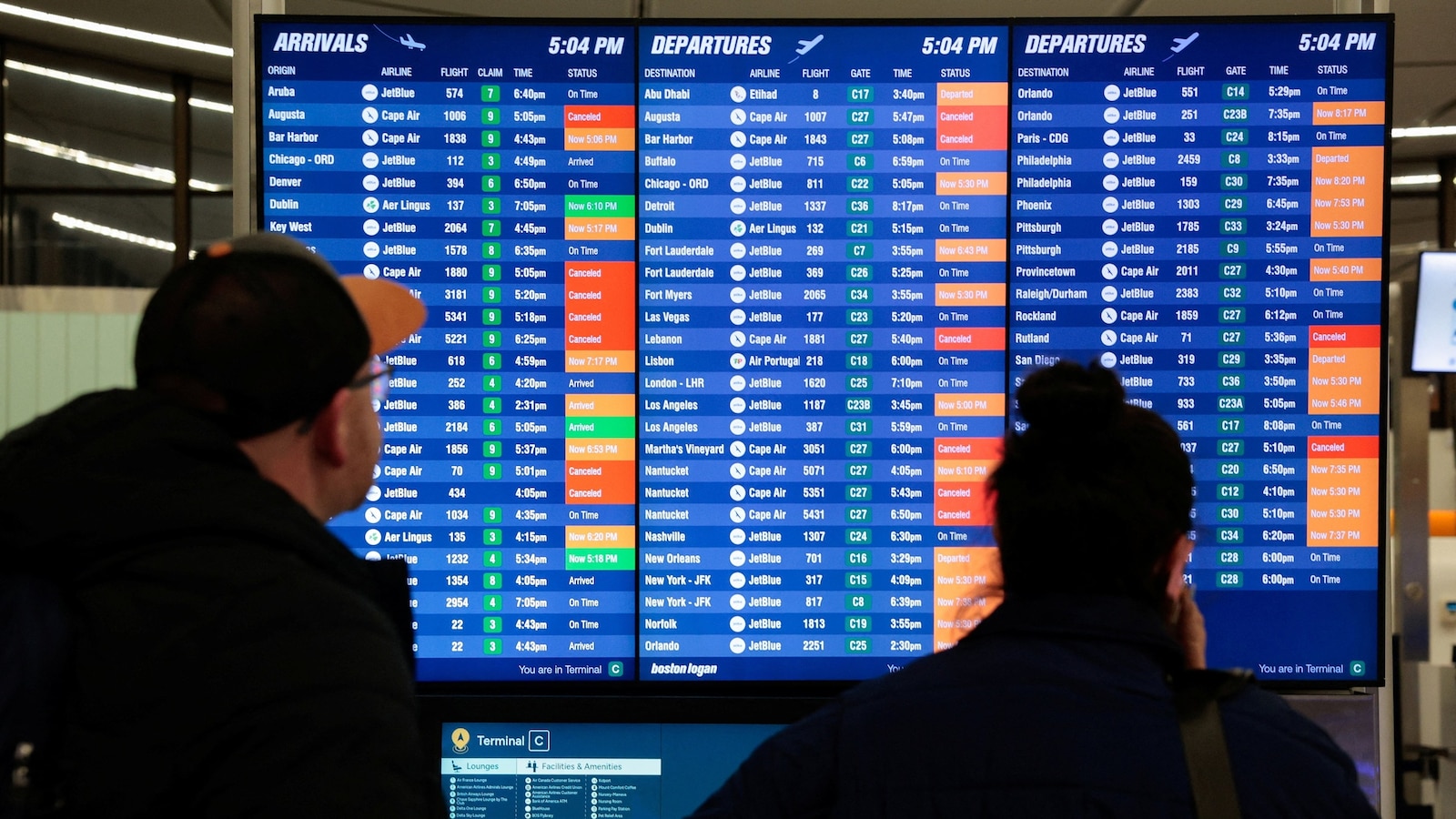
Old Tech or Cyberattack? FAA Ground Stop Sparks Funding Fight
Left says
- •The ground stop underscores years of bipartisan neglect in modernizing critical infrastructure, and officials were quick to rule out a cyberattack to avoid panic rather than fully explaining the technical failure.
- •Congress has repeatedly been asked to fund air traffic control upgrades, and this incident shows the real-world risk of delaying that investment rather than scoring it as a partisan win for the current administration.
- •Framing this primarily as a funding request gives the administration political cover while deflecting from questions about oversight of the update that reportedly triggered the system reboot and crash.
- •Travelers bore the brunt of a preventable disruption, raising questions about accountability for whoever approved or managed the network update that caused the outage.
Right says
- •The outage is clear evidence that America's air traffic control infrastructure is dangerously outdated and needs the full $50 billion overhaul the administration has been requesting for years.
- •Officials were transparent and decisive, quickly ruling out a cyberattack and explaining that overloaded routers running on old analog telecom systems caused the shutdown to protect public safety.
- •This is explicitly framed as a nonpartisan issue — not red or blue — with the administration calling on Congress from both parties to finally act instead of continuing to delay funding.
- •The system worked as intended in a crisis: everyone landed safely, showing that the safeguards in place, while imperfect, prevented a catastrophe.
Common Take
High Consensus- No evidence of a cyberattack was found, and officials from both parties accepted that conclusion.
- The air traffic control system relies on outdated technology, including old analog telecom infrastructure, that needs modernization.
- All flights landed safely during the ground stop, and the top priority throughout was public safety.
- Congress has not yet delivered the full funding needed for a comprehensive overhaul of the air traffic control system.
The Arguments
Right argues
The outage is concrete proof that America's air traffic control system runs on dangerously outdated analog telecom infrastructure, justifying the administration's long-standing $50 billion modernization request.
Left counters
Pointing to outdated infrastructure as justification conveniently ignores that this administration and its predecessors have had years to prioritize this funding, and using a crisis to demand a specific dollar figure doesn't substitute for accountability on how the update that triggered the crash was managed.
Left argues
Framing the incident primarily as a funding shortfall gives officials political cover and deflects attention from the more immediate question of who approved or oversaw the network update that actually caused the system to reboot and crash.
Right counters
Identifying the proximate technical trigger doesn't change the underlying reality that an aging, patchwork system is inherently fragile and prone to exactly this kind of failure, which is why systemic modernization, not just an internal review, is the real fix.
Right argues
Officials acted transparently and decisively by quickly ruling out a cyberattack and explaining the technical cause, demonstrating that the safeguards in place worked exactly as intended since every flight landed safely.
Left counters
Quickly ruling out a cyberattack may have been more about preventing public panic than offering a fully vetted explanation, and a successful landing of all flights doesn't mean the disruption or its underlying causes were adequately explained to the public.
Right argues
By explicitly framing the issue as nonpartisan — not red or blue — the administration is appealing to Congress across the aisle to finally fund an overhaul that both parties have delayed for years.
Left counters
Calling something 'nonpartisan' while simultaneously using a crisis press conference to attach a specific administration-backed price tag is itself a political framing technique designed to pressure Congress on the administration's terms.
Left argues
Travelers stranded for hours bore the real-world cost of a preventable disruption, and focusing the public conversation on future funding needs risks letting those responsible for managing the update that caused the crash avoid scrutiny.
Right counters
The scale of disruption from a single software update is itself the strongest argument for urgent modernization, since a more robust, updated system would be far less vulnerable to being taken down by one faulty rollout in the first place.
Challenge Questions
These questions target genuine internal contradictions — meant to provoke honest reflection.
Right asks Left
“If the ground stop genuinely demonstrates the risks of chronic underfunding across multiple administrations, why does the left's framing emphasize oversight of a single update rather than acknowledging that bipartisan neglect is the more systemic problem?”
Left asks Right
“If this is truly a nonpartisan infrastructure failure, why did administration officials use the crisis primarily as a platform to demand a specific $50 billion figure rather than first fully explaining what happened with the update that triggered the crash?”
Outlier Report
Left Fringe
Figures like some progressive commentators on social media (e.g., accounts pushing narratives that DHS/Duffy are covering up a cyberattack or deliberately underfunding safety to justify privatization) represent maybe 10-15% of the left, pushing a more conspiratorial accountability angle beyond mainstream Democratic infrastructure concerns.
Right Fringe
Some further-right commentators and accounts (small segment, roughly 10%) have pushed theories blaming the outage on an AI startup's software or framed it as evidence of deep state incompetence/sabotage rather than simply old infrastructure, going beyond Duffy's own stated explanation.
Noise Assessment
Moderate-to-high noise ratio; the bipartisan 'fix the infrastructure' framing from officials themselves dampens partisan conflict, but social media speculation (cyberattack theories, blame-shifting) amplifies disagreement beyond what the underlying facts (an overloaded legacy system) actually support.
Sources (5)
The DHS secretary said there were no indications of a cyberattack.
<p>Transportation Secretary Sean Duffy provided an update hours after the Federal Aviation Administration (FAA) issued a ground stop of all flights in the U.S., explaining that the "routers actually got overloaded with data" to the point where they were getting "inconsistency in the data" from the routers.</p> <p>The post <a href="https://www.breitbart.com/politics/2026/11/13/sean-duffy-gives-update-faa-ground-stop-routers-overloaded-data/" rel="nofollow">Transportation Sec. Sean Duffy Gives Update After FAA Ground Stop: Routers ‘Got Overloaded with Data’</a> appeared first on <a href="https://www.breitbart.com" rel="nofollow">Breitbart</a>.</p>
An update to the private communications network that connects America's air traffic control system caused the system to reboot, leading to a crash and a communications outage, multiple sources told CBS News. Lindsey Reiser anchors continuing coverage.
Secretary of Transportation Sean Duffy gives the timeline of the paralyzing FAA ground stop, which left travelers across the country stranded for hours. Duffy says the issue was due to old communications systems.
Trump administration officials reupped their calls for a multi-billion-dollar investment into updating the U.S.’s “incredibly old” air traffic control systems, calling out Congress for “[kicking] the can down the road” on improvements they argued could have prevented Friday night’s nationwide ground stop. “What we have is an incredibly old air traffic control system,” Transportation Secretary…