OpenAI Says Its Own AI Caught Alleged Corporate Spy
Left says
- •This case highlights how corporate espionage targeting AI firms is now treated as a matter of national security, raising questions about the concentration of power and secrecy surrounding 'superintelligence' technology.
- •The incident underscores the vulnerability of workers on visas or international employment to being swept into high-stakes geopolitical narratives, since prosecutors have not identified any foreign government or competitor benefiting from the alleged scheme.
- •OpenAI's use of its own AI models to detect and attribute the planted device demonstrates a legitimate, non-invasive security application of AI, distinct from fears about AI being used for surveillance of ordinary people.
- •The case should be handled through due process, with care not to presume guilt or inflame nationality-based suspicion before the facts are fully established in court.
Right says
- •This case validates longstanding concerns about insider threats and foreign nationals gaining access to sensitive American technological and intellectual property.
- •Officials are right to treat theft of advanced AI intellectual property as a serious national security matter, given the economic and strategic stakes of maintaining U.S. leadership in artificial intelligence.
- •The swift FBI response and arrest demonstrate strong law enforcement action in protecting critical American innovation from espionage threats.
- •This episode reinforces the need for stronger vetting and security protocols for foreign nationals working inside leading U.S. tech and AI companies.
Common Take
High Consensus- Abdulrahman Alfozan, a Saudi national employed as an engineer at OpenAI since July 2025, was arrested on October 9 and charged with attempting to intercept oral communications.
- A recording device wrapped in toilet paper was found inserted into a USB port on a television in OpenAI's executive conference room on September 30, having been installed around September 28.
- OpenAI used its own AI models to identify the device's origin and the employee responsible, then contacted the FBI and terminated the employee.
- OpenAI states there is no evidence that source code, model weights, or customer data were accessed or taken in connection with the incident.
The Arguments
Right argues
The swift FBI arrest and the DOJ's forceful rhetoric about protecting 'superintelligence' technology show that law enforcement is taking insider threats to America's AI leadership seriously, which is appropriate given the enormous economic and strategic stakes.
Left counters
Urgent national-security framing can outpace the actual evidence; prosecutors have not identified any foreign government, competitor, or recipient benefiting from the alleged recordings, so the 'protecting American innovation' narrative may be getting ahead of what's actually been proven.
Left argues
Because no foreign government or competitor has been named as a beneficiary, this looks like it could be an isolated personal or workplace dispute dressed up in geopolitical language, and foreign national employees are especially vulnerable to having ambiguous conduct cast as espionage.
Right counters
The specificity of the alleged conduct — a concealed, encrypted device hidden in toilet paper inserted into a TV's USB port in an executive conference room, plus research into 'secretly place audio equipment' — goes well beyond an ordinary workplace dispute and justifies treating it as a serious security breach regardless of motive.
Left argues
OpenAI's use of its own AI models to detect and trace the device back to the employee is a positive, concrete example of AI being deployed defensively to protect people's privacy and corporate security, which cuts against narratives that AI is primarily a surveillance threat.
Right counters
That same capability also shows how much visibility and power these AI systems already have inside a company's physical and digital infrastructure, which should raise its own questions about concentration of surveillance capability in a single firm's hands.
Right argues
This case validates long-standing concerns about vetting foreign nationals who gain employment at the frontier of sensitive American technology, since a Saudi national with regular office access allegedly used chatbots to research how to clandestinely plant recording equipment.
Left counters
Singling out the employee's nationality as the lesson risks scapegoating an entire category of worker based on one unproven allegation, when the real failure, if any, was in OpenAI's physical and digital security practices applicable to any employee regardless of origin.
Left argues
The case should proceed through ordinary due process, with the presumption of innocence intact, rather than being used immediately as proof of a broader espionage threat before any trial has occurred.
Right counters
Waiting for a full trial before acknowledging obvious red flags — detailed chatbot research into covert surveillance methods, a hidden encrypted device, a second device found with the suspect's wallet — would be an unreasonable standard given how clear-cut the alleged facts already appear.
Challenge Questions
These questions target genuine internal contradictions — meant to provoke honest reflection.
Right asks Left
“If the same alleged conduct — concealing an encrypted recording device and researching covert surveillance methods via chatbot — had been carried out by a U.S. citizen, would you still describe the national security framing as premature, or does your objection rest mainly on the suspect's nationality?”
Left asks Right
“If investigators ultimately cannot identify any foreign government, competitor, or other party that benefited from the alleged recording, would you still endorse treating this as a national security matter, or does that framing depend on an espionage motive that hasn't yet been established?”
Outlier Report
Left Fringe
Civil liberties-focused commentators and immigration advocates (e.g., voices associated with outlets like The Intercept or ACLU-aligned figures) who frame this as an example of anti-Muslim/anti-Arab profiling or visa-worker exploitation represent maybe 10-15% of the left, as most liberals are not deeply invested in defending an individual accused of planting a hidden recording device.
Right Fringe
Figures like Mike Benz or other extremely hawkish national-security commentators who use this case to push broader narratives about foreign infiltration of U.S. tech firms (sometimes veering into conspiracy territory about Saudi or Gulf state influence operations) represent roughly 10-15% of the right; most conservatives simply see this as a straightforward espionage/security story without broader geopolitical conspiracy framing.
Noise Assessment
Performative amplification is moderate-to-low; this is a niche tech/security story that hasn't become a major culture-war flashpoint, so most public reaction is proportionate rather than highly polarized or weaponized.
Sources (12)
Prosecutors say the device, wrapped in toilet paper, was found inserted in a USB port on the back of a TV in an executive conference room.
A Saudi national who worked at OpenAI as an engineer is suspected of planting a recording device in one of the company's conference rooms.
U.S. federal agents have arrested an engineer at OpenAI, the company behind ChatGPT, after the man allegedly planted a listening device inside an executive conference room at headquarters. Jo Ling Kent reports.
The deceased was identified as a 42-year-old father
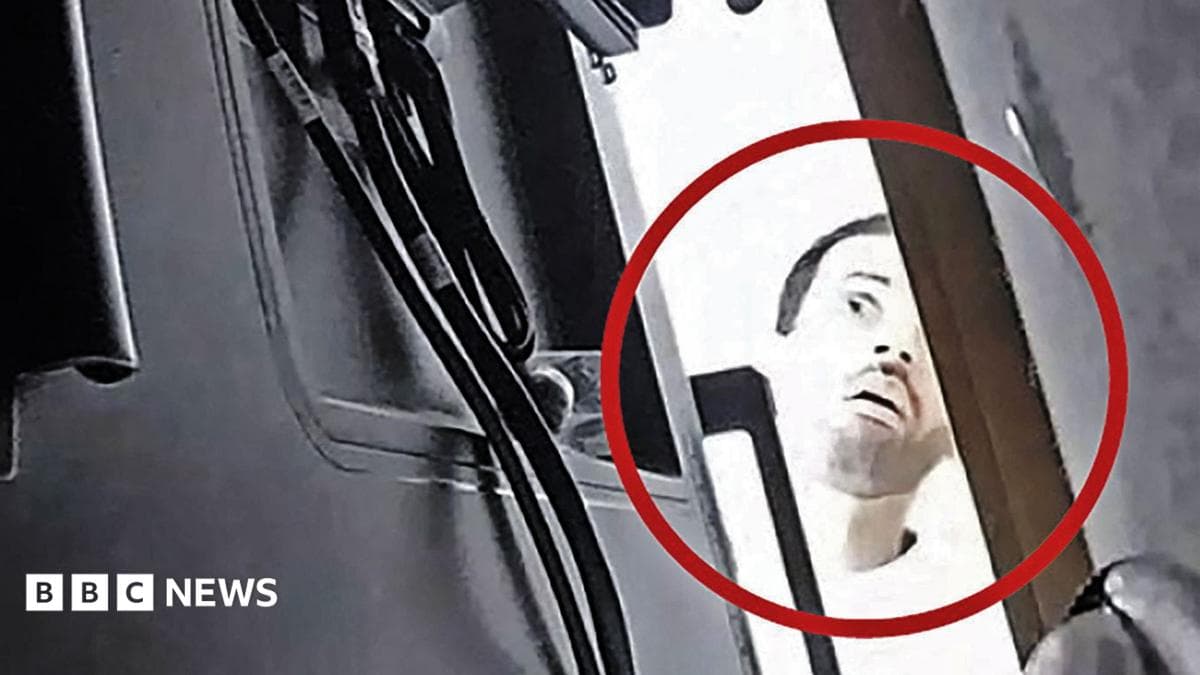
OpenAI said they immediately contacted the FBI after they discovered the device and Alfozan was allegedly caught on the company's CCTV cameras.
Abdulrahman Alfozan is accused of concealing an audio recording device in an executive conference room at OpenAI.
OpenAI said that the employee had placed a device built to evade detection and that he had planned to secretly record meetings in other sensitive spaces.
An OpenAI employee from Saudi Arabia has been arrested after allegedly hiding a recording device in the company’s offices, the Department of Justice (DOJ) said Tuesday. Abdulrahman Alfozan, a 35-year-old Saudi national who had worked as an engineer at OpenAI since last July, was charged with using or attempting to use a device to intercept…
For 37 years, a Queens house has been identified as the childhood home of Spider Man, aka, Peter Parker. The images and exact address were revealed in the pages of "The Amazing Spider Man" back in 1989. Now, the city is honoring that legacy with a street name change. Tony Dokoupil has the story.
OpenAI said they immediately contacted the FBI after they discovered the device and Alfozan was allegedly caught on the company's CCTV cameras.