Patel Defends FBI Hiring Rule Change Allowing Past Bestiality
Intra-Party Split Detected
Most right-leaning coverage emphasizes Patel's crime-reduction and fugitive-capture successes, but GOP Sen. John Kennedy sharply broke ranks to criticize Patel's FBI hiring policy change regarding past bestiality and prostitution, an unusual public rebuke from within the same party.
Left says
- •The policy change removed clear, categorical safeguards without public data showing how many applicants the exception would actually help, raising concerns about transparency and accountability.
- •Bipartisan skepticism, including from a Republican senator, suggests this isn't just partisan criticism but a genuine concern about vetting standards at a law enforcement agency tasked with public trust.
- •The change surfaced alongside other controversies, including firings seen as politically motivated, luxury vehicle purchases, and personal travel expenses, fitting a broader pattern of scrutiny over Patel's leadership and use of resources.
- •Senators like Durbin and Booker pressed Patel not just on this policy but on the FBI's broader handling of politically sensitive matters, including the Epstein files and law enforcement shootings, suggesting a pattern of insufficient accountability.
Right says
- •Patel explained the rationale was to avoid penalizing trafficking victims who were coerced into bestiality or prostitution, not to lower standards for willing participants in criminal conduct.
- •The FBI maintains it did not relax standards broadly and that applicants who engaged in criminal sexual acts remain ineligible, with the change intended only to allow case-by-case review of coerced victims.
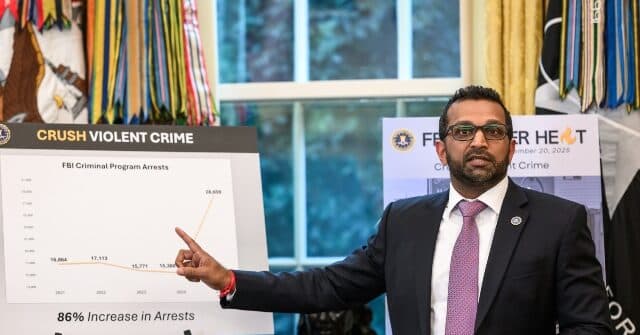
- •Patel used the hearing to highlight major FBI accomplishments, including capturing all ten of the bureau's most wanted fugitives, a historic drop in violent crime, and thwarting over 1,000 potential terrorist attacks.
- •The FBI's security record at major events like the World Cup, Olympics, and F1 races with zero major incidents demonstrates operational competence that supporters argue is being overshadowed by an isolated hiring policy controversy.
Common Take
High Consensus- The FBI issued guidance this spring removing automatic disqualification for past prostitution and bestiality-related conduct in hiring, a change confirmed by both the agency and outside reporting.
- Senators from both parties, including Republican John Kennedy and Democrat Dick Durbin, questioned Patel directly about the rationale for the policy change during the same hearing.
- The FBI has not publicly released data on how many applicants have been affected by the exception for trafficking or abuse victims.
- Patel and lawmakers on both sides expressed the shared goal of maintaining public trust in FBI hiring and being able to attract qualified, trustworthy agents.
The Arguments
Left argues
The FBI removed a clear, categorical safeguard without publishing any data on how many applicants the exception would actually help, which raises legitimate transparency concerns for an agency that depends on public trust.
Right counters
Patel explained the policy targets a narrow, sympathetic category—trafficking victims coerced into bestiality or prostitution—and the FBI maintains that anyone who willingly engaged in criminal sexual conduct remains categorically ineligible.
Right argues
Patel used the hearing to highlight substantial, verifiable achievements—capturing all 10 of the FBI's most-wanted fugitives, a historic drop in violent crime, and disrupting over 1,000 potential terrorist attacks—showing operational competence that shouldn't be eclipsed by one narrow hiring provision.
Left counters
Touting crime statistics doesn't answer basic accountability questions about a specific policy change; an agency can be operationally effective while still owing the public a transparent, well-documented rationale for lowering vetting standards.
Left argues
The fact that a Republican senator, John Kennedy, was just as baffled and critical as Democrats—asking Patel 'what planet did you parachute in from?'—shows this is a genuine, bipartisan concern about judgment and vetting standards, not partisan noise.
Right counters
Bipartisan surprise at an awkward-sounding policy doesn't mean the underlying rationale is wrong; even skeptical senators were reacting to the optics of the topic, not necessarily disputing the FBI's stated goal of not penalizing trafficking victims.
Right argues
The FBI's flawless security record at major events like the World Cup, Olympics, and F1 races—12 million visitors with zero major incidents—demonstrates real institutional competence that Patel's critics are ignoring in favor of a single controversial policy line.
Left counters
Successful event security is a different function from personnel vetting integrity; citing unrelated operational wins doesn't resolve concerns about transparency in hiring policy or the broader pattern of controversies around firings and spending.
Left argues
The bestiality hiring controversy didn't emerge in isolation—it surfaced alongside politically-charged firings, luxury vehicle purchases, and personal travel expenses, fitting a pattern that suggests broader accountability problems in Patel's leadership.
Right counters
Bundling unrelated controversies together to construct a 'pattern' is itself a rhetorical strategy; each issue—firings, travel, hiring policy—deserves to be evaluated on its own specific facts rather than lumped into a general narrative of scandal.
Challenge Questions
These questions target genuine internal contradictions — meant to provoke honest reflection.
Right asks Left
“If the FBI's stated goal—not penalizing trafficking victims for conduct forced upon them—is one most critics say they support in principle, what specific alternative policy language would satisfy transparency concerns while still protecting those victims, and why wasn't that alternative proposed instead of simply objecting to the change?”
Left asks Right
“If the policy is truly meant only for coerced victims and not willing participants, why did the FBI reportedly fail to build in a distinction between coercion and willing participation at the time of the policy's adoption, and why has it not released data to substantiate how many applicants this narrow exception was designed to help?”
Outlier Report
Left Fringe
Progressive commentators and figures like those amplifying Adam Schiff's and Cory Booker's combative framing (roughly 15-20% of the left) push a narrative that this is part of a deliberate authoritarian pattern at the FBI rather than a narrow, defensible carve-out, going beyond what most Democrats or independents would claim.
Right Fringe
MAGA-aligned defenders on X and outlets like RedState who fully embrace Patel's framing without skepticism (roughly 15-20% of the right) dismiss the story entirely as media-manufactured outrage, ignoring that even a Republican senator found the policy indefensible.
Noise Assessment
High noise ratio: the bestiality detail generated viral, meme-driven social media reactions disproportionate to its actual policy significance, while the more substantive concerns (transparency, data, broader FBI accountability issues) received less sustained public attention than the shock-value headline.
Sources (21)
<p>Federal Bureau of Investigation (FBI) Director Kash Patel testifies before the Senate Judiciary Committee on Tuesday, September 15.</p> <p>The post <a href="https://www.breitbart.com/politics/2026/09/15/watch-live-kash-patel-testifies-before-congress/" rel="nofollow">Watch Live: Kash Patel Testifies Before Congress</a> appeared first on <a href="https://www.breitbart.com" rel="nofollow">Breitbart</a>.</p>
FBI Director Kash Patel was grilled for nearly five hours by both Democrats and Republicans about a string of recent negative headlines about the FBI.
Democratic Sen. Adam Schiff and FBI Director Kash Patel squabbled over firings at the bureau and Patel's relationship with the media during his Senate Judiciary Committee hearing on Tuesday.
Democratic Sen. Cory Booker got into a heated back-and-forth with FBI Director Kash Patel during a Senate Judiciary Committee hearing on Tuesday that prompted committee chair Sen. Chuck Grassley to chide the New Jersey senator.
FBI Director Kash Patel and Democratic Sen. Peter Welch of Vermont got into a heated argument over U.S. election conspiracies and the FBI's role at polling sites for the upcoming midterms during a Senate Judiciary Committee hearing.
FBI Director Kash Patel testified before the Senate Judiciary Committee on Tuesday, where GOP Sen. John Kennedy of Louisiana pushed Patel on the bureau's hiring changes. CBS News' Jake Rosen has more.
During a Senate committee hearing, Democratic Sen. Dick Durbin criticized the FBI's response to shootings involving an ICE officer and a Border Patrol agent.
Kash Patel told the Senate Judiciary Committee the FBI captured a fugitive in Venezuela tied to Tren de Aragua, completing a historic clean sweep.
FBI Director Kash Patel is set to tell senators the FBI delivered historic crime reductions, disrupted terrorist plots, captured top fugitives and overhauled the bureau under his leadership.
Patel made the remarks during an appearance before Senate lawmakers of the Judiciary Committee.
FBI Director Kash Patel defended his record on reducing crime, Tuesday, in front of the U.S. Senate Judiciary Committee. Democrats grilled him over the files related to the late financier and sex offender Jeffrey Epstein and the use of taxpayer funds for personal...
<p>Senators question FBI chief on move to cut restrictions on agent applicants who have engaged in bestiality</p><ul><li><p><a href="https://www.theguardian.com/us-news/live/2026/sep/15/supreme-court-mail-ballot-restrictions-midterm-elections-trump-ai-politics-latest-news-updates">US politics live – latest updates</a></p></li></ul><p>The FBI director, Kash Patel, defended his agency’s decision to roll back restrictions on agent applicants who have previously engaged in bestiality, arguing the FBI “did not want to punish victims of bestiality” by automatically disqualifying them.</p><p>The unusual topic of bestiality emerged during a <a href="https://www.c-span.org/event/senate-committee/fbi-director-patel-testifies-on-bureau-oversight-before-senate-judiciary-cmte/446906">Senate judiciary committee oversight hearing on Tuesday</a> after Democrat Dick Durbin and Republican John Kennedy questioned Patel’s decision to remove barriers that previously prevented applicants who engaged in prostitution and bestiality from being qualified for a job at the FBI.</p> <a href="https://www.theguardian.com/us-news/2026/sep/15/kash-patel-fbi-hiring-policy-bestiality">Continue reading...</a>
It’s not a topic often discussed in the halls of Congress, but Sen. John Kennedy (R-La.) grilled FBI Director Kash Patel as he said he was just “trying to understand” a recent change in policy regarding bestiality. The line of questioning on Tuesday was sparked by a shift in FBI hiring practices which lifted longtime…
FBI Director Kash Patel on Monday defended his personal travel and the law enforcement agency’s purchase of several luxury armored BMWs under his leadership amid scrutiny. Patel is scheduled to appear before the Senate Judiciary Committee on Tuesday morning. Democrats on the panel are expected to press the Trump administration official over his use of…
FBI Director Kash Patel is testifying Tuesday before the Senate Judiciary Committee on oversight of the federal law enforcement agency. Patel is likely to face questions over a series of personnel shake-ups and controversies surrounding his conduct and use of government resources for travel. The FBI chief has defended his actions against criticism. The hearing…
Kash Patel defended his firings at the bureau, saying he weeded out employees who politicized law enforcement. He also discussed the FBI’s plans for the midterms.
FBI Director Kash Patel mounted a strong defense for Flock cameras on Tuesday, telling senators they help solve crimes and rescue children from sexual predators.
FBI Director Kash Patel returned to Capitol Hill on Tuesday for an oversight hearing before the Senate Judiciary Committee expected to feature contentious exchanges with Democrats skeptical of his leadership.
Patel denied the change signaled a lower of employment standards and argued they were designed to protect victims who had been forced to engage in the conduct, which would have previously precluded them from consideration for employment.