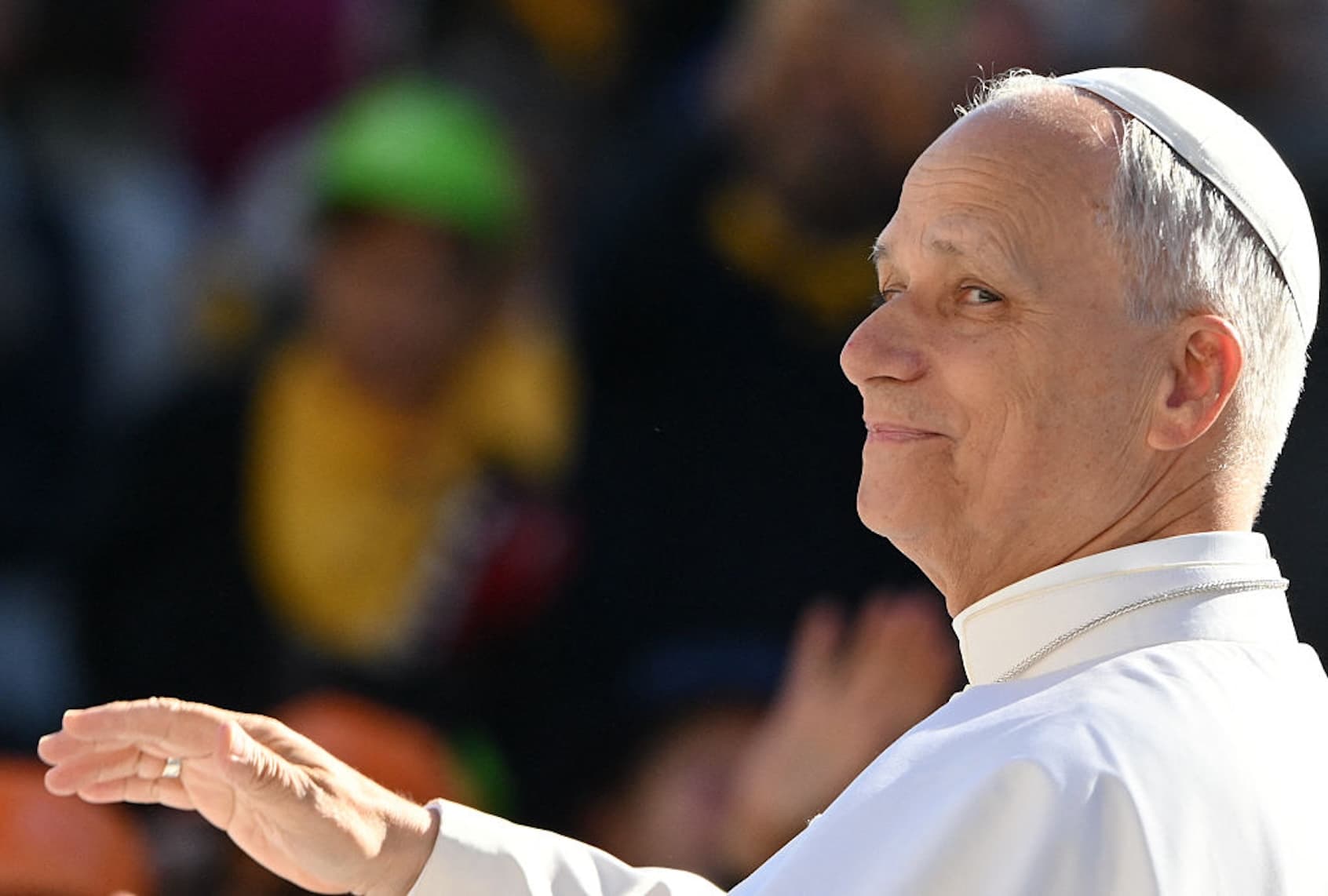
 Pope Francis in white papal robes during a public appearance
Pentagon official allegedly threatened Vatican over Pope's war criticism
Left says
- •The Trump administration's aggressive foreign policy approach has created unprecedented tensions with traditional allies, including the Vatican
- •Pentagon officials made inappropriate threats referencing historical attempts to control the papacy, demonstrating authoritarian overreach
- •The Pope's moral authority to speak against war and violence is being undermined by military officials who prioritize power over diplomatic norms
- •The administration's hostility toward religious criticism of its policies represents a dangerous erosion of church-state boundaries
Right says
- •Multiple official sources from both the Pentagon and Vatican confirm the meeting was respectful and professional, contradicting sensationalized media reports
- •The administration maintains positive diplomatic relations with the Holy See and welcomes continued dialogue on shared concerns
- •Unsubstantiated claims about threats appear to be fabricated or grossly distorted to create controversy where none exists
- •National security discussions with foreign representatives, including religious leaders, are routine and necessary for effective diplomacy
Common Take
High Consensus- A January meeting occurred between Pentagon Undersecretary Elbridge Colby and Cardinal Christophe Pierre at the Pentagon
- Pope Leo XIV has publicly criticized military actions and warned against escalating global tensions
- Both the Pentagon and Vatican have issued official statements about the meeting's tone and content
- The meeting addressed various international issues including Venezuela and Cuba
The Arguments
Right argues
Multiple official sources from both the Pentagon and Vatican confirm the meeting was professional and respectful, with the Vatican itself backing up the Pentagon's characterization of the discussion as cordial.
Left counters
A Vatican official specifically called the meeting 'unprecedented' and described it as 'most unpleasant,' suggesting the official denials are diplomatic face-saving rather than accurate accounts of what transpired.
Left argues
The reported threat that 'The United States has the military power to do whatever it wants in the world. The Catholic Church had better take its side' represents an unprecedented breach of diplomatic protocol and an authoritarian attempt to silence religious criticism of war.
Right counters
These inflammatory quotes appear in only one media report and are contradicted by all official sources involved, suggesting they may be fabricated or grossly distorted to create controversy where none exists.
Left argues
The reference to the Avignon papacy—when French political pressure forced the Pope to relocate from Rome—constitutes a historically-informed threat that demonstrates sophisticated intimidation tactics against the Vatican's independence.
Right counters
No official source has confirmed this alleged reference occurred, and such a specific historical allusion would be highly unusual in routine diplomatic discussions about shared security concerns.
Right argues
The meeting was part of routine diplomatic engagement where the U.S. shared its positions on Venezuela, Cuba, and other regional issues while listening to Vatican perspectives—exactly the kind of dialogue that should occur between allies.
Left counters
The timing immediately after Pope Leo XIV's criticism of U.S. military action in Iran, combined with the Vatican's subsequent cancellation of a planned July 4 visit, suggests this was retaliation rather than routine diplomacy.
Left argues
The Pope's moral authority to speak against war and violence is being undermined by military officials who prioritize geopolitical power over diplomatic norms and religious freedom.
Right counters
The administration maintains positive relations with the Holy See and welcomes continued dialogue, demonstrating respect for the Vatican's role while also ensuring U.S. national security interests are clearly communicated.
Challenge Questions
These questions target genuine internal contradictions — meant to provoke honest reflection.
Right asks Left
“If the meeting was truly as threatening and unprecedented as claimed, why would the Vatican itself publicly back up the Pentagon's characterization of the meeting as respectful and professional?”
Left asks Right
“If the meeting was routine and cordial as all official sources claim, why did the Vatican cancel the planned July 4 visit to the U.S. and why did a Vatican official describe it as 'most unpleasant'?”
Outlier Report
Left Fringe
Anti-war activists like CodePink's Medea Benjamin and some progressive commentators on social media are treating this as evidence of Trump administration authoritarianism without waiting for verification. They represent roughly 15-20% of the left.
Right Fringe
Some Trump supporters on social media are celebrating the alleged 'tough stance' against the Pope's criticism, viewing it as appropriate pushback against foreign interference. They represent about 10-15% of the right.
Noise Assessment
Moderate noise level - the story gained traction due to the dramatic nature of alleged threats against the Vatican, but the quick official denials from all parties involved have contained the controversy. Most discourse is genuine concern rather than performative outrage.
Sources (7)
A meeting between the Pentagon and a Vatican ambassador has raised eyebrows after conflicting reports indicate tensions may be rising between the White House and the Vatican.
The U.S. government is aggressively pushing back on reports of a falling out with the Holy See, calling claims of a January dust-up at the Department of War "grossly false."
WASHINGTON—During a January meeting at the Pentagon, Vatican officials met with U.S. military leaders and discussed key national security objectives for the United States, according to a War Department official who was in the room. Months later, the Free Press published an “expose” describing a reportedly contentious January meeting between a Vatican diplomat and Pentagon ...
A new report claimed a Pentagon official threatened a representative of the Vatican during a tense meeting
The Vatican backed up the Pentagon in pushing back against news reports claiming a meeting earlier this year between the Holy See’s then-envoy to the U.S. and a top Pentagon official turned heated, resulting in threats made against the Catholic Church.  The Pentagon’s policy office chief, Elbridge Colby, huddled with Cardinal Christophe Pierre, the Vatican’s former…
The Pentagon has denied threatening the Vatican during a late January meeting with the Holy See’s then-envoy to the U.S., as Pope Leo XIV has warned against the growing use of military action in recent months. The Pentagon’s policy office head, Elbridge Colby, met with Cardinal Christophe Pierre, the Vatican’s former diplomat to the U.S.,…
U.S. and Vatican officials have sought to downplay accounts of a strained relationship, but there have been tensions between the Trump administration and the Catholic Church.