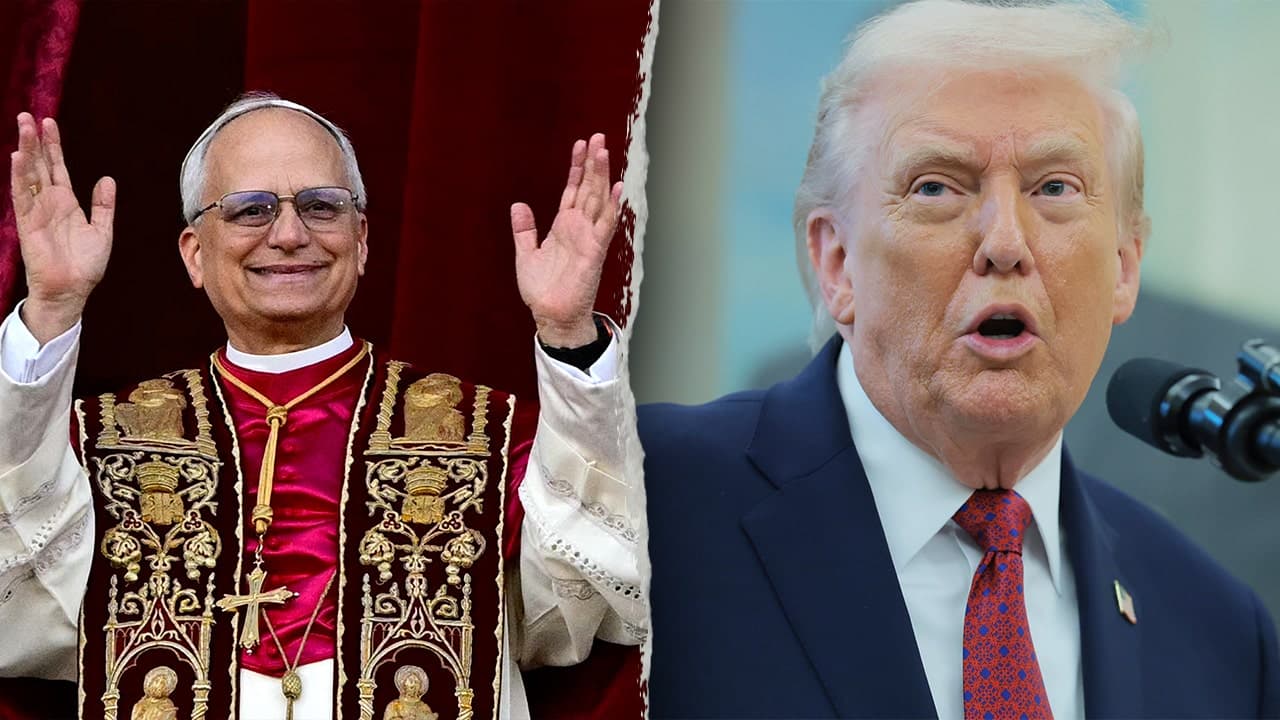
Pope Leo fires back at Trump: 'I have no fear'
Intra-Party Split Detected
Some Christian conservatives criticized Trump for posting an AI image depicting himself as Jesus-like figure, showing religious right discomfort with the imagery
Left says
- •The Pope's calls for peace and criticism of violence represent core Gospel values that transcend politics and should not be silenced by political pressure
- •Trump's attacks on the pontiff represent an unprecedented public assault on religious leadership and moral authority
- •The Pope's opposition to mass deportations and the Iran war reflects legitimate moral concerns about human suffering and the protection of innocent lives
- •Religious leaders have a responsibility to speak out against policies they view as harmful, regardless of political consequences
Right says
- •The Pope has overstepped his spiritual role by inserting himself into complex political and foreign policy matters where he lacks expertise
- •Trump's criticism reflects legitimate concerns that the Pope's positions on Iran and immigration undermine American national security interests
- •Religious leaders should focus on spiritual guidance rather than taking partisan political stances that divide their congregations
- •The Pope's opposition to strong deterrence against Iran could enable nuclear proliferation and threaten regional stability
Common Take
High Consensus- Both Trump and Pope Leo claim to want peace and the protection of innocent lives
- The public nature of this dispute between a U.S. president and the Pope is historically unusual
- Religious and political leaders often have different perspectives on how to achieve security and peace
- The debate centers on fundamental questions about the appropriate role of religious authority in political matters
The Arguments
Left argues
The Pope's calls for peace and protection of innocent lives represent fundamental Gospel values that transcend partisan politics, and religious leaders have a moral obligation to speak out against policies they view as causing human suffering.
Right counters
Complex foreign policy decisions require expertise in geopolitics, military strategy, and intelligence that religious leaders lack, and moral intentions without strategic understanding can inadvertently enable greater harm.
Right argues
The Pope's opposition to strong deterrence against Iran could undermine efforts to prevent nuclear proliferation and embolden a regime that threatens regional stability and American allies.
Left counters
Threatening to 'wipe out Iranian civilization' represents a disproportionate escalation that could lead to massive civilian casualties, which any moral leader has a duty to oppose regardless of geopolitical considerations.
Left argues
Trump's unprecedented public attack on the Pope represents an assault on religious authority and moral leadership that damages both American diplomatic standing and interfaith relations.
Right counters
When religious leaders insert themselves into partisan political debates, they open themselves to legitimate criticism and should not expect immunity from scrutiny simply because of their religious position.
Right argues
Religious leaders should focus on spiritual guidance rather than taking positions on complex policy matters like immigration enforcement and military strategy, which divide their congregations and politicize their ministry.
Left counters
The Gospel's call to care for the vulnerable and pursue peace directly applies to contemporary issues like mass deportations and war, making silence on these matters a betrayal of core Christian teachings.
Left argues
The Pope's consistent message of peace and dialogue offers a necessary moral alternative to escalating global tensions and represents the Church's prophetic role in speaking truth to power.
Right counters
Naive calls for dialogue without acknowledging the reality of hostile actors who exploit peaceful overtures can enable aggression and ultimately lead to greater violence and suffering.
Challenge Questions
These questions target genuine internal contradictions — meant to provoke honest reflection.
Right asks Left
“If the Pope's moral authority comes from representing timeless Gospel values, how can his specific policy positions on complex contemporary issues like Iran sanctions or immigration quotas claim the same divine mandate as core Christian teachings about love and peace?”
Left asks Right
“If religious leaders should stay out of politics to avoid division, how do you reconcile this position with the historical role of religious figures in opposing slavery, segregation, and other injustices that were also considered 'political' issues of their time?”
Outlier Report
Left Fringe
Progressive activists like Shaun King and some Democratic Socialist figures who frame any criticism of papal political involvement as attacks on moral authority itself represent roughly 15% of the left coalition.
Right Fringe
Anti-Catholic evangelicals like some followers of John MacArthur and hardline Protestant nationalists who view papal influence as inherently illegitimate represent about 20% of the right coalition.
Noise Assessment
Moderate noise level - while both sides are amplifying this for political gain, the underlying tension between religious moral authority and political boundaries reflects genuine public ambivalence rather than manufactured controversy.
Sources (7)
Pope Leo XIV fires back at President Trump, saying his calls for peace are rooted in the Gospel and should not be treated as a political argument.
Pope Leo has repeatedly warned that violence is becoming normalized and that religious language is at risk of being misused to justify it.
President Trump slammed Pope Leo again on Monday over the pontiff's criticisms of Mr. Trump's immigration policies and the Iran war. Norah O'Donnell and Chris Livesay report.
Clashes between U.S. presidents and popes are not new, but they've almost always been handled quietly. Chris Livesay reports.
President Trump told CBS News senior correspondent Norah O'Donnell that Pope Leo is "wrong on the issues" Monday after lashing out at the pontiff late Sunday in a Truth Social post.
Pope Leo XIV shot back at President Trump after the president went after him Sunday on Truth Social, saying he does not fear Trump. “I’m not afraid of the Trump administration or of speaking out loudly about the message of the Gospel, which is what the Church works for,” the pope said Monday, while aboard…
The president wrote that the first U.S.-born pope, who has criticized the Iran war, was “weak” and “terrible” on crime and foreign policy.