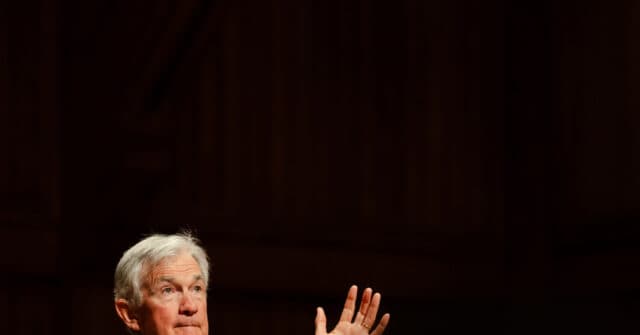
Powell Clings to Fed Power Despite Warsh Confirmation
Intra-Party Split Detected
Only one Democrat (Fetterman) voted to confirm Warsh, showing near-unanimous Democratic opposition
Left says
- •Powell's decision to remain on the Fed board protects the institution's independence from unprecedented political interference and potential criminal investigations
- •The Fed board's designation of Powell as temporary chair follows established legal precedent during leadership transitions
- •Warsh received the least bipartisan support of any Fed chair in history, with only one Democratic vote, raising concerns about his independence from the White House
- •Powell successfully steered the economy through major crises including the pandemic and Iran war while maintaining the Fed's institutional integrity
Right says
- •Powell is defying democratic norms by clinging to power after his term expired and Warsh was confirmed as his replacement
- •The Fed board lacks clear statutory authority to designate Powell as chair pro tempore when a successor has already been confirmed
- •Powell's extended tenure represents an unprecedented power grab that undermines the orderly transition of leadership
- •The manufacturing sector is booming under policies that diverge from Powell's approach, suggesting new leadership was needed
Common Take
High Consensus- Kevin Warsh was confirmed by the Senate as the new Fed chair and will take over leadership of the central bank
- Jerome Powell's eight-year tenure as Fed chair was marked by significant economic turbulence and political pressure
- The Fed faces ongoing challenges with inflation that has resurged due to the Iran war
- Questions remain about the legal authority and precedent for the current leadership transition arrangement
The Arguments
Right argues
Powell is defying democratic norms by remaining as chair after his term expired and a successor has been confirmed, creating an unprecedented power grab that undermines orderly transitions of leadership.
Left counters
Powell's designation as chair pro tempore follows established legal precedent during leadership transitions, and he's staying to protect the Fed's independence from potential criminal investigations and political interference.
Left argues
Warsh received the least bipartisan support of any Fed chair in history with only one Democratic vote, raising serious concerns about his independence from the White House and ability to resist political pressure.
Right counters
Democratic opposition reflects partisan resistance to change rather than legitimate concerns about independence, and Warsh's confirmation by the Senate provides the democratic mandate needed for new leadership.
Right argues
The Fed board lacks clear statutory authority to designate Powell as chair pro tempore when a successor has already been confirmed, as the Federal Reserve Act only contemplates temporary absence from meetings, not vacancy transitions.
Left counters
The Fed's action is consistent with past practice during similar transitions, and the board has inherent authority to ensure continuity of leadership during the transition period.
Left argues
Powell successfully steered the economy through major crises including the pandemic and Iran war while maintaining institutional integrity, demonstrating the value of experienced leadership during turbulent times.
Right counters
The manufacturing sector is booming under policies that diverge from Powell's approach, suggesting that new leadership with different economic philosophies was needed to capitalize on emerging opportunities.
Right argues
Powell's extended tenure represents an institutional power grab that sets a dangerous precedent for future Fed chairs to cling to power beyond their confirmed terms.
Left counters
Powell is protecting the Fed's independence from unprecedented political attacks and potential criminal investigations, making his continued presence necessary to preserve institutional integrity.
Challenge Questions
These questions target genuine internal contradictions — meant to provoke honest reflection.
Right asks Left
“If Powell is truly protecting Fed independence by staying on, how does defying the democratic process of Senate confirmation and peaceful transition of power actually strengthen rather than undermine the institution's legitimacy?”
Left asks Right
“If the statutory authority for Powell's designation as chair pro tempore is genuinely unclear and unprecedented in this context, how can you argue this represents proper institutional governance rather than an abuse of power?”
Outlier Report
Left Fringe
Progressive economists like Paul Krugman and some Democratic senators who view any criticism of Powell's actions as inherently illegitimate attacks on Fed independence. They represent roughly 15% of the left coalition.
Right Fringe
MAGA hardliners and some Trump allies who want immediate criminal prosecution of Powell and complete dismantling of Fed independence protections. They represent about 25% of the right coalition.
Noise Assessment
Moderate noise level - while partisan media amplifies the story, the core issue of institutional transition authority genuinely concerns many Americans beyond typical political theater.
Sources (7)
<p>Kevin Warsh has been confirmed as the 17th leader of the <a href="https://www.axios.com/economy/federal-reserve" target="_blank">Federal Reserve</a>, becoming America's economist-in-chief at a moment of resurgent inflation, public discontent with the economy and unprecedented attacks on the Fed's independence.</p><p><strong>Driving the news: </strong>Warsh was confirmed to a four-year term as Fed chair Wednesday by a 54-45 Senate vote. He received unanimous support from Republicans but only one "aye" vote from a Democrat, John Fetterman of Pennsylvania.</p><ul><li>Warsh takes the helm of the central bank after Jerome Powell's term ends Friday. </li></ul><hr /><p><strong>The big picture: </strong>Warsh has promised sweeping change at an institution that he argues has grown too unwieldy and inclined to intervene in the economy.</p><ul><li>He inherits buoyant financial markets and an AI-driven growth surge — as well as the legacy of five straight years of elevated inflation that has spiked again due to the Iran war.</li><li>High prices and affordability concerns have driven consumer sentiment indicators to recessionary levels, despite a low unemployment rate and solid GDP growth.</li></ul><p><strong>Friction point: </strong>President Trump has demanded that the Fed cut interest rates, and Warsh has previously laid out an intellectual case for doing so premised on a 1990s-style boom in America's supply potential.</p><ul><li>But in recent weeks — including April inflation data the last <a href="https://www.axios.com/2026/05/12/cpi-april-inflation-iran-trump" target="_blank">two </a><a href="https://www.axios.com/2026/05/13/ppi-iran-inflation" target="_blank">days</a> — evidence has pointed toward price pressures being resurgent and the labor market holding up, which undermines the case for rate cuts.</li><li>Indeed, if he seeks rate cuts anytime soon, Warsh will face an uphill battle with his fellow members of the Fed policy committee, who jointly make those decisions.</li></ul><p><strong>Zoom out: </strong>The debate over interest rates will occur against a backdrop of historically unique threats to the Fed's ability to act without regard to political influence.</p><ul><li>A Supreme Court case over whether Trump can fire Biden-appointed governor Lisa Cook is pending.</li><li>Powell is remaining on the Fed Board of Governors, contrary to modern precedent, due to what he sees as an ongoing threat by the Trump administration to reopen a criminal investigation over the Fed's building renovations.</li><li>Warsh also takes the helm with less bipartisan support than any previous leader of the central bank, as Democrats expressed doubt he will be sufficiently independent from the White House.</li></ul><p><strong>Catch up quick: </strong>Warsh was a Fed governor from 2006 to 2011 — then the youngest on record — and was a close ally of chair Ben Bernanke in fighting the financial crisis.</p><ul><li>Warsh stepped down in 2011 amid misgivings about the Fed's post-crisis efforts to stimulate the economy through quantitative easing.</li><li>In the years since, he has become an increasingly sharp critic of the institution he once helped lead, accusing it of mission creep and of massive policy failure in allowing inflation to surge in 2021-2022.</li></ul><p><strong>The intrigue: </strong>An open question is how quickly he will seek to act in remaking the institution.</p><ul><li>He is largely stuck with the top leadership — the other governors, who serve staggered terms, and the 12 reserve bank presidents around the country. But he has broad authority to make changes to the staff at the Board of Governors.</li><li>He has also flagged possible changes to the <a href="https://www.axios.com/2026/04/22/kevin-warsh-fed-communications-policy" target="_blank">Fed's communications approach</a>, including skepticism of its "forward guidance" for signaling future actions, and frequent press conferences.</li></ul><p><strong>Between the lines: </strong>Warsh got the job in part by attacking the way the Fed has operated over the last dozen years.</p><ul><li>Now the question is whether he can deliver economic outcomes — particularly a return to price stability — that prove more satisfying to the American people than the status quo.</li><li>And as Powell learned the hard way, he may have to do it with an impatient president second-guessing him along the way.</li></ul><p><strong>The bottom line: </strong>It's Warsh's economy now.</p>
<p>Everyone thought Powell was out as chair. But in a late Friday move, the Fed has declared he's sticking around.</p> <p>The post <a href="https://www.breitbart.com/economy/2026/05/15/powell-4-eva-fed-declares-powell-temporary-chair-even-though-warsh-has-been-confirmed/" rel="nofollow">Powell 4 Eva? Fed Declares Powell Temporary Chair—Even Though Warsh Has Been Confirmed!</a> appeared first on <a href="https://www.breitbart.com" rel="nofollow">Breitbart</a>.</p>
<p>This week saw Jerome Powell give up his crown but insist on still lurking in the cloakroom.</p> <p>The post <a href="https://www.breitbart.com/economy/2026/05/15/breitbart-business-digest-manufacturing-roars-while-jerome-powell-cleans-out-his-desk/" rel="nofollow">Breitbart Business Digest: Manufacturing Roars While Jerome Powell Cleans Out His Desk</a> appeared first on <a href="https://www.breitbart.com" rel="nofollow">Breitbart</a>.</p>
Jerome Powell's eight-year role leading the Federal Reserve is over. His term will be remembered as one of the most turbulent and politically charged in the central bank's history. William Brangham discussed Powell's impact and legacy with Jason Furman.
The justices sound sceptical about Donald Trump’s move to dismiss her
The economist has spent her career calculating the cost of discrimination
Jerome Powell’s stint leading the Federal Reserve is finished, but his battle with President Trump is far from over. Powell’s second four-year term as chair of the Fed board ended Friday, two days after his successor, Kevin Warsh, was confirmed by the Senate as the bank’s next chief. After leading the bank for the past…