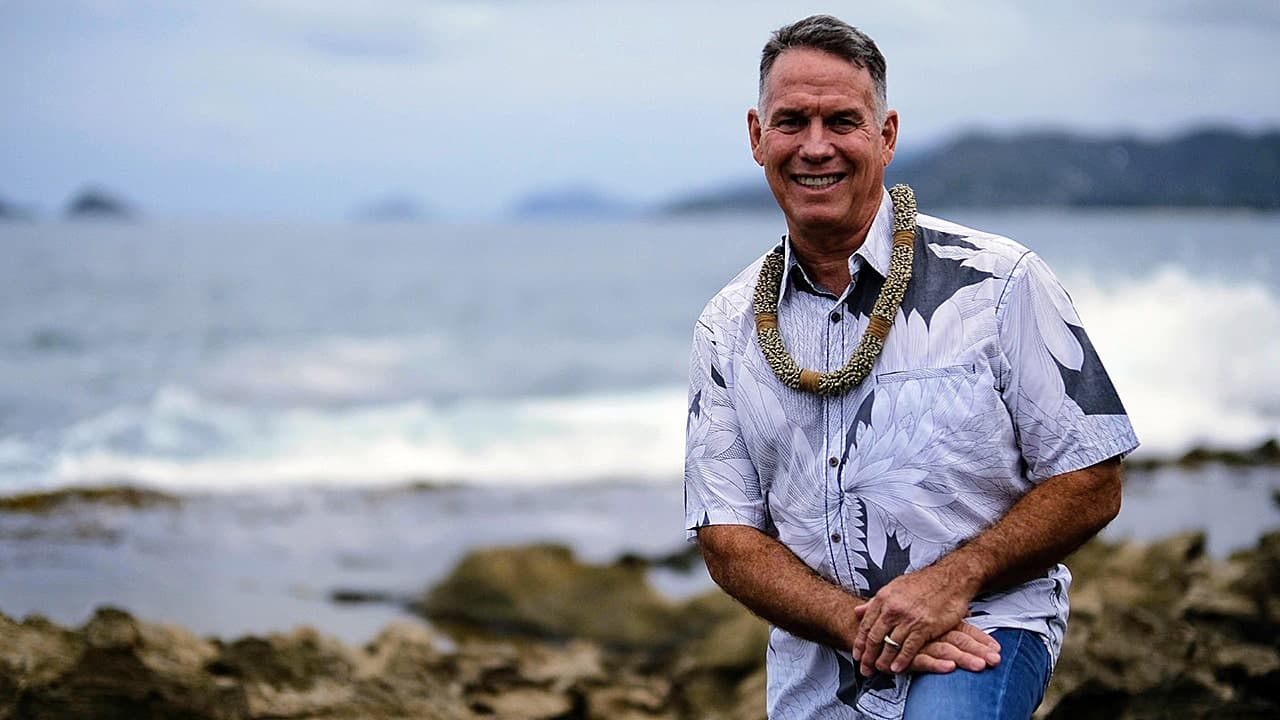
 Hawaii GOP gubernatorial nominee poses by the ocean wearing a lei.
Progressive Challenger Attacks Moderate Dem Over ICE, Tariffs in Hawaii
Intra-Party Split Detected
Progressive challenger Jarrett Keohokalole is running against moderate Rep. Ed Case, opposing his stances on tariffs and ICE enforcement, reflecting a broader intraparty divide between progressive and moderate Democrats seen in primaries nationwide.
Left says
- •Jarrett Keohokalole's challenge reflects grassroots Democratic frustration with incumbents seen as too accommodating toward Trump-era immigration enforcement and trade policy.
- •Progressive primary challenges nationwide reflect a push to hold Democrats accountable for not aggressively opposing ICE tactics that critics say harm immigrant communities.
- •Opposition to tariffs stems from concern that they raise costs for working families, particularly in a high-cost state like Hawaii.
- •This intraparty contest is part of a broader pattern of progressives challenging moderate Democrats across the country, signaling energy within the party's base.
Right says
- •Rep. Ed Case represents the more moderate wing of the Hawaii Democratic delegation, contrasting with progressive colleagues like Rep. Jill Tokuda.
- •The primary challenge illustrates an ongoing Democratic civil war between moderate incumbents and progressive insurgents playing out in multiple House races nationwide.
- •Hawaii's heavily Democratic voter base and district partisan lean make the general election outcome largely predictable regardless of the primary's ideological battle.
- •Coverage of Hawaii's primary also highlights Gov. Josh Green's commanding lead and the state's continued overwhelming Democratic dominance, including in the governor's race where Republicans face a steep uphill climb.
Common Take
High Consensus- Ed Case faced a real primary challenge from Keohokalole centered on ICE enforcement and tariff policy.
- Hawaii's Democratic Party is experiencing visible ideological tension between moderate and progressive factions, mirroring similar fights in other states.
- Jill Tokuda easily won her primary in the 2nd Congressional District and will face Republican Brenton Awa in November.
- Hawaii remains a heavily Democratic state, with Gov. Josh Green entering the general election as a strong favorite.
The Arguments
Left argues
Keohokalole's challenge reflects legitimate grassroots frustration that Democratic incumbents like Ed Case haven't aggressively opposed ICE enforcement tactics that critics say tear apart immigrant families and communities.
Right counters
Given Hawaii's D+13 partisan lean and Case's incumbency advantages, this intraparty fight is more symbolic than substantive, and voters may prefer a proven moderate over ideological purity tests that could weaken the party's broader coalition.
Left argues
Opposition to tariffs is grounded in real economic concern for Hawaii, one of the most expensive states in the country, where added import costs disproportionately burden working families already struggling with cost of living.
Right counters
If cost of living is the central issue, Republican candidates like Gary Cordery are offering concrete proposals—eliminating the excise tax on food and medicine, expanding housing—while the Democratic primary fight over tariffs remains largely rhetorical in a race Democrats are all but certain to win regardless.
Right argues
This primary is best understood as part of a nationwide Democratic civil war between progressives and moderates, and Hawaii's overwhelming Democratic dominance—from Green's 56% approval to safe partisan indexes—means the real contest is intraparty, not partisan.
Left counters
Framing this purely as 'civil war' dismisses the substantive policy stakes; progressive challengers are responding to real constituent anger over immigration enforcement and trade policy, not just engaging in factional theater.
Right argues
Hawaii's entrenched one-party dominance—no Republican governor since 2010, massive fundraising gaps, and D+12/D+13 districts—means the general election outcomes are essentially predetermined, making the ideological battle within the Democratic primary the only meaningful contest to watch.
Left counters
Even in safe seats, primary challenges matter because they shape which policies and priorities actually get representation in Congress; treating these races as inconsequential ignores how progressive pressure has already shifted Democratic positioning on issues like ICE nationally.
Left argues
The pattern of progressive challenges against moderate incumbents nationwide signals real energy and organizing strength within the Democratic base that party leaders ignore at their peril.
Right counters
Coverage shows most of these progressive challengers—including Keohokalole and Tokuda's minor opponents—struggle with fundraising and name recognition compared to incumbents, suggesting the 'energy' narrative may outpace actual electoral traction.
Challenge Questions
These questions target genuine internal contradictions — meant to provoke honest reflection.
Right asks Left
“If progressive challengers argue that Democratic incumbents are too accommodating on ICE and tariffs, why have most of these challenges, including in Hawaii, failed to gain real fundraising or polling traction against established moderates?”
Left asks Right
“If Republicans argue that Hawaii's primary outcome is irrelevant because the general election is predetermined by partisan lean, why does the same coverage devote significant attention to framing the intraparty progressive-moderate fight as consequential and newsworthy?”
Outlier Report
Left Fringe
Figures like Rep. Jill Tokuda's most progressive allies and Democratic Socialists (e.g., George 'Teva' Lucas-Tadeo in the same primary cycle) represent a small but vocal faction, roughly 10-15% of the left, pushing for full ICE abolition rhetoric and hardline anti-tariff positions.
Right Fringe
Commentators like those at Breitbart or hardline Trump-aligned voices who dismiss all Hawaii Democratic primary contests as irrelevant 'blue state noise,' representing perhaps 10% of the right, may overstate how meaningless intraparty fights are given growing evidence of progressive momentum nationally (e.g., Mamdani's NYC win).
Noise Assessment
Moderate noise ratio; this is a low-salience local primary story getting national attention mainly as a proxy for the broader Democratic 'civil war' narrative, meaning most public sentiment is inferred from general partisan priors rather than direct engagement with this specific race.
Sources (7)
Hawaii's 1st Congressional District primary pits Rep. Ed Case against Jarrett Keohokalole, who opposes Donald Trump's tariffs and ICE enforcement.
Gary Cordery won the Republican nomination for Hawaii governor and now faces Democratic Gov. Josh Green despite a massive fundraising gap ahead.
Democratic Hawaii Gov. Josh Green's 56% approval rating and $3.5 million war chest left three underfunded challengers with no path in the primary.
Progressive Rep. Jill Tokuda cruised past three Democratic primary challengers in Hawaii's 2nd Congressional District to face Republican Brenton Awa.
Few people have anything bad to say about Darline Graham, who was catapulted from obscurity last month when she was appointed to replace her late brother Lindsey Graham in the U.S. Senate. "I think Darline's wonderful," said Kathy Bustos of Mount Pleasant, after attending a...
Perez Hilton was in serious condition Saturday at a Florida hospital after he livestreamed what appeared to be self-harm from his Miami-area home Tuesday night, his family said in a statement.
It's a common sentiment among Republican voters pondering an unexpected decision about replacing Lindsey Graham, who was nominated for a fifth term before he died from a tear in his aorta. Darline Graham was often by his side throughout his career, but she remains largely unknown in South Carolina's clubby political circles.