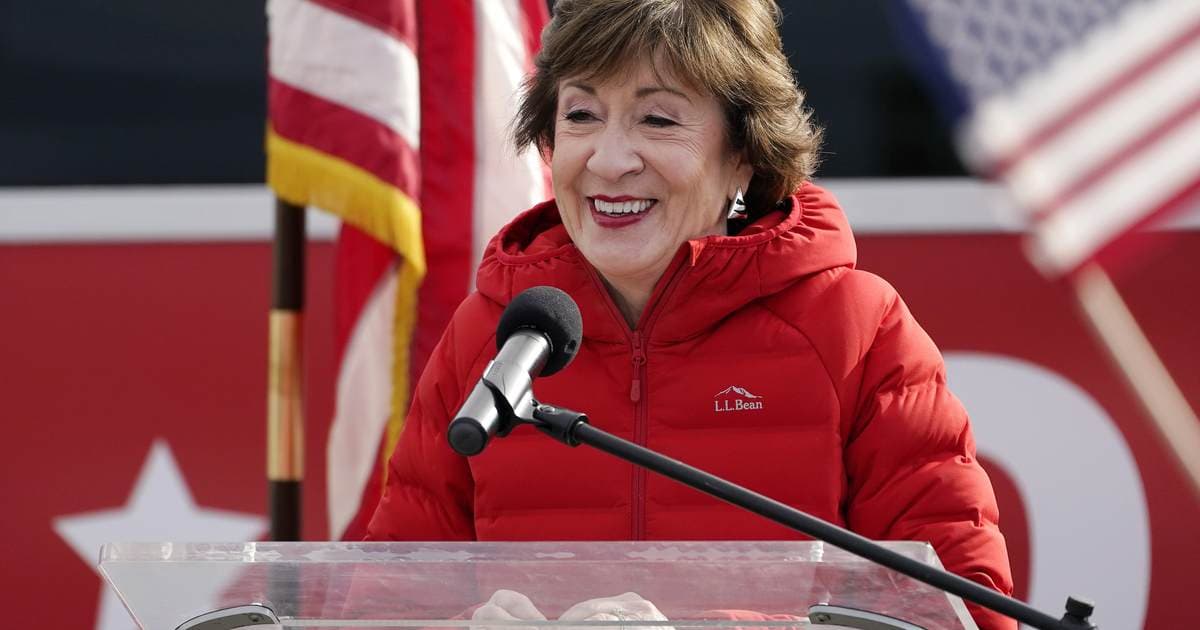
ProPublica: FBI Bribery Probe Into Collins Died Under Trump
Left says
- •A Navatek executive told agents his company won federal contracts by funneling $500,000 in disguised donations to Collins' super PAC through a shell company, with internal emails describing a $32 million payoff.
- •The FBI's public corruption unit had gathered enough evidence by late 2024 to pursue a sweeping bribery investigation potentially implicating multiple lawmakers, not just Collins.
- •Trump's overhaul of the FBI and DOJ's public corruption teams after his reelection effectively terminated the probe before it could run its course, denying the public a full accounting.
- •An internal company email and a former Navatek executive's on-record account—'Oh my God, all of it is for sale'—suggest this pay-to-play dynamic may reflect a broader pattern in Washington, not an isolated incident.
Right says
- •Collins' office and the FBI itself have stated her campaign was never the actual target of the investigation, directly contradicting the story's framing.
- •The central accuser, Martin Kao, is a convicted felon who pleaded guilty to money laundering, wire fraud, bank fraud, and FEC violations, and reportedly leveled these claims against Collins only after he was facing sentencing.
- •The former FBI agent who initiated the inquiry, Kevin Gounaud, has a documented history of politically motivated actions, including an effort to investigate Elon Musk, and was later fired.
- •The report's timing—six weeks before a tight Maine Senate election where Collins' opponent has struggled to consolidate Democratic support—raises questions about whether it is designed to influence the race rather than simply report news.
Common Take
High Consensus- A Navatek fundraising meeting took place at a Corner Bakery in Washington, D.C. in late 2019 involving Collins' super PAC fundraiser Scott Reed and Navatek executives.
- Navatek CEO Martin Kao pleaded guilty to federal crimes including money laundering, wire fraud, and false FEC submissions.
- No member of Collins' campaign or office has been criminally charged in connection with the Navatek matter.
- The FBI's investigation into potential public corruption tied to this matter did not result in continued prosecution after 2024.
The Arguments
Left argues
Internal Navatek emails documenting a $32 million payoff commitment, combined with a former executive's on-record 'all of it is for sale' testimony, provide contemporaneous documentary evidence that goes beyond one felon's say-so.
Right counters
Documentary emails from a company whose CEO was independently proven to be a fraudster who lied to federal regulators should be treated with extreme skepticism, especially when Collins' office and the FBI itself say she was never the actual target.
Right argues
The story's central accuser, Martin Kao, is a convicted felon who pleaded guilty to money laundering, wire fraud, and FEC violations, and only made these allegations against Collins while facing sentencing—a classic motive to shift blame and curry favor.
Left counters
A source's criminal history doesn't automatically invalidate his testimony, especially when it's corroborated by internal company emails and a second, independent former executive's account of the scheme.
Right argues
The investigation's initiator, former FBI agent Kevin Gounaud, has a documented history of politically motivated targeting, including pursuing Elon Musk, and was later fired—raising legitimate questions about the objectivity of the probe's origins.
Left counters
Attacking the investigator's background doesn't address the substance of the underlying evidence—shell company transactions, timed donations, and contract outcomes—which exists independent of who first flagged it.
Left argues
Regardless of who Collins' office says was the 'target,' the FBI's public corruption unit had gathered enough evidence by late 2024 to pursue a sweeping investigation implicating multiple lawmakers, and the public deserves to know why that effort was shut down after a change in administration.
Right counters
An investigation being contemplated is not the same as wrongdoing being established, and framing a stalled preliminary inquiry as evidence of guilt presumes conclusions the FBI itself never reached.
Right argues
The report's publication just six weeks before a tight Maine Senate election, targeting only Collins by name despite alleging a pattern involving 'two dozen' lawmakers, suggests political timing designed to influence the race rather than neutral public-interest journalism.
Left counters
Investigative journalism often publishes findings when they're ready, and holding a legitimate story about potential corruption until after an election to avoid 'affecting' it would itself be a form of election interference by omission.
Challenge Questions
These questions target genuine internal contradictions — meant to provoke honest reflection.
Right asks Left
“If the FBI and Collins' office both confirm she was never the actual target of the investigation, on what basis does the story's framing—built around her—hold together, and does relying primarily on a convicted fraudster's post-plea allegations meet the evidentiary bar this story implies?”
Left asks Right
“If the substance of the emails and the independent former executive's corroborating account are set aside purely because of the messenger's criminal record and timing, what standard of evidence would the right accept to investigate alleged pay-to-play corruption involving any sitting senator?”
Outlier Report
Left Fringe
Groups like MoveOn and some Warren-aligned progressive activists who amplify the story as definitive proof of corruption without engaging the credibility caveats about Kao represent maybe 15-20% of the left, pushing a more absolutist 'this proves it' framing.
Right Fringe
Commentators like Mollie Hemingway and Matt Whitlock who frame ProPublica itself as a 'dark money' partisan operation entirely discrediting the story represent a vocal but not universal segment (~25-30%) of the right; most conservatives likely take the more measured 'credibility problems undermine this' position rather than dismissing it as pure conspiracy.
Noise Assessment
High — this is a fast-moving, election-adjacent story where partisan X accounts and campaign staff (Annie Clark, Troy Jackson) are driving much of the visible discourse, likely amplifying the story's political salience well beyond how many ordinary voters are actually following the granular details of Navatek, shell companies, and FBI personnel changes.
Sources (7)
The FBI sought to launch a pay-to-play investigation examining interactions between Collins and a top donor
Even Navatek’s executives were surprised at how far their money went in D.C. “It was eye-opening for me, frankly. ‘Oh my God, all of it is for sale. It’s all for sale,’” Eric Schiff, a former Navatek executive, told ProPublica.
<p>The post <a href="https://www.propublica.org/article/fbi-susan-collins-navatek-campaign-donations-investigation">The FBI Anti-Corruption Squad Was Circling Susan Collins — Until Trump Got in the Way</a> appeared first on <a href="https://www.propublica.org">ProPublica</a>.</p>
<img alt="Susan Collins" class="webfeedsFeaturedVisual wp-post-image" src="https://thefederalist.com/wp-content/uploads/2026/09/45656274601_4cd3a92e93_k-1200x675.jpg" style="display: block; margin: auto; margin-bottom: 5px;" />If ProPublica's two key subjects including a criminal and a man with repeated history of targeting Republicans was not enough to cast a shadow of doubt on the credibility and bias of this story and outlet, let's not forget the outlet has spent years running anti-Republican propaganda.
Maine Democratic Senate nominee Troy Jackson criticized his opponent, Sen. Susan Collins (R-Maine), saying “the jig is up,” following a ProPublica corruption report into the senator which her aide calls “categorically false.”  “This is corruption of the highest order. Susan Collins delivered millions in taxpayer dollars for a corrupt donor bankrolling her campaign, and then…