Record Diesel Prices Hit as Iran War Escalates: Who's to Blame?
Left says
- •Ordinary consumers, truck drivers, and small businesses are bearing the brunt of a war whose escalation the administration has downplayed, with Trump himself calling the conflict 'small potatoes' even as it drives everyday costs higher.
- •Rising diesel prices will ripple through grocery, farming, and construction costs, hitting working- and middle-class families hardest just as economic pressures mount ahead of the midterms.
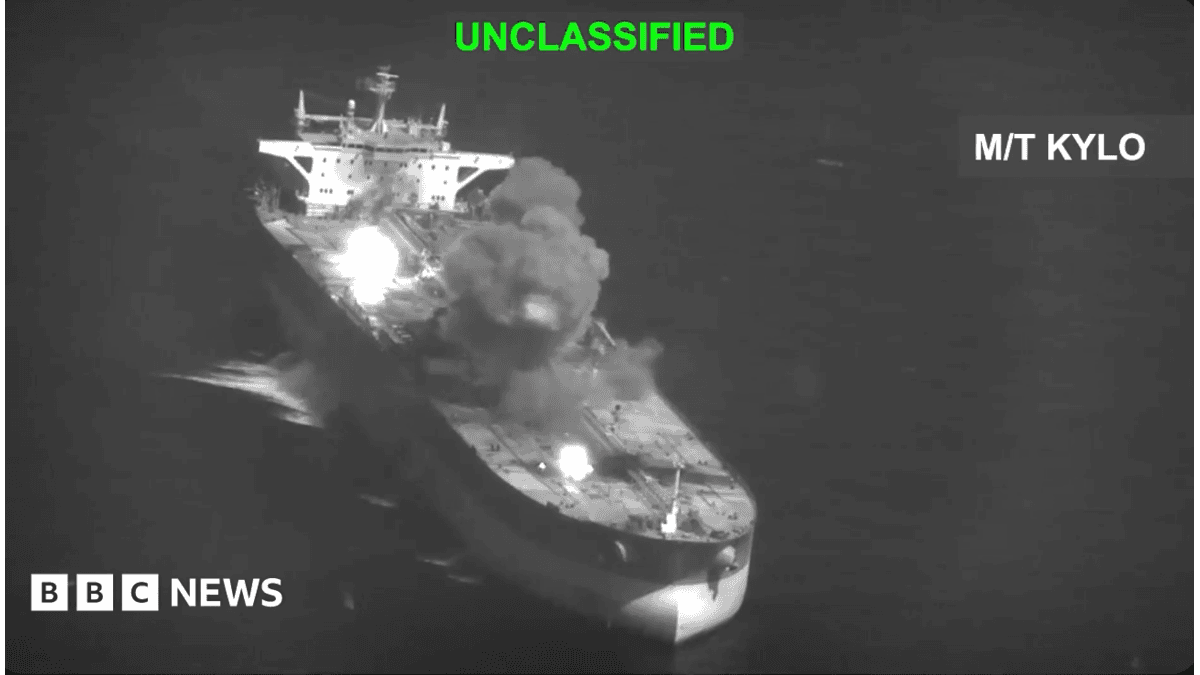
- •The tit-for-tat military escalation, including US strikes on Iranian tankers and Iran's retaliatory attacks, shows a conflict spiraling without a clear strategy to de-escalate or protect global energy supplies.
- •Democratic candidates are highlighting how diesel-driven inflation touches nearly every consumer good, framing it as a tangible cost of the administration's handling of the war.
Right says
- •The Iranian regime's aggression, including attacks on US warships and oil tankers, justifies a firm military response to protect American forces and interests in the Gulf.
- •Record diesel prices are a direct consequence of Iran's provocations and global supply disruptions, not a failure of US policy, and the administration is responding decisively to threats against American ships.
- •Comparisons to the 2022 Biden-era energy crisis show that fuel price spikes tied to foreign conflicts are not unique to this administration and reflect broader global instability rather than domestic mismanagement.
- •Diesel prices topping even the 2022 record underscore the economic stakes of the conflict, but the blame lies with Iran's actions and its shadow oil network funding regional proxies.
Common Take
High Consensus- US diesel prices hit a record national average of around $5.85 to $5.88 per gallon in early September 2026, according to AAA and GasBuddy.
- The escalating US-Iran conflict, now in its sixth month, is directly disrupting global oil and refining supplies.
- Higher diesel prices are expected to raise costs across trucking, farming, construction, and grocery delivery, affecting consumers broadly.
- The current price spike surpasses the previous record set in 2022 following Russia's invasion of Ukraine.
The Arguments
Left argues
Record diesel prices, now exceeding even the 2022 crisis, are hitting truckers, farmers, and consumers hard, and the administration's own rhetoric—dismissing a six-month war as 'small potatoes'—suggests a troubling disconnect between the human and economic toll and how seriously officials are treating de-escalation.
Right counters
Acknowledging the economic pain from a foreign conflict is not the same as ignoring it; the administration is actively responding to Iranian aggression against US ships and tankers, and downplaying rhetorical bravado shouldn't be conflated with a lack of substantive policy response.
Right argues
Iran initiated attacks on US warships and oil tankers, and Centcom's strikes on tankers funding the IRGC's regional proxy network represent a justified defensive response to protect American forces and choke off funding for terrorism, not a reckless escalation.
Left counters
Even if individual strikes are defensively framed, the tit-for-tat pattern over six months with no clear off-ramp suggests a strategy vacuum, and calling the resulting economic damage 'small potatoes' undercuts the claim that the administration is taking the stakes seriously.
Right argues
Diesel prices spiked to records under Biden in 2022 due to the Ukraine war, showing that fuel shocks from foreign conflicts are a recurring feature of global instability rather than a unique failure of any single administration's domestic policy.
Left counters
Pointing to a past precedent doesn't absolve current responsibility—voters judge officials on outcomes during their watch, and the fact that this record now surpasses 2022 by four cents makes the comparison a weak defense rather than a reassurance.
Left argues
Diesel-driven inflation touches nearly every consumer good—groceries, construction, farming—making it a uniquely broad and tangible economic burden that Democratic candidates are right to spotlight as a real-world cost of the war's mismanagement ahead of the midterms.
Right counters
Blaming domestic policy for a globally-driven price spike ignores that Brent crude and refining disruptions are being shaped by Iran's own shadow oil network and attacks on shipping, meaning the root cause lies with Tehran's aggression, not decisions made in Washington.
Left argues
The escalating cycle of strikes and counterstrikes, including attacks on tankers and warships, shows a conflict spiraling without an articulated plan to protect global energy supplies or bring the war to a close, leaving consumers to absorb the fallout indefinitely.
Right counters
Hegseth's stated policy—that any Iranian attack on US ships will be met with strikes on their oil tankers—is in fact a clear, articulated deterrence strategy, even if it doesn't guarantee a quick resolution to a conflict Iran itself continues to escalate.
Challenge Questions
These questions target genuine internal contradictions — meant to provoke honest reflection.
Right asks Left
“If Democratic candidates are highlighting diesel prices as a political liability for the administration, does that framing hold up given that prices spiked comparably under the previous administration during the 2022 Ukraine-driven energy crisis for similar external reasons?”
Left asks Right
“If the administration insists its strikes on Iranian tankers are a decisive, justified response to protect American interests, why does the president simultaneously describe the same six-month conflict as 'small potatoes,' and what does that gap suggest about how seriously the economic and strategic stakes are being weighed?”
Outlier Report
Left Fringe
Progressive commentators and some Democratic candidates like Shawn Harris frame this as evidence of reckless warmongering demanding immediate troop withdrawal or war-powers restrictions; this more anti-war absolutist framing represents maybe 15-20% of the left, with most Democrats focusing on cost-of-living messaging rather than opposing the military response itself.
Right Fringe
Pundits like Sean Hannity or accounts amplifying Hegseth's 'sink their tankers' rhetoric fully endorse escalation as necessary and dismiss inflation concerns as media hype; this hawkish dismiss-the-cost framing represents roughly 15-20% of the right, while more populist/economic-anxiety conservatives worry openly about diesel costs hurting truckers and farmers.
Noise Assessment
High noise ratio: much of the online discourse (X posts, cable punditry) is performative partisan blame-assignment tied to midterm positioning, while most ordinary consumers experience this simply as 'gas costs more' without deep engagement in the geopolitical blame game.
Sources (6)
The US says it hit three Iranian oil tankers, while Iran says it targeted three US-linked ships.
American truck drivers and travelers are struggling to fill up their tanks amid higher gas and diesel prices linked to the Iran war. Ali Bauman has more.
Diesel Prices Now Higher Than They Were Under Biden
Diesel prices hit a record high Saturday as the U.S. conflict with Iran continued to disrupt Persian Gulf energy supplies, threatening to drive up the cost of everything from groceries to construction and adding another headache for President Trump ahead of the midterms.
The average price of diesel hit an all-time high Friday in the U.S., as the conflict with Iran puts more strain on the global energy supply. The average cost of a gallon of diesel in the U.S. was up to around $5.85 on Friday morning, according to AAA. This is a 58 percent cost increase…
Surging fuel cost puts additional cost pressure on manufacturing and retail.