Republicans Split Over Trump's Iran Deal as Hawks Cry 'Disastrous Mistake'
Intra-Party Split Detected
Significant Republican split with hawks like Cruz, Graham, and Wicker opposing Trump's Iran deal while leadership like Johnson and Rubio defend it
Left says
- •Trump's deal fails to address Iran's nuclear program while allowing billions in sanctions relief, repeating the same mistakes he criticized in Obama's approach
- •The agreement leaves Iran in a stronger position with control over the Strait of Hormuz and continued uranium enrichment capabilities
- •Trump has been outmaneuvered by Iranian negotiators who are securing economic benefits without meaningful concessions on their core strategic objectives
Right says
- •Trump's military strikes successfully forced Iran to negotiate for the first time in decades from a position of weakness
- •The deal represents a diplomatic victory that avoids unnecessary American casualties while achieving key objectives through strength
- •Critics are undermining the president's negotiating position by publicly attacking terms of an agreement still being finalized
- •Any final deal will include strict enforcement mechanisms to prevent Iran from developing nuclear weapons
Common Take
High Consensus- Iran's nuclear program remains a critical national security concern that must be addressed
- The Strait of Hormuz is vital to global commerce and energy markets
- Military action against Iran has imposed significant costs on their capabilities
- Details of any final agreement are still being negotiated and have not been fully disclosed
The Arguments
Right argues
Trump's military strikes successfully forced Iran to negotiate from a position of weakness for the first time in decades, achieving what previous administrations could not accomplish through diplomatic pressure alone.
Left counters
Iran is actually negotiating from a position of strength, having gained effective control over the Strait of Hormuz and maintained its uranium enrichment capabilities while securing billions in sanctions relief.
Left argues
The emerging deal repeats Obama's mistakes by providing Iran with economic benefits without meaningful concessions on nuclear weapons, leaving Tehran with highly enriched uranium it didn't possess before Trump's presidency.
Right counters
Unlike Obama's deal, this agreement includes strict enforcement mechanisms and Trump has already demonstrated his willingness to use military force, making Iranian compliance far more likely than under previous frameworks.
Right argues
Critics are undermining America's negotiating position by publicly attacking terms of an agreement that is still being finalized, potentially sabotaging diplomatic progress that could avoid unnecessary American casualties.
Left counters
Congressional oversight and public scrutiny are essential checks on executive power, especially when the administration appears willing to accept terms that leave Iran's core strategic capabilities intact.
Left argues
Iran has outmaneuvered Trump by securing control over critical shipping lanes and maintaining nuclear infrastructure while offering only temporary ceasefires, essentially achieving their strategic objectives without fundamental concessions.
Right counters
The deal represents a diplomatic victory that reopens vital shipping lanes and addresses nuclear concerns through negotiation rather than prolonged military conflict that would be far more costly in lives and resources.
Challenge Questions
These questions target genuine internal contradictions — meant to provoke honest reflection.
Right asks Left
“If Trump's approach is fundamentally flawed and Iran is negotiating from strength, why are you simultaneously arguing that Iran was forced to negotiate at all - wouldn't a truly strong Iran simply ignore American pressure entirely?”
Left asks Right
“If Trump has already demonstrated his willingness to use overwhelming military force against Iran, how can you argue that Iran would risk violating an agreement when they've seen the consequences of defying this administration's red lines?”
Outlier Report
Left Fringe
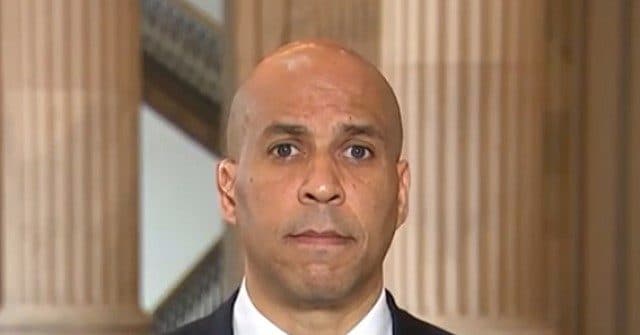
Sen. Cory Booker represents the most aggressive Democratic criticism, calling Trump 'played as a fool' and demanding immediate military escalation rather than any diplomatic solution. This represents roughly 15-20% of the Democratic base who oppose any engagement with Iran.
Right Fringe
Sens. Ted Cruz, Roger Wicker, and Lindsey Graham lead the hawkish Republican faction demanding continued military action and rejecting any deal that leaves Iran's government intact. This represents approximately 25-30% of the Republican base who favor maximum pressure over diplomacy.
Noise Assessment
High performative element - many criticisms appear designed for political positioning rather than genuine policy concerns. The online spat between Cruz and Trump adviser Alex Bruesewitz exemplifies how much discourse is driven by political theater rather than substantive public debate.
Sources (21)
<p>Sunday on CNN's "State of the Union," Sen. Cory Booker (D-NJ) claimed President Donald Trump was "being played as a fool" by Iran.</p> <p>The post <a href="https://www.breitbart.com/clips/2026/05/24/booker-trump-is-being-played-as-a-fool-by-iran/" rel="nofollow">Booker: ‘Trump Is Being Played as a Fool’ by Iran</a> appeared first on <a href="https://www.breitbart.com" rel="nofollow">Breitbart</a>.</p>
Cruz appears concerned about any deal that would leave the "Iranian Regime" in place.
House Speaker Mike Johnson on Sunday defended President Donald Trump's tentative Iran agreement despite Republican criticism of a framework that would reopen the Strait of Hormuz and extend a 60-day ceasefire while postponing talks on Tehran's nuclear program.
Donald Trump Jr. publicly celebrated what supporters are calling a major breakthrough in U.S.-Iran negotiations, strongly backing his father, President Donald Trump's reported agreement aimed at dismantling Iran's nuclear capabilities.
The U.S. must remain cautious in negotiations with Iran because the Islamic regime has shown no indication it ultimately wants peace or will stop backing regional militias, former Trump foreign policy adviser Walid Phares said Sunday on Newsmax.
Sen. Ted Cruz, R-Texas, publicly broke with the White House on Saturday over the emerging terms of a U.S.-Iran peace framework, saying he was "deeply concerned" the deal would give Tehran sanctions relief and a path to continued uranium enrichment.
U.S. lawmakers appearing on Sunday morning talk shows split sharply over a potential deal to end the Iran war, with Republicans mostly backing the publicly reported contours of an agreement being negotiated by President Donald Trump and Democrats dismissing it as...
Negotiations between the Trump administration and Iran appear to have made progress, former National Security Council chief of staff Fred Fleitz said Sunday.
Former Rep. Peter King, R-N.Y., said Sunday on Newsmax that while hopes remain high for a peace agreement involving Iran, more work still needs to be done before the conflict can be considered resolved.
Lawmakers, including some of President Trump’s closest allies, slammed the emerging agreement as effectively undermining the president’s own war goals.
President Donald Trump's emerging deal to end the Iran war is drawing heavy criticism from some fellow Republicans who favor a harder line against the government in Tehran and fear a lost opportunity to finally rein in a longtime Mideast nemesis.
<p>Trump insists US won’t rush talks with Tehran after rebukes from Republicans, including Ted Cruz and Lindsey Graham</p><p><a href="https://www.theguardian.com/us-news/republicans">Republican</a> hawks have issued a rare rebuke of <a href="https://www.theguardian.com/us-news/donaldtrump">Donald Trump</a> over his planned <a href="https://www.theguardian.com/world/2026/may/23/trump-ceasefire-iran-strait-of-hormuz">peace deal</a> with Iran, describing it as a “disaster” and questioning why the US president launched the war in the first place.</p><p>Allies of Trump who strongly backed his controversial decision to order war on Iran alongside Israel urged him to “hold the line” this weekend, despite mounting economic costs and no sign of progress on many of the the <a href="https://www.theguardian.com/us-news/2026/mar/07/trump-rationale-war-iran-story">initial objectives</a> set out by his administration.</p> <a href="https://www.theguardian.com/world/2026/may/24/republican-hawks-trump-deal-iran">Continue reading...</a>
Secretary of State Marco Rubio shot back at Republican criticism of a possible deal with Iran as “absurd,” adding that “our preference is to address this through a diplomatic means.” “The idea that somehow this president — given everything he’s already proven he’s willing to do — is going to somehow agree to a deal…
House Speaker Mike Johnson (R-La.) on Sunday defended the Trump administration’s tentative deal with Iran, parts of which Iranian officials have disputed. President Trump previously said a deal to reopen the Strait of Hormuz and a 60-day extension to the ceasefire were “largely negotiated.” No mention was made of the fate of Iran’s nuclear program…
Sen. Thom Tillis (R-N.C.) on Sunday added his voice to other Republicans criticizing an emerging peace deal with Iran, saying he would not support it based on his understanding of what it includes. “It doesn’t make sense to me,” Tillis said of the deal, arguing it was a mistake to leave nuclear material in Iran.…
Sen. Rand Paul (R-Ky.) is pushing back on fellow Republicans who have criticized an emerging deal being negotiated by the Trump administration to end the war with Iran. Paul, who has criticized the war while joining with Democrats to support War Powers Resolution votes to curb President Trump’s actions, said those criticizing Trump should give…
Sen. Ted Cruz (R-Texas) sparred with one of President Trump’s outside advisers on social media Saturday after indicating he was “deeply concerned” about the terms of an emerging deal between the U.S. and Iran. “I am deeply concerned about what we are hearing about an Iran ‘deal,’ being pushed by some voices in the administration,”…
Key Senate Republicans are raising concerns about a reported peace deal being negotiated with Iran, arguing it would be a disaster for the United States that would make meaningless the war launched by President Trump nearly three months ago. “The rumored 60-day ceasefire — with the belief that Iran will ever engage in good faith…
Senate Armed Services Committee Chair Roger Wicker (R-Miss.) on Friday called for renewed strikes on Iran, pressing President Trump to “finish the job he started” and warning him of an “ill advised” deal with Tehran. Wicker advocates for Trump to allow U.S. forces to fully destroy Tehran’s military capabilities and reopen the Strait of Hormuz,…
President Donald Trump's emerging deal to end the Iran war is drawing heavy criticism from some fellow Republicans who favor a harder line against the government in Tehran and fear a lost opportunity to finally rein in a longtime Mideast nemesis.