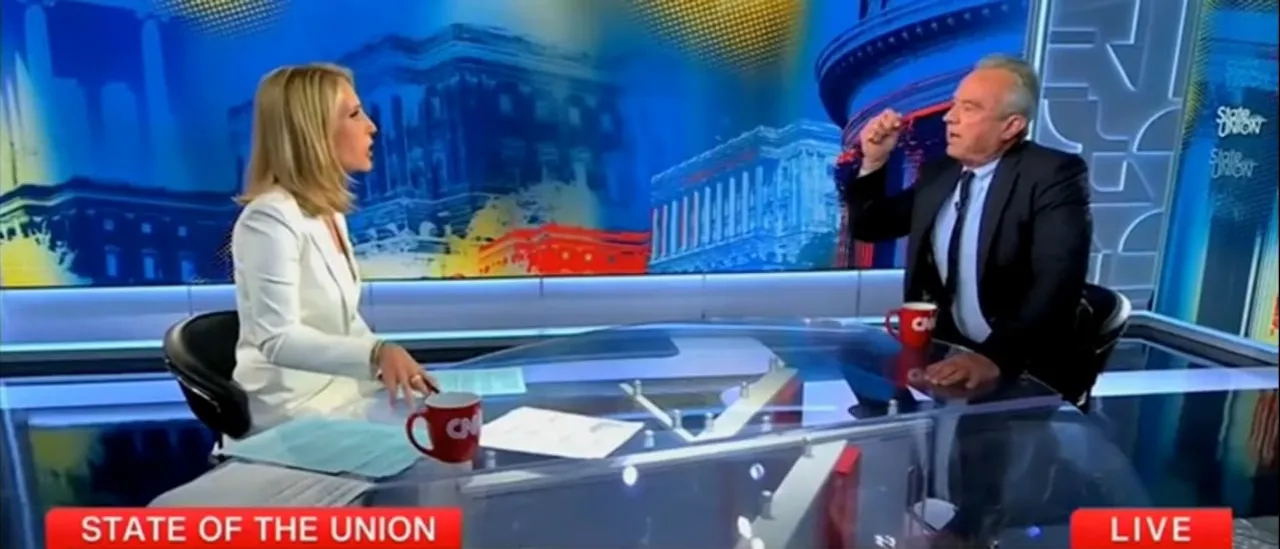
RFK Jr. and CNN's Bash Clash Over Vaccines, Autism, COVID Truth
Left says
- •Decades of research involving millions of patients have consistently found no causal link between vaccines and autism, and repeating this consensus on air is not bias but responsible journalism.
- •Bash's questioning reflects a legitimate journalistic duty to challenge public health claims made by a sitting HHS secretary that diverge from established scientific consensus, especially given his history as a prominent vaccine skeptic.
- •The measles outbreak, now at a 35-year high with 93% of cases among the unvaccinated, raises real concerns about the public health consequences of vaccine hesitancy promoted by officials in positions of authority.
- •Blaming media coverage or 'censorship' for COVID-era public health messaging sidesteps the reality that clear communication about a novel, deadly virus was a difficult but necessary public service.
Right says
- •Kennedy argues that dismissing all vaccine-autism research inquiry as settled science shuts down legitimate scientific investigation, including into Tylenol exposure during pregnancy, which he says has 73 supporting studies.
- •Kennedy contends the COVID-era media, including CNN, engaged in fear-mongering through constant death-toll chyrons and suppressed dissenting scientific voices rather than practicing the skepticism journalism requires.
- •He points out that Anthony Fauci's own diary entries reportedly show President Trump repeatedly pushing to reopen the country, undercutting the narrative that Trump supported prolonged lockdowns.
- •Kennedy frames his role as HHS secretary as pursuing truth and further research rather than simply reinforcing existing institutional narratives, even when that research challenges figures like Fauci or established public health messaging.
Common Take
High Consensus- Kennedy stated on air that he supports parents vaccinating their children against measles.
- Both Kennedy and Bash agree the measles outbreak is a serious public health concern worth addressing.
- Both acknowledge that COVID-era lockdowns caused disruptions, including missed childhood vaccinations that may have contributed to current outbreaks.
- Both agree that questions about the origins and drivers of autism, including potential environmental factors, are worth continued scientific study.
The Arguments
Left argues
More than 40 studies involving 5.6 million people have found no causal link between vaccines and autism, and Bash's insistence on citing that consensus on air is a basic function of journalism, not bias, especially when a sitting HHS secretary suggests otherwise.
Right counters
Kennedy argues that citing a settled consensus on vaccines doesn't foreclose legitimate scientific inquiry into other factors like fetal brain development or Tylenol exposure, which he says has 73 supporting studies and deserves the same open investigation rather than dismissal.
Right argues
Kennedy contends that journalism requires 'fierce skepticism toward authority,' and that CNN and other outlets instead amplified fear through constant death-toll chyrons while marginalizing dissenting scientists during COVID, an approach he calls 'press malpractice.'
Left counters
Communicating the severity of a novel virus that ultimately killed over a million Americans was a difficult but necessary public service, and equating accurate mortality reporting with fear-mongering risks undermining public trust in future health emergencies.
Right argues
Kennedy points to Fauci's own diary entries reportedly showing Trump repeatedly pushing to reopen the country, which he argues undercuts the narrative that Trump was responsible for prolonged lockdowns and shifts accountability toward unelected bureaucrats like Fauci.
Left counters
Trump was president and held ultimate authority over federal pandemic policy; invoking private diary entries to deflect blame from the person who was actually in charge doesn't erase his administration's formal role in the response.
Left argues
With measles at a 35-year high and 93% of cases among the unvaccinated, Bash's pressing of Kennedy on his responsibility as the nation's most prominent vaccine skeptic-turned-HHS-secretary reflects legitimate concern about how his rhetoric may be fueling a genuine public health crisis.
Right counters
Kennedy notes the outbreak reflects a broader international trend with higher per-capita rates elsewhere, and that reduced childhood immunization during COVID lockdowns—not his current messaging—created the vulnerable populations now driving the surge; he also publicly urged parents to vaccinate against measles during the interview.
Right argues
Kennedy frames his role at HHS as pursuing further research and truth-telling rather than simply reinforcing existing institutional narratives, arguing that real science requires ongoing investigation even when it challenges figures like Fauci or established messaging.
Left counters
There's a meaningful difference between pursuing genuine open scientific questions and re-litigating a thoroughly studied question like vaccine-autism links; using an HHS platform to cast doubt on settled science can itself contribute to the erosion of public trust that fuels outbreaks like the current measles surge.
Challenge Questions
These questions target genuine internal contradictions — meant to provoke honest reflection.
Right asks Left
“If decades of study can be described as fully 'settled' on vaccines and autism, why is it appropriate for journalists and public officials to treat other contested areas of pandemic-era science—like lockdown efficacy, mask mandates, or lab-leak origins—as open questions rather than similarly settled?”
Left asks Right
“If Kennedy believes journalism should exercise 'fierce skepticism toward authority,' does that same standard apply to his own claims as HHS secretary, including the 73 studies he cites on Tylenol and autism, or only to the authority of institutions he disagrees with?”
Outlier Report
Left Fringe
Figures like Dr. Peter Hotez represent the strong pro-consensus, zero-tolerance-for-skepticism wing (~15-20% of the left), viewing any RFK Jr. platforming as dangerous; most Democrats are less absolutist but still trust the consensus.
Right Fringe
Figures like Alex Jones and hardline anti-vaccine activists represent an extreme fringe (~10-15% of the right) who reject vaccine safety broadly, going further than RFK Jr.'s more measured 'just asking questions' stance that most Trump-aligned voters hold.
Noise Assessment
High noise ratio — outlets like RedState, PJ Media, and Townhall frame this as a decisive 'win' for Kennedy in highly performative terms, while Salon and CNN's own statement defend Bash's professionalism; actual public opinion is more measured and less polarized than the combative framing in either camp suggests.
Sources (8)
‘You’re Like A Parrot’: RFK Jr. Verbally Brawls With CNN Host Over Having To ‘Trust The Experts’
“Trump, as you recall, wanted to end the lockdowns. I think the thing that did the most damage to our country was the lockdowns,” Kennedy says
The HHS secretary denied responsibility for the nation's measles surge while defending vaccine skepticism
Health and Human Services Secretary Robert Kennedy Jr. said Sunday the media engaged in "press malpractice" and fear-mongering during the COVID pandemic.
Health and Human Services (HHS) Secretary Robert F. Kennedy Jr. and CNN’s Dana Bash clashed over vaccine safety and COVID-19 in a heated interview on Sunday. The tension in the “State of the Union” interview began when Bash pushed back on a claim from Kennedy about the U.S. having “the highest death rate from COVID…