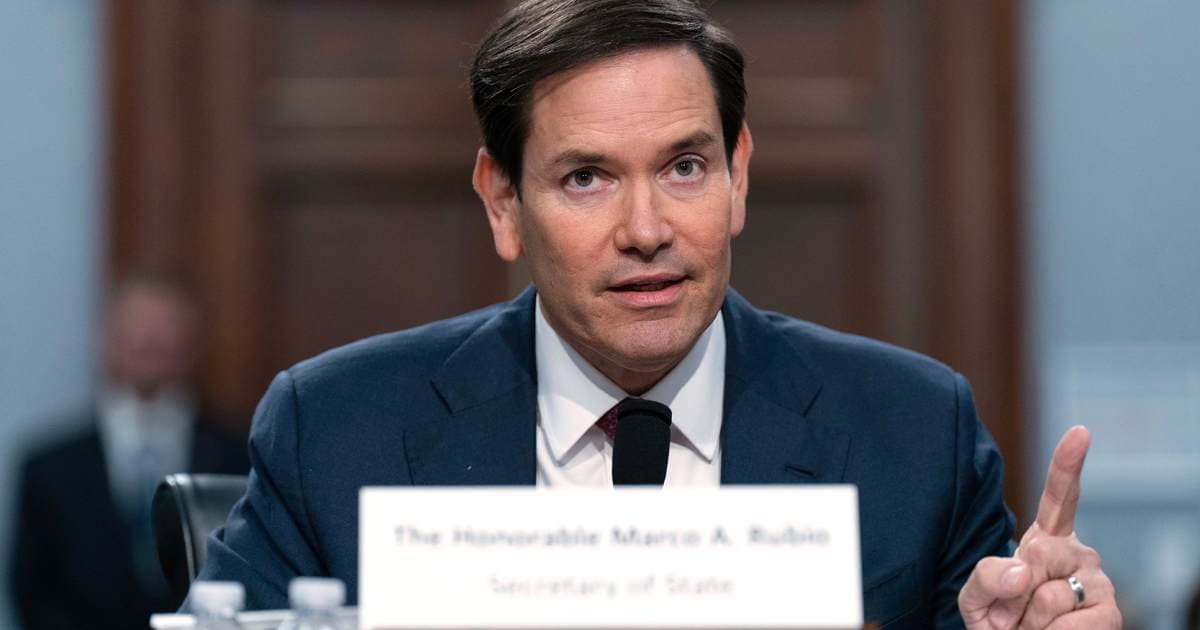
 Marco Rubio speaking at a Senate hearing, gesturing while making a point
Rubio Hints Iran Crisis Will Be Solved 'One Way or the Other'
Intra-Party Split Detected
Some Trump allies are criticizing the administration for pursuing a peace deal with Iran, while Rubio defends the diplomatic approach
Left says
- •Trump's aggressive rhetoric toward Iran risks escalating tensions and potentially dragging America into another costly Middle East conflict
- •Diplomatic solutions require patience and multilateral cooperation, not ultimatums that could backfire and strengthen hardliners in Tehran
- •The administration's approach mirrors past foreign policy mistakes that prioritized military threats over sustained diplomatic engagement
Right says
- •Trump's firm stance demonstrates strength and gives America maximum leverage in negotiations with a regime that only responds to pressure
- •The administration prioritizes diplomacy while maintaining credible military deterrence to prevent Iran from exploiting perceived weakness
- •Critics opposing the peace deal fail to recognize that Trump's approach has already produced tangible progress in ongoing negotiations
Common Take
High Consensus- Iran's nuclear ambitions pose a legitimate threat that requires serious attention from U.S. policymakers
- Diplomatic solutions are preferable to military conflict when addressing international disputes
- The Strait of Hormuz represents a vital international shipping lane that must remain open for global commerce
- Progress has been made in ongoing negotiations between the United States and Iran
The Arguments
Right argues
Trump's 'peace through strength' approach has already produced tangible progress in Iran negotiations, with Rubio confirming ongoing diplomatic work while maintaining credible military deterrence that prevents Iran from exploiting perceived American weakness.
Left counters
Aggressive ultimatums like 'one way or the other' actually strengthen Iranian hardliners who can point to American threats to justify their own militant positions, making diplomatic breakthroughs less likely rather than more.
Left argues
The administration's threatening rhetoric risks escalating tensions into another costly Middle East conflict, repeating past foreign policy mistakes where military threats undermined rather than supported diplomatic solutions.
Right counters
Iran's regime has historically only responded to pressure and strength, not diplomatic overtures alone - the current progress in negotiations demonstrates that credible deterrence creates the leverage necessary for meaningful diplomatic breakthroughs.
Right argues
Rubio explicitly stated Trump's preference is for diplomatic solutions through the State Department rather than military action, while ensuring Iran cannot threaten vital international shipping lanes like the Strait of Hormuz.
Left counters
Framing diplomacy as backed by implicit military threats creates a coercive environment that makes genuine negotiation difficult and risks miscalculation that could spiral into unintended conflict.
Left argues
Sustainable diplomatic solutions require patient multilateral cooperation and trust-building, not ultimatums that could backfire by giving Iranian hardliners ammunition to argue against engagement with the West.
Right counters
Iran has repeatedly violated international agreements and used diplomatic engagement as cover to advance its nuclear program - only credible consequences and pressure have proven effective in bringing them to serious negotiations.
Right argues
The administration is pursuing an 'America First' diplomatic strategy that protects vital national interests while avoiding unnecessary military entanglements, as evidenced by Rubio's assurance that any deal won't strengthen Iran's nuclear ambitions.
Left counters
Unilateral approaches that bypass traditional allies and international frameworks often fail to produce lasting solutions and can isolate America diplomatically when sustained multilateral pressure is needed.
Challenge Questions
These questions target genuine internal contradictions — meant to provoke honest reflection.
Right asks Left
“If diplomatic engagement without credible consequences has repeatedly failed to prevent Iran's nuclear advancement and regional aggression over decades, what specific alternative approach would actually compel Iranian compliance without appearing weak?”
Left asks Right
“If the administration truly prefers diplomatic solutions as Rubio claims, why use threatening language like 'one way or the other' that could undermine the very negotiations they say are making progress?”
Outlier Report
Left Fringe
Progressive anti-war activists like CodePink's Medea Benjamin and some Squad members like Rashida Tlaib who oppose any military threats against Iran, representing roughly 15-20% of the left coalition.
Right Fringe
Neoconservative hawks like John Bolton and some Republican senators like Tom Cotton who prefer immediate military action over prolonged negotiations, representing about 10-15% of the right coalition.
Noise Assessment
Moderate noise level - most discourse reflects genuine policy differences rather than performative positioning, though some partisan media amplifies extreme positions that don't represent mainstream opinion.
Sources (3)
“This problem will be solved, as the president’s made clear, one way or the other.” Secretary of State Marco Rubio delivered that blunt warning while hinting the Trump administration could be on the verge of a major breakthrough with Iran after weeks of escalating tensions tied to Operation Epic Fury and the growing standoff over ...
Secretary of State Marco Rubio on Saturday said progress has been made in the ongoing peace negotiations between the U.S. and Iran, saying the war will be solved “one way or the other” amid a visit to India. “There’s been some progress made. Even as I speak to you now, there’s some work being done,”…