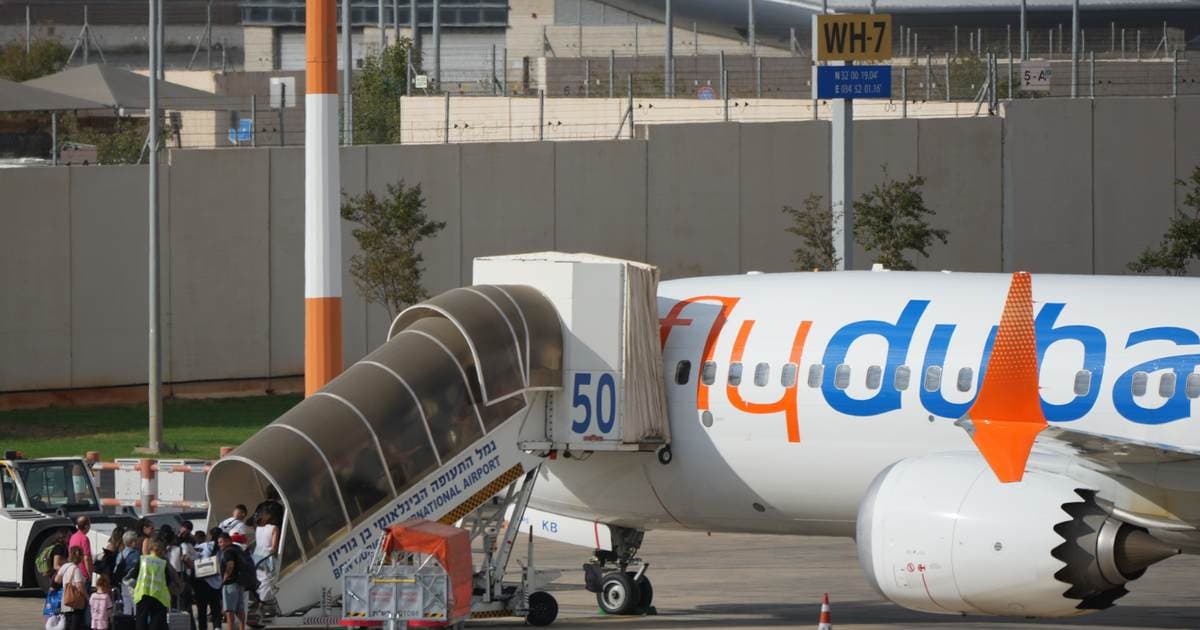
 Passengers board a Flydubai plane at an Israeli airport.
Security Failures Let Flagged Extremist Pilot Target Israel-Bound Jet
Left says
- •The case highlights how radicalization can slip through corporate hiring processes when profit and route demand take priority over rigorous vetting, raising broader questions about airline industry accountability rather than any single nation or religion.
- •Investigators are still determining whether the co-pilot acted alone or was directed by a larger network, and premature conclusions about motive risk inflaming tensions before facts are confirmed.
- •The heroism of passengers and crew who stopped the attack underscores the resilience of ordinary people in the face of institutional failures, and should be centered alongside scrutiny of corporate and governmental lapses.
- •Cross-border information sharing gaps between Oman and FlyDubai reflect systemic weaknesses in international aviation security cooperation that need technical and diplomatic fixes, not just blame.
Right says
- •The attacker's documented history of extremist radicalization, including alleged social media posts expressing a desire to kill Jews, shows a clear ideological motive that should not be minimized or treated as ambiguous.
- •FlyDubai's failure to check with Oman Air before hiring a pilot already flagged and banned for radical views represents a severe and preventable security lapse that endangered over 170 lives.
- •Assigning an Omani national, a country without diplomatic relations with Israel, to a sensitive Dubai-to-Tel Aviv route violated basic security protocols that should have disqualified him from that assignment entirely.
- •Israeli officials, including the prime minister, are right to demand accountability and investigate whether the attacker was directed by outside actors, given the scale of the planned attack compared to September 11.
Common Take
High Consensus- Oman Air grounded the co-pilot in 2024 after discovering extremist material or radical online activity.
- FlyDubai hired him afterward without verifying his background with Oman Air, allowing him onto the sensitive Dubai-Tel Aviv route.
- Passengers and crew physically overpowered the attacker mid-flight, preventing a catastrophic crash that could have killed everyone aboard.
- The incident exposes a clear breakdown in airline security screening and cross-border information sharing that investigators and aviation authorities need to address.
The Arguments
Right argues
The attacker's documented radicalization, including alleged social media posts about wanting to kill Jews and his prior ban by Oman for extremist views, demonstrates a clear ideological motive that should be named plainly rather than treated as an open question.
Left counters
Acknowledging clear evidence of radicalization doesn't preclude the need for a full investigation into whether he acted alone or was directed, since confirming motive and confirming a broader network or sponsor are two distinct factual questions that shouldn't be conflated for the sake of a faster narrative.
Left argues
This case is fundamentally a story about systemic corporate and cross-border institutional failure—FlyDubai's inadequate vetting and the breakdown in information sharing between Oman and the UAE—that could enable a dangerous individual to slip through regardless of their specific ideology.
Right counters
Framing this primarily as a generic 'systemic failure' risks obscuring the specific, documented nature of the threat: this wasn't a random vetting gap but a known extremist, already flagged and banned by his own country, who was waved through onto a flight to Israel specifically.
Right argues
Assigning an Omani national—a country with no diplomatic relations with Israel—to the sensitive Dubai-to-Tel Aviv route violated basic security protocols and reflects a specific, identifiable policy failure, not just vague bad luck.
Left counters
Highlighting this one protocol gap shouldn't distract from the broader pattern of airline-industry profit incentives and weak international vetting cooperation that would likely have let other red flags slip through even with better nationality-based screening.
Left argues
The heroism of the passengers and crew who physically stopped the attack deserves equal or greater attention, since it demonstrates human resilience succeeded where institutional and governmental systems failed.
Right counters
Celebrating the heroes is appropriate and undisputed, but it cannot substitute for rigorous accountability questions about why ordinary passengers were forced to prevent a '9/11-scale' catastrophe that proper screening and diplomatic protocols should have stopped long before boarding.
Right argues
Israeli officials, including the prime minister, are justified in publicly demanding accountability and investigating possible outside direction, given the scale of the planned attack and the stakes of over 170 lives aboard.
Left counters
Public statements from a sitting head of state linking the attack to a potential '9/11-scale' plot and foreign direction risk prematurely shaping the investigation's conclusions and inflaming regional tensions before investigators have verified a wider network actually exists.
Challenge Questions
These questions target genuine internal contradictions — meant to provoke honest reflection.
Right asks Left
“If the attacker had clear documented ties to extremist ideology and a specific prior ban for those views, at what point does emphasizing 'systemic corporate failure' over his individual radicalization become a way of avoiding an uncomfortable conclusion about motive?”
Left asks Right
“If Israeli officials are right to publicly declare a near-9/11-scale plot and demand investigation into outside direction before the UAE-led investigation has concluded, how is that different from the 'premature conclusions' about motive that commentators are otherwise warned against?”
Outlier Report
Left Fringe
Commentators like those at The Intercept or figures such as Glenn Greenwald-style critics who frame Israel-related security incidents skeptically or emphasize Islamophobia risks represent a small fringe (~10-15% of the left) pushing back hard against attributing clear motive, even amid strong evidence.
Right Fringe
Figures like Laura Loomer or certain commentators on outlets like PJ Media/RedState who push toward broader anti-Muslim or anti-Oman state-level blame (suggesting state sponsorship without confirmed evidence) represent roughly 10-15% of the right, going beyond the evidence to imply broader conspiratorial direction.
Noise Assessment
Moderate noise: mainstream coverage across NYT, NBC, WSJ, and conservative outlets largely converges on the same facts (extremist views, hiring failure), so the core narrative isn't highly contested—most of the ideological friction is in framing emphasis (systemic vs. individual blame) rather than factual disagreement, amplified mostly by partisan commentary accounts on social media.
Sources (6)
<p>The Omani co-pilot accused of trying to crash a Flydubai passenger jet carrying more than 170 people, nearly all of them Israeli, had previously been barred from flying over concerns about extremist views and identified as a security risk — and has indicated to investigators that he intended to crash the aircraft in Israel, according to reports Friday.</p> <p>The post <a href="https://www.breitbart.com/politics/2026/10/02/flydubai-hijacker-was-barred-by-oman-flagged-security-risk-intended-to-crash-jet-in-israel/" rel="nofollow">Flydubai Hijacker Was Barred by Oman, Flagged ‘Security Risk’ — Intended to Crash Jet in Israel</a> appeared first on <a href="https://www.breitbart.com" rel="nofollow">Breitbart</a>.</p>
Oman had banned the FlyDubai co-pilot accused of stabbing his captain in an attempted hijacking from flying over concerns that he had adopted “radical ideological views,” according to a new report. Despite the ban, FlyDubai hired the Omani national, allowing him to fly the route between the United Arab Emirates and Israel, The Wall Street ...
The Wall Street Journal reports the co-pilot who tried to fly a plane bound for Israel into the ground had been banned from flying by his home country, Oman, over his radical views. Plus, an Israeli official told NBC News investigators discovered the co-pilot had posted on social media that he wanted to kill Jews. NBC News’ Matt Bradley reports.
It was unclear what background checks had been carried out before he was allowed to fly to Israel.