Sitting Democratic Governor Ousted in First Primary Loss in 8 Years
Intra-Party Split Detected
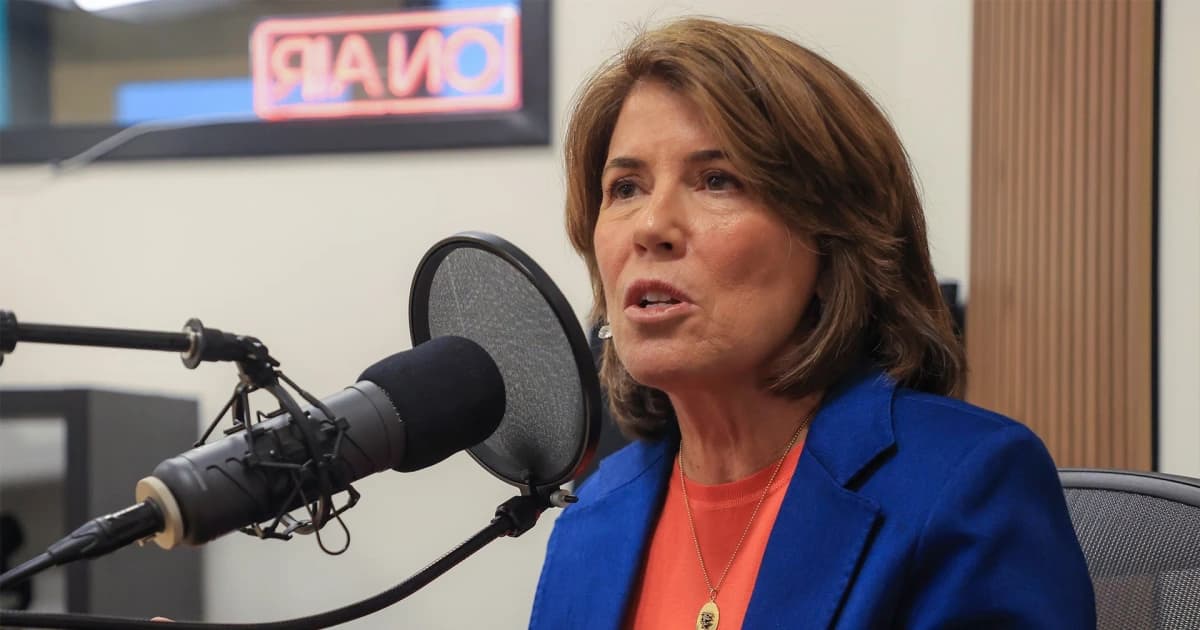
Rhode Island Democratic primary voters rejected incumbent Gov. Dan McKee by a wide margin (62%-38%), favoring challenger Helena Foulkes amid frustration over his handling of the Washington Bridge closure, reflecting broader anti-incumbent sentiment within the party this cycle.
Left says
- •McKee's loss reflects accountability for prolonged mismanagement of the Washington Bridge crisis, which left commuters and businesses frustrated for years without a clear resolution.
- •Foulkes' victory shows voters rewarding a candidate with private-sector infrastructure and management experience who promised tangible fixes to roads, bridges, and housing.
- •The result is framed as part of a broader anti-incumbent mood this cycle, but distinct from progressive insurgencies, since Foulkes is not running as a further-left challenger.
- •Foulkes' pledge to be 'a governor for everyone' signals an effort toward unity and competent governance rather than ideological upheaval within the party.
Right says
- •McKee's defeat is cited as evidence of deep public frustration with Democratic governance failures, particularly on infrastructure competence and accountability.
- •The loss is framed within a wider narrative of incumbents nationwide facing backlash amid voter discontent in the current political climate.
- •Foulkes' business background, including her ties to CVS and Costco, is highlighted as a point of interest given her transition from corporate leadership to progressive-leaning politics.
- •Commentary draws parallels to the last sitting governor's primary defeat (Kansas' Jeff Colyer in 2018), underscoring how rare and significant this event is politically.
Common Take
High Consensus- Dan McKee lost the Democratic primary to Helena Foulkes by a wide margin, roughly 62% to 38%.
- This marks the first time a sitting governor has lost a primary in eight years, and the first in Rhode Island since 1994.
- The unresolved Washington Bridge closure, which has dragged on since December 2023 with completion now delayed to 2028, was central to voter dissatisfaction with McKee.
- Both McKee and Foulkes expressed commitment to a smooth transition, with McKee pledging support for her general election campaign.
The Arguments
Left argues
McKee's loss reflects legitimate voter accountability for years of mismanagement on the Washington Bridge crisis, which left commuters and businesses in limbo without a clear resolution or completion timeline.
Right counters
If Democratic voters themselves are punishing a Democratic governor for basic competence failures, that undercuts the left's broader narrative that Democratic governance is generally sound and infrastructure delays are just unavoidable bureaucratic realities.
Right argues
McKee's defeat is a clear signal of deep public frustration with Democratic governance and infrastructure competence, fitting into a nationwide pattern of incumbents facing voter backlash regardless of party.
Left counters
Framing this as evidence of generic 'Democratic failure' ignores that voters replaced McKee with another Democrat rather than rejecting the party itself, suggesting this is an intra-party competence correction, not an ideological repudiation.
Left argues
Foulkes' victory shows voters rewarding pragmatic, results-oriented leadership rather than ideological purity, since she ran on management experience and concrete infrastructure fixes rather than a further-left platform.
Right counters
The fact that a wealthy former corporate executive with CVS and Costco ties could credibly campaign as a Democrat highlights an underlying tension in the party between its progressive base and its increasing reliance on business-friendly candidates to win statewide races.
Right argues
The rarity of a sitting governor losing a primary — the first in eight years, echoing Kansas' Jeff Colyer in 2018 — underscores just how significant and historic this rebuke of an incumbent truly is.
Left counters
Comparing this to Colyer's loss, which was driven by a Trump-endorsed ideological challenger, obscures the fact that McKee's defeat was about a specific, well-documented local infrastructure failure rather than a broader ideological wave against him.
Left argues
Foulkes' pledge to be 'a governor for everyone' signals a unifying, competence-focused approach aimed at repairing trust in state government rather than pulling the party in a more ideological direction.
Right counters
Campaign rhetoric about unity is easy to offer after a lopsided 25-point win; the real test will be whether a former corporate executive can actually deliver the infrastructure results that voters were promised, given McKee also claimed to prioritize safety and competence.
Challenge Questions
These questions target genuine internal contradictions — meant to provoke honest reflection.
Right asks Left
“If this result is being framed as distinct from progressive insurgencies and more about competence, why did the Democratic base still deliver a 25-point landslide against a sitting governor of their own party rather than a narrower correction?”
Left asks Right
“If this loss is being cited as proof of a broader anti-Democratic or anti-incumbent backlash, how does that narrative account for voters choosing to replace McKee with another Democrat rather than shifting toward the Republican field?”
Outlier Report
Left Fringe
Progressive figures aligned with Bernie Sanders or groups celebrating David Morales' win in Providence might downplay Foulkes' business background as insufficiently progressive; this represents a small slice (~10-15%) of the left focused more on ideological purity than infrastructure accountability.
Right Fringe
Commentators like those at Breitbart or some Fox contributors may overstate this as proof of nationwide Democratic collapse or incompetence, exaggerating its significance beyond a local bridge/infrastructure issue; this represents roughly 15-20% of the right's commentary ecosystem.
Noise Assessment
Moderate noise: national outlets are using this local race to fit broader midterm narratives (anti-incumbent wave, Democratic dysfunction), but most public reaction, especially in Rhode Island, is driven by concrete frustration over the Washington Bridge rather than national ideological framing.
Sources (11)
Rhode Island Gov. Dan McKee is projected to lose his reelection bid to former CVS executive Helena Foulkes in the Democratic primary for Rhode Island, according to Decision Desk HQ. (DDHQ). Foulkes led McKee by nearly 25 percentage points — 62 percent to nearly 38 percent — per DDHQ. It’s the second time the pair…
Rhode Island Gov. Dan McKee has lost his Democratic primary to former CVS executive Helena Foulkes, NBC News projects, after facing a significant spending disadvantage and voter discontent with his tenure. NBC News' Steve Kornacki breaks down the numbers.
Costco board member, former CVS exec avenges narrow 2022 loss to Gov. Dan McKee in high-stakes Rhode Island rematch. McKee is the first sitting governor to lose aparty primary in years.
The governor previously served as Lt. Gov. but was elevated to the top post in 2021 when then-Gov. Gina Raimondo was tapped to serve as commerce secretary during the Biden administration. He was elected to a full term in 2022.
NBC News projects that Foulkes won the Democratic nomination in the blue state, making McKee the first governor to fall in a primary in eight years.
Helena Foulkes defeated Rhode Island Governor Dan McKee in the state’s Democratic primary Wednesday.
Former CVS executive Helena Foulkes defeated the Rhode Island governor in the Democratic primary after he failed to corral a growing political crisis around a bridge.
<p>Helena Foulkes beats incumbent Dan McKee after criticizing handling of Providence’s Washington bridge, now expected to be completed in 2028</p><p>Rhode Island’s Dan McKee became the first sitting governor to lose a primary in nearly a decade, bested not by a more progressive challenger or a more youthful upset but by frustration over a bridge.</p><p>McKee lost his Democratic primary to Helena Foulkes, a former longtime executive with Rhode Island-based retail pharmacy CVS, the Associated Press said on Wednesday.</p> <a href="https://www.theguardian.com/us-news/2026/sep/09/rhode-island-primary-results-dan-mckee">Continue reading...</a>
Rhode Island Gov. Dan McKee (D) is in a tough reelection battle Wednesday, facing off against Helena Foulkes for the Democratic Party’s nomination. Foulkes, a former CVS Pharmacy executive, narrowly lost to McKee in 2022 and has led the incumbent by double digits in the polls heading into Wednesday’s primary contest. On the other side…
Incumbent governors rarely lose party primaries, but McKee lost to Helena Foulkes.
Rhode Island Gov. Dan McKee was dogged by questions about his administration's work to replace a critical bridge in the state capital that was abruptly closed due to safety problems in 2023.