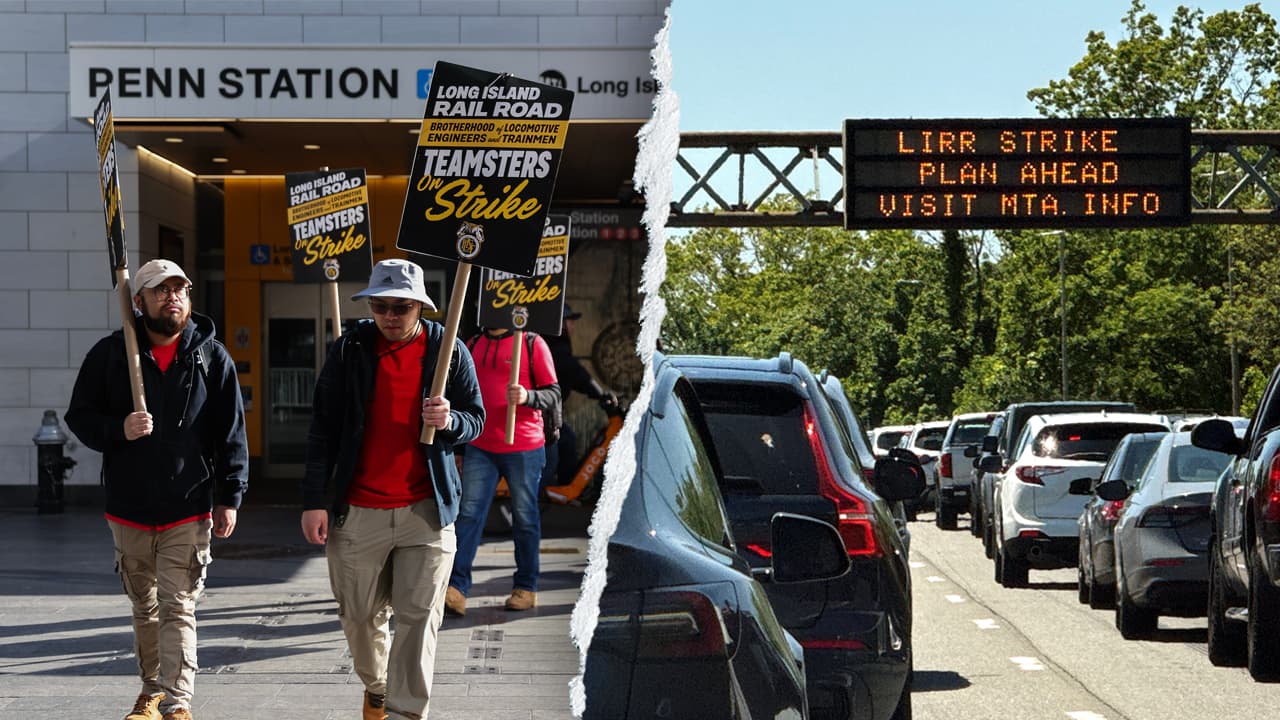
Six-Figure Railroad Workers Strike, Disrupting 250,000 Daily Commuters
Left says
- •Workers have gone three years without raises while facing rising costs of living in one of the nation's most expensive metropolitan areas
- •The strike represents workers fighting for basic cost-of-living adjustments to maintain their standard of living amid inflation
- •Alternative transportation options demonstrate the region can adapt while negotiations continue toward a fair resolution
Right says
- •Railroad workers already earn significantly more than typical residents, with average total compensation around $150,000 annually including overtime
- •The strike costs the regional economy an estimated $61 million per day while disrupting essential transportation for a quarter million daily commuters
- •The MTA offered a reasonable 9.5% raise over three years, matching agreements already accepted by other transit unions
Common Take
High Consensus- The strike has shut down the nation's largest commuter railroad system, affecting approximately 250,000 daily riders
- Negotiations between the five unions and the MTA are ongoing with both sides returning to the bargaining table
- The work stoppage creates significant economic costs and transportation challenges for the New York metropolitan region
- Rising cost of living in the New York area affects all workers and residents
The Arguments
Right argues
LIRR workers already earn significantly more than typical area residents, with average total compensation around $150,000 annually, compared to per capita incomes of $92,113-$109,400 in the counties they serve.
Left counters
Raw salary comparisons ignore that these workers haven't received raises in three years while facing inflation in one of the nation's most expensive metropolitan areas, effectively reducing their purchasing power.
Left argues
Workers are simply seeking basic cost-of-living adjustments after three years without raises, which is a reasonable request to maintain their standard of living amid rising costs.
Right counters
The MTA offered a 9.5% raise over three years plus an additional 4.5% in year four, which other transit unions have already accepted as fair compensation.
Right argues
The strike costs the regional economy an estimated $61 million per day while disrupting essential transportation for 250,000 daily commuters, creating massive economic and social harm.
Left counters
Alternative transportation options demonstrate the region's resilience, and temporary disruption is necessary to achieve fair wages that will ensure long-term service stability.
Left argues
The strike represents workers fighting to maintain their standard of living in an expensive region, with locomotive engineer Byron Lee stating they're 'just trying to keep their heads above water.'
Right counters
Workers earning $150,000 annually are hardly struggling to survive, especially when the MTA has offered raises that match agreements other unions found acceptable.
Challenge Questions
These questions target genuine internal contradictions — meant to provoke honest reflection.
Right asks Left
“If alternative transportation options truly demonstrate the region can adapt during negotiations, why is the strike necessary at all rather than continuing to work while negotiating, especially given the $61 million daily economic impact on the broader community?”
Left asks Right
“If the MTA's 9.5% offer over three years is unreasonable for workers earning $150,000 annually, why have other transit unions with similar cost-of-living pressures accepted identical terms?”
Outlier Report
Left Fringe
Progressive labor activists like Sara Nelson (flight attendants union president) and some Democratic Socialists of America chapters may frame this as pure worker solidarity regardless of wage levels, representing roughly 15-20% of the left coalition.
Right Fringe
Anti-union hardliners like Grover Norquist and some Tea Party-aligned figures may use this to call for eliminating public sector collective bargaining entirely, representing about 25-30% of the right coalition.
Noise Assessment
Moderate noise level - the Trump/Hochul blame game creates political theater, but the core economic facts (wages, strike impact, offer details) are driving most genuine public discourse rather than partisan performance.
Sources (6)
Long Island Rail Road employees with median pay over $131,000 are on strike, disrupting travel for nearly 300,000 daily riders across the region.
It was manic Monday for thousands of Long Island Rail Road riders trying to get in and out of New York City on the third day of a labor strike that has shut down the nation’s largest commuter railroad
Commuters are navigating a maze of car, bus and subway routes after a strike shut down the Long Island Rail Road in New York.
New York Gov. Kathy Hochul (D) again pinned an ongoing Long Island Rail Road (LIRR) strike on the Trump administration, continuing a days-long feud between Albany and Washington over the strike. “Let me be clear, this strike would not have been possible if the Trump administration had not taken the highly unusual step last fall…
President Trump hit back at New York Gov. Kathy Hochul (D) after she faulted his administration over a railroad strike in the state.  “Failed New York State Governor Kathy Hochul, a Dumacrat, just blamed ME for her Long Island Railroad STRIKE, when she knows, full well, that I have NOTHING TO DO WITH IT –…