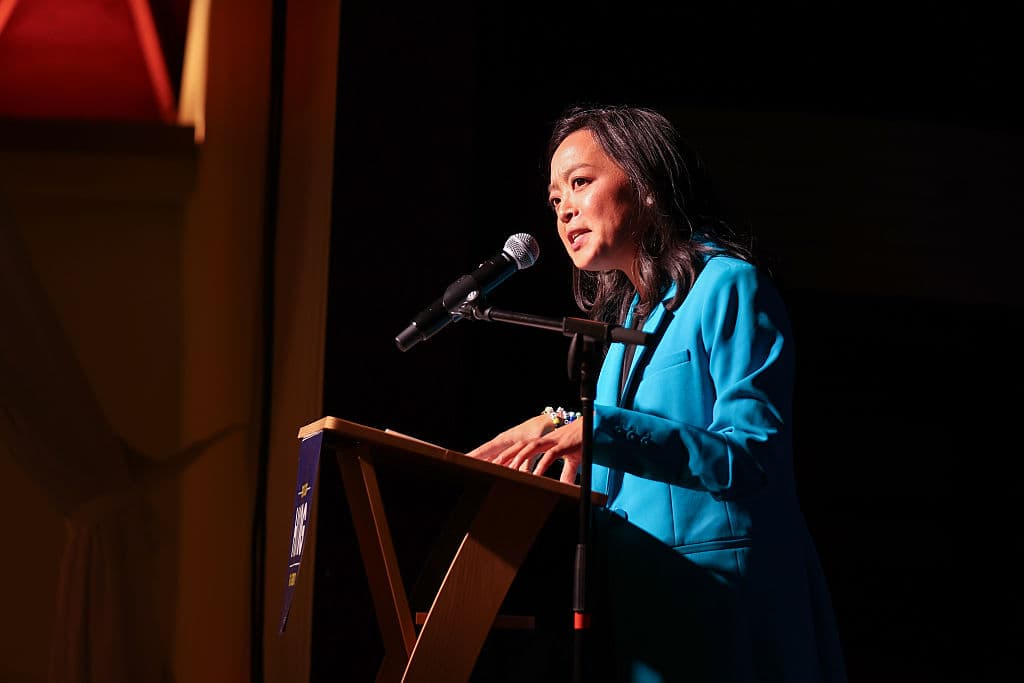
Socialist Hong Nearly Wins Wisconsin — Loss or Moral Victory?
Intra-Party Split Detected
Progressive/socialist-aligned outlets (Jacobin, The Intercept, The Nation) celebrate Hong's near-win as a sign of the left's strength, framing establishment Democrats and Gov. Evers's late endorsement of Crowley as obstacles, while mainstream Democratic establishment figures and media treated her loss as validation of the party's centrist wing.
Left says
- •Hong pulled in roughly 312,000 votes, outperforming Tony Evers' first primary total by nearly 90,000 votes, despite lacking establishment support and a well-funded campaign treasury.
- •The race narrative shifted sharply in its final days toward a manufactured controversy over old tweets about Thanksgiving, distracting from Hong's substantive platform, especially her call for a moratorium on new AI data centers amid widespread public concern over their environmental and energy impact.
- •Sitting Governor Evers actively withheld support and then endorsed Crowley late in the race, and national media declared Hong's near-tie a definitive defeat for the left even though the margin was under a single percentage point.
- •Socialist and progressive movements historically take multiple election cycles to build power, and a near-win in a swing state against a hostile media environment and party establishment demonstrates real, growing potential rather than failure.
Right says
- •Hong's socialist platform and past rhetoric, including comments dismissive of Thanksgiving, raise legitimate concerns about her broader ideological commitments and fitness for statewide office.
- •Democratic socialism's reluctance to clearly denounce authoritarian regimes like Russia, China, and Iran fuels skepticism about the movement's core values and loyalties.
- •Some conservatives view continued warnings against socialism's rise as necessary vigilance, even after Hong's loss, given her strong vote total and the momentum of the movement she represents.
- •Concerns exist that Republican strategy of boosting Hong as a supposedly easier general-election opponent backfired, since the primary result was far closer than expected.
Common Take
High Consensus- Hong lost the Democratic primary to David Crowley by less than one percentage point, roughly 3,000 votes.
- Pre-election polling significantly underestimated Crowley's chances and overstated the certainty of Hong's win.
- The controversy over Hong's old Thanksgiving tweets became a major storyline in the final days of the campaign.
- Hong's strong showing, over 300,000 votes, is widely recognized as historically significant regardless of the ultimate outcome.
The Arguments
Left argues
Hong turned out roughly 312,000 votes, nearly 90,000 more than Evers' first primary win in 2018, despite lacking establishment support, a well-funded treasury, and facing a sitting governor's late endorsement of her opponent — evidence of real grassroots strength rather than failure.
Right counters
A loss is still a loss regardless of turnout totals, and if a socialist candidate cannot close a single-digit gap even with favorable polling and media attention, it raises doubts about her ability to win a tougher general election against a unified opposition.
Right argues
Hong's old tweets dismissing Thanksgiving and broader democratic socialist reluctance to clearly condemn regimes like Russia, China, and Iran raise legitimate questions about the ideological commitments of candidates within this movement, not just cultural sensitivities.
Left counters
Fixating on a years-old tweet about a holiday while ignoring Hong's substantive platform, like her data center moratorium that polls show is broadly popular, reveals a media and opposition strategy of distraction rather than genuine scrutiny of policy.
Left argues
The final days of the race were dominated by manufactured outrage over old tweets rather than substantive debate on Hong's policies, particularly her call for an AI data center moratorium, an issue Gallup polling shows seven in ten Americans support restricting in their own area.
Right counters
Candidates' past public statements are fair game for scrutiny, especially when they suggest a dismissive attitude toward widely cherished traditions or institutions; voters are entitled to weigh character and judgment alongside policy positions.
Right argues
Reports that Republicans spent millions promoting Hong as the supposedly easier general-election opponent, only to see her nearly win the primary anyway, suggest GOP strategists may have badly misjudged the socialist left's actual electoral strength in swing states.
Left counters
That miscalculation actually validates the left's core claim: this movement is far more formidable than either party establishment anticipated, meaning continued dismissal of it as fringe is itself a strategic error.
Left argues
Movements like democratic socialism historically require multiple election cycles to build power, as historical figures such as Robert La Follette showed in Wisconsin, so a near-win against a hostile media environment and an actively opposed party establishment should be read as momentum, not defeat.
Right counters
Continued vigilance against socialism's rise remains warranted precisely because of that momentum; a near-miss with structural disadvantages this time could easily become an outright win next cycle if the underlying ideological concerns go unaddressed.
Challenge Questions
These questions target genuine internal contradictions — meant to provoke honest reflection.
Right asks Left
“If Hong's substantial vote total and near-win are proof of the socialist left's strength despite establishment opposition, why does the same movement's inability to close a sub-1-point gap, even with favorable pre-election polling, not count as evidence of a real ceiling on its appeal?”
Left asks Right
“If conservatives believe Hong's near-win shows the socialist left is more electorally dangerous than expected, how does that square with the Republican strategy of spending millions to elevate her as the supposedly weaker general-election opponent?”
Outlier Report
Left Fringe
DSA-aligned activists and outlets like Jacobin who frame any close socialist result as a major structural victory represent maybe 15-20% of the left, most Democrats view primary losses as losses.
Right Fringe
Commentators like Isaac Schorr (National Review) and some NY Post letter-writers invoking Cold War-style 'communist scare' rhetoric represent a vocal but not universal 20-25% of the right; most conservatives are simply relieved by the outcome without deep ideological alarm.
Noise Assessment
High: both the 'Thanksgiving-gate' controversy and the 'moral victory' framing are largely elite media narratives with limited grassroots resonance; most voters likely focused on economic and gubernatorial competence issues rather than symbolic culture-war flashpoints.
Sources (5)
Francesca Hong’s campaign both showed the potential that exists for the socialist left in purple states and what the Left needs to do to reach it.
NY Post readers discuss the rise of democratic socialists, despite Francesca Hong’s loss in Wisconsin.
<p>Though the democratic socialist was defeated, the fight against the data centers she opposed isn’t going anywhere.</p> <p>The post <a href="https://theintercept.com/2026/08/12/francesca-hong-wisconsin-governor-data-centers/">Francesca Hong’s Loss in Wisconsin Is a Win for AI Data Centers — for Now</a> appeared first on <a href="https://theintercept.com">The Intercept</a>.</p>
<p>Today’s Democratic gubernatorial primary in Wisconsin has featured increasingly desperate attacks against the frontrunner.</p> <p>The post <a href="https://theintercept.com/2026/08/11/francesca-hong-thanksgiving-wisconsin-governor/">Francesca Hong’s “Thanksgiving-Gate” Shows Her Detractors Are Totally Out of Ideas</a> appeared first on <a href="https://theintercept.com">The Intercept</a>.</p>
<p>John Nichols</p> <div><img alt="" src="https://www.thenation.com/wp-content/uploads/2026/08/GettyImages-2289635341.jpg" /></div> <div> <div class="wp-block-the-nation-dek article-title__dek"> <p>More than 300,000 Wisconsin voters backed a democratic socialist’s gubernatorial bid. That’s the measure of the strength of a new kind of politics.</p> </div> </div> <p>The post <a href="https://www.thenation.com/article/politics/francesca-hong-wisconsin-election-aftermath/">Francesca Hong: “Our Movement Is Strong, and the Work Isn’t Done”</a> appeared first on <a href="https://www.thenation.com">The Nation</a>.</p>