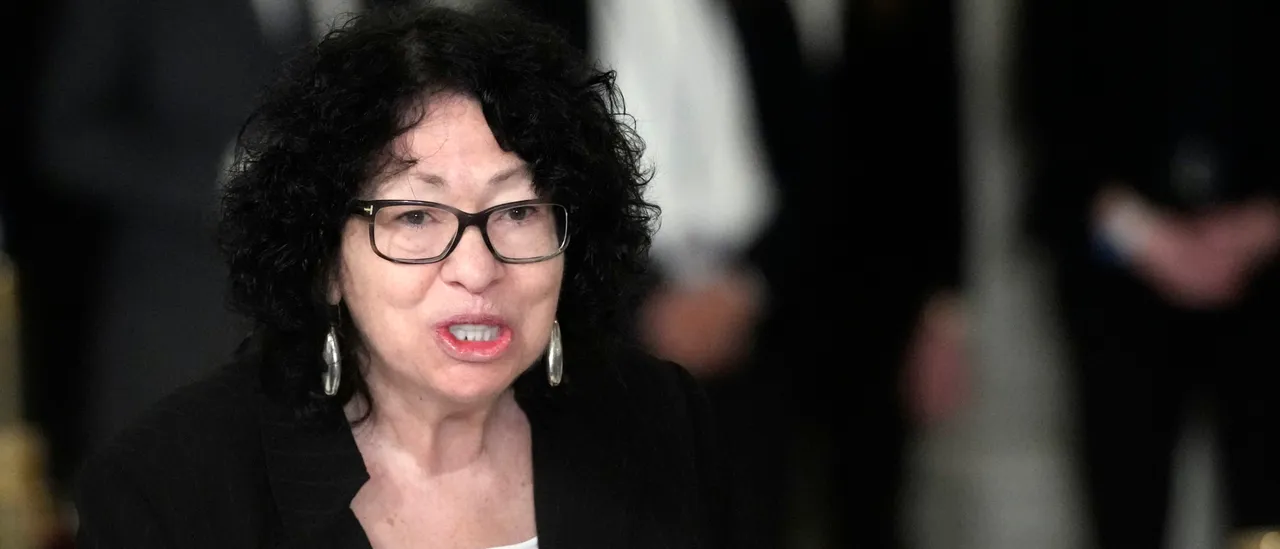
Sotomayor Apologizes for Calling Kavanaugh Privileged and Out-of-Touch
Left says
- •Sotomayor's original comments highlighted how personal background and life experiences shape judicial perspectives on cases affecting working-class communities
- •The immigration case allowed enforcement sweeps that could lead to racial profiling and wrongful detention of legal residents and citizens
- •Even brief immigration stops can have severe financial consequences for hourly workers who cannot afford to miss work or face employer retaliation
- •The apology demonstrates the institutional pressure justices face to maintain collegiality even when addressing substantive disagreements about real-world impacts
Right says
- •Sotomayor's personal attack on Kavanaugh's upbringing violated longstanding Supreme Court traditions of collegiality and professional civility
- •The immigration enforcement decision was based on established legal precedent allowing race as one factor among others in reasonable suspicion determinations
- •Public criticism of fellow justices undermines the institutional integrity and respect that the Supreme Court requires to function effectively
- •Kavanaugh's concurrence properly balanced immigration enforcement needs with constitutional protections by requiring multiple factors beyond ethnicity alone
Common Take
High Consensus- Supreme Court justices rarely criticize colleagues publicly, making both the original remarks and formal apology highly unusual
- The case involved a 6-3 decision allowing immigration enforcement sweeps in Los Angeles with Kavanaugh writing the only concurring opinion
- Sotomayor acknowledged her comments were inappropriate and personally apologized to Kavanaugh
- The incident reflects broader tensions on a court with a 6-3 conservative majority deciding contentious immigration and civil rights cases
The Arguments
Right argues
Sotomayor's personal attack on Kavanaugh's upbringing violated longstanding Supreme Court traditions of collegiality and professional civility that are essential for the institution's credibility and function. Public criticism of fellow justices based on their family background undermines the Court's institutional integrity.
Left counters
The apology demonstrates the institutional pressure justices face to maintain collegiality even when addressing substantive disagreements about real-world impacts. Sotomayor's original comments highlighted how personal background and life experiences legitimately shape judicial perspectives on cases affecting vulnerable communities.
Left argues
Even brief immigration stops can have severe financial consequences for hourly workers who cannot afford to miss work or face employer retaliation, a reality that Kavanaugh's privileged background may prevent him from understanding. The immigration case allowed enforcement sweeps that could lead to racial profiling and wrongful detention of legal residents and citizens.
Right counters
Kavanaugh's concurrence properly balanced immigration enforcement needs with constitutional protections by requiring multiple factors beyond ethnicity alone and was based on established legal precedent allowing race as one factor among others in reasonable suspicion determinations.
Right argues
The immigration enforcement decision followed established constitutional law that permits consideration of ethnicity as one factor among many in reasonable suspicion analysis, not as the sole determining factor. Kavanaugh's legal reasoning was sound and grounded in precedent, making personal attacks on his background irrelevant to the merits.
Left counters
Legal precedent that enables racial profiling in practice, even when couched in multi-factor analysis, perpetuates systemic discrimination against Latino communities and ignores the documented pattern of wrongful detention of citizens and legal residents during immigration sweeps.
Left argues
Sotomayor's perspective as the first Hispanic justice brings crucial lived experience to understanding how immigration enforcement disproportionately impacts working-class Latino communities, including citizens and legal residents who face harassment and economic hardship from these stops. Her background legitimately informs her judicial analysis of real-world consequences.
Right counters
Judicial decisions should be based on legal reasoning and constitutional interpretation, not personal identity or background experiences, and suggesting that a justice's family upbringing disqualifies their legal analysis sets a dangerous precedent for ad hominem attacks on the Court.
Challenge Questions
These questions target genuine internal contradictions — meant to provoke honest reflection.
Right asks Left
“If personal background and life experiences are legitimate factors in judicial decision-making as you argue, how do you reconcile this with the principle that justice should be blind and based on law rather than the judge's identity or personal circumstances?”
Left asks Right
“If maintaining institutional collegiality and civility is so crucial to the Supreme Court's function and credibility, why shouldn't this same standard apply to the Court's substantive decisions that you argue cause real harm to vulnerable communities through their real-world implementation?”
Outlier Report
Left Fringe
Progressive activists like Elie Mystal and some Squad members who argue Supreme Court justices should be more confrontational about conservative rulings and that calls for civility protect an illegitimate conservative majority. Represents roughly 15% of the left.
Right Fringe
Hardline conservatives like Mark Levin and some Trump allies who want Sotomayor's impeachment or removal for her comments, viewing any criticism of conservative justices as disqualifying. Represents roughly 20% of the right.
Noise Assessment
Moderate noise level - while partisan media amplified the story, the core issue of Supreme Court collegiality resonates with genuine public concerns about institutional integrity.
Sources (8)
'I regret my hurtful comments'
Supreme Court Justice Sonia Sotomayor apologized Wednesday for publicly criticizing Justice Brett Kavanaugh, comments she said were "hurtful" and "inappropriate."
Supreme Court Justice Sotomayor apologized for "hurtful" remarks seemingly aimed at Justice Brett Kavanaugh over immigration enforcement perspectives.
<p>In a spilling of the court’s divisions in public, Sotomayor had criticized Kavanaugh over a dissenting ruling on ICE raids</p><p>Sonia Sotomayor, a US supreme court justice, issued an apology on Wednesday for her recent criticism of fellow justice Brett Kavanaugh, an unusual public mea culpa that underscores the continuing divisions within the nation’s top judicial body over its direction and actions in high-profile cases.</p><p>Sotomayor had criticized Kavanaugh at an event in Kansas last week for an opinion he wrote in September concurring with the court’s decision backing roving immigration raids in California. Kavanaugh is one of the court’s six conservative justices, while Sotomayor is the senior member of the court’s three-justice liberal bloc.</p> <a href="https://www.theguardian.com/us-news/2026/apr/15/sonia-sotomayor-us-supreme-court-apology-brett-kavanaugh">Continue reading...</a>
Supreme Court Justice Sonia Sotomayor publicly apologized to Justice Brett Kavanaugh on Wednesday for her comments at a recent talk criticizing his opinion concerning the Trump administration’s immigration stops.   “At a recent appearance at the University of Kansas School of Law, I referred to a disagreement with one of my colleagues in a prior case, but…
The extraordinary public apology highlights rifts on the court dominated by a 6-3 conservative majority.
Justice Sonia Sotomayor offered a rare public apology Wednesday to fellow Justice Brett M. Kavanaugh for "hurtful" comments she made suggesting he was out of touch with working people.