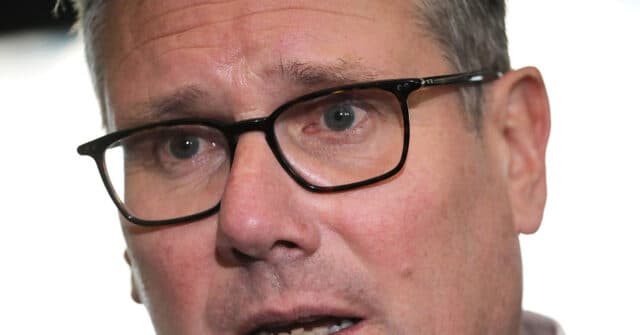
Starmer Defies Own Party's Calls to Resign After Election Losses
Intra-Party Split Detected
One-fifth of Labour MPs calling for Starmer's resignation, with multiple cabinet ministers resigning to pressure him to quit
Left says
- •Starmer's refusal to resign demonstrates dangerous political stubbornness that ignores clear voter rejection and party concerns about his leadership
- •The prime minister's defiance comes after catastrophic local election losses that saw Labour's traditional heartlands fall to Reform UK's far-right populism
- •His leadership has enabled the rise of Nigel Farage's party by failing to address working-class concerns and maintaining policies that alienate Labour's base
- •Multiple cabinet resignations and calls from over 50 MPs reflect legitimate concerns that Starmer cannot deliver the change voters were promised
Right says
- •Starmer's determination to remain in office shows necessary leadership strength in the face of political opportunism and destabilizing rebellion
- •The prime minister correctly prioritizes governing stability over internal party politics, noting that leadership challenges impose real economic costs on the country
- •His challenge to rebels to 'put up or shut up' forces critics to either make a formal leadership challenge or stop undermining the government
- •Starmer takes responsibility for election results while maintaining focus on delivering promised reforms rather than engaging in political theater
Common Take
High Consensus- Labour suffered significant losses in recent local elections, with Reform UK making substantial gains in traditional Labour strongholds
- Multiple cabinet ministers have resigned and over 50 Labour MPs have called for Starmer's resignation
- The UK has experienced significant political instability with multiple prime ministerial changes in recent years
- Political uncertainty and leadership challenges create economic costs and governance disruption
The Arguments
Left argues
Starmer's refusal to resign after catastrophic local election losses that saw Labour's traditional heartlands fall to Reform UK demonstrates dangerous political stubbornness that ignores clear voter rejection and undermines democratic accountability.
Right counters
Leadership stability during challenging times is essential for effective governance, and frequent leadership changes impose real economic costs on the country while preventing the delivery of promised reforms.
Right argues
Starmer's challenge to rebels to 'put up or shut up' forces critics to either make a formal leadership challenge through proper party processes or stop destabilizing the government with political theater.
Left counters
When over 50 MPs and multiple cabinet ministers resign calling for new leadership, dismissing these concerns as mere 'political theater' ignores legitimate democratic feedback from elected representatives and party members.
Left argues
Starmer's leadership has enabled the rise of Nigel Farage's far-right Reform UK by failing to address working-class concerns and maintaining policies that alienate Labour's traditional base, as evidenced by Reform sweeping Labour heartlands like Wigan and Hartlepool.
Right counters
Abandoning principled governance in response to populist pressure would only legitimize far-right messaging, while maintaining steady leadership allows for the implementation of substantive policies that address underlying issues.
Right argues
Starmer correctly prioritizes governing stability over internal party politics, recognizing that the country expects leadership to focus on delivering change rather than engaging in destabilizing leadership contests.
Left counters
True democratic leadership requires responding to clear electoral rejection and party concerns - clinging to power despite losing public confidence prevents the fresh leadership needed to address the crisis.
Left argues
The scale of Labour's collapse across England, Scotland, and Wales, with Reform becoming the largest party in historic Labour strongholds, represents an irretrievable loss of public confidence that requires immediate leadership change.
Right counters
Electoral setbacks are temporary challenges that require steady leadership to navigate, and changing leaders mid-term would only create further instability without addressing the underlying policy issues that need time to show results.
Challenge Questions
These questions target genuine internal contradictions — meant to provoke honest reflection.
Right asks Left
“If democratic accountability truly requires leaders to resign after electoral defeats, how do you reconcile this with the need for policy continuity and the fact that voters elected Labour MPs to serve full terms, not to trigger constant leadership changes based on local election results?”
Left asks Right
“If Starmer's determination to remain in office represents necessary leadership strength, how do you explain the continued rise of Reform UK under his leadership, and at what point would electoral rejection become significant enough to warrant stepping aside for the good of the party and country?”
Outlier Report
Left Fringe
Progressive activists like those associated with Justice Democrats or DSA chapters who view any resistance to internal party pressure as inherently undemocratic, representing roughly 15% of the left coalition.
Right Fringe
Populist commentators like Steve Bannon or Tucker Carlson who might frame this as validation that establishment politicians never listen to voters, representing about 20% of the right coalition.
Noise Assessment
Moderate noise level - this is primarily a UK story that most Americans aren't following closely, so much of the discourse comes from political junkies and partisan commentators rather than genuine public engagement.
Sources (7)
<p>Starmer has refused to go quietly, as some within the UK's Labour government had clearly hoped, and has defied rebels to challenge him.</p> <p>The post <a href="https://www.breitbart.com/europe/2026/05/12/starmer-defies-rebels-to-put-up-or-shut-up-who-could-be-the-next-pm/" rel="nofollow">Starmer Refuses to Quit, Defies Rebels to Put up or Shut up: Who Could Be the Next Prime Minister?</a> appeared first on <a href="https://www.breitbart.com" rel="nofollow">Breitbart</a>.</p>
Despite a fifth of British Prime Minister Keir Starmer's fellow Labour Party lawmakers calling on him to step down, he says he'll "get on with governing."
U.K. Prime Minister Starmer resists calls to step down
British Prime Minister Keir Starmer is facing mounting pressure to resign, with the UK's political turmoil continuing to unravel as it may burn through its fifth premier in just seven years.
<p>Marcus Barnett</p> <div><img alt="" src="https://www.thenation.com/wp-content/uploads/2026/05/keir-starmer-loser-elections.jpg" /></div> <div> <div class="wp-block-the-nation-dek article-title__dek"> <p>Labour leadership’s free fall is also tied to its lack of respect for the base it relies on to function.</p> </div> </div> <p>The post <a href="https://www.thenation.com/article/world/labour-uk-elections-starmer-populism/">Reeling From the UK Election and the Collapse of Labour</a> appeared first on <a href="https://www.thenation.com">The Nation</a>.</p>
<p>Evan Robins</p> <div><img alt="" src="https://www.thenation.com/wp-content/uploads/2026/05/GettyImages-2275129676.jpg" /></div> <div> <div class="wp-block-the-nation-dek article-title__dek"> <p>How the Labour Party’s catastrophic prime minister paved the way for fascists to dominate British politics.</p> </div> </div> <p>The post <a href="https://www.thenation.com/article/world/uk-local-elections-reform-keir-starmer/">The UK’s Far Right Is On the March—Thanks to Keir Starmer</a> appeared first on <a href="https://www.thenation.com">The Nation</a>.</p>