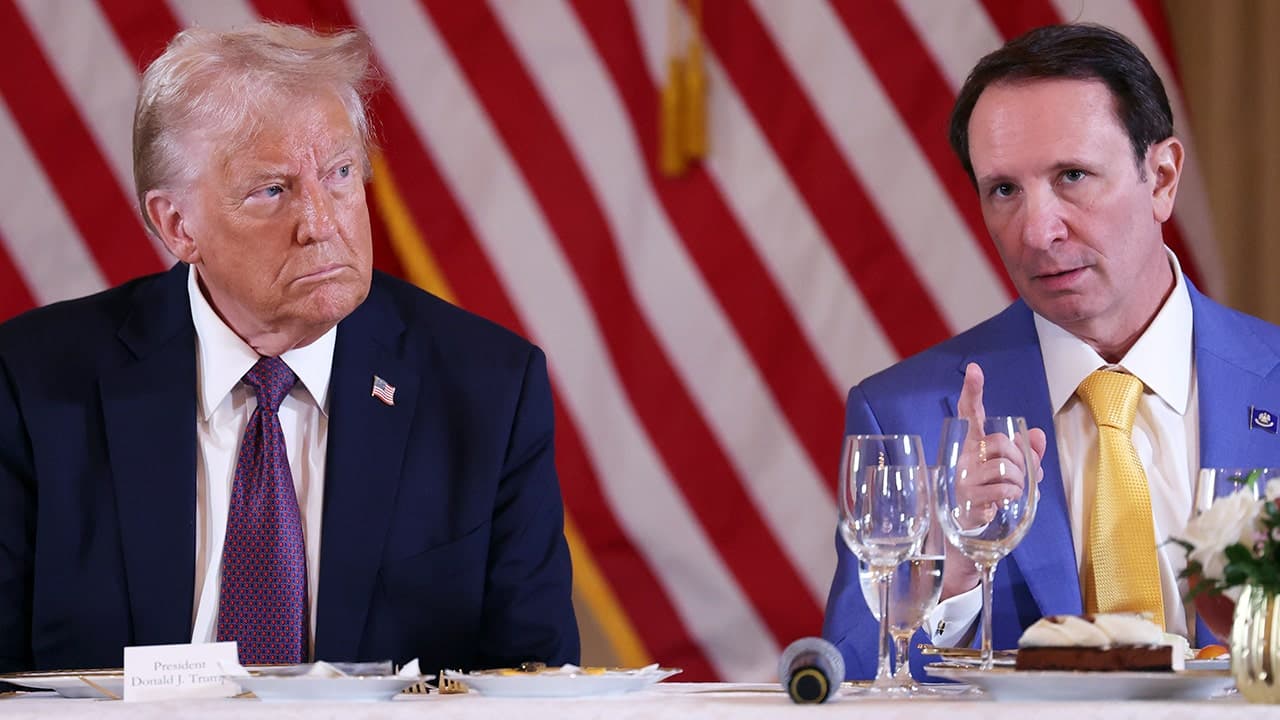
Supreme Court guts Voting Rights Act, sparking Southern redistricting war
Intra-Party Split Detected
Some Republican lawmakers like Florida's Sen. Jen Bradley opposed redistricting efforts, calling maps 'unconstitutional' despite party support
Left says
- •The ruling eliminates crucial protections that helped dismantle Jim Crow laws and protected minority voting power for over half a century
- •Republican-controlled Southern states can now redraw maps to dilute Black and Hispanic representation in Congress and local governments
- •The decision allows partisan gerrymandering to override civil rights protections, potentially erasing thousands of minority-majority districts nationwide
- •Democrats could lose multiple safe House seats immediately, severely hampering their ability to retake Congress in November
Right says
- •The Court correctly ruled that using race as the primary factor in drawing districts violates the Constitution's equal protection principles
- •States should have the authority to draw maps based on legitimate political considerations without being forced into racial gerrymandering
- •The Voting Rights Act was being misapplied by lower courts to require race-based discrimination that the Constitution forbids
- •The ruling restores proper constitutional balance by preventing racial considerations from overriding other legitimate redistricting factors
Common Take
High Consensus- The Supreme Court's 6-3 decision significantly changes how congressional and local district maps can be drawn across the country
- Louisiana has suspended its House elections and multiple Southern states are moving to redraw their congressional maps
- The ruling affects both congressional representation and local government districts including city councils and school boards
- The decision will likely influence which party controls the House during the remainder of Trump's presidency
The Arguments
Right argues
The Constitution's Equal Protection Clause prohibits using race as the primary factor in redistricting, and the Court correctly ruled that states cannot be forced into racial gerrymandering even under the Voting Rights Act. Drawing districts based primarily on race violates the fundamental principle that government should treat all citizens equally regardless of their race.
Left counters
The Voting Rights Act was specifically designed to remedy centuries of systematic disenfranchisement and ensure meaningful representation for minority communities who were historically excluded from the political process. Without race-conscious remedies, states can use facially neutral criteria like partisanship to achieve the same discriminatory results that the VRA was meant to prevent.
Left argues
This ruling effectively guts the most successful civil rights law in American history, allowing Republican-controlled states to systematically dilute minority voting power by breaking up majority-minority districts under the guise of partisan considerations. The decision threatens to eliminate thousands of minority-majority districts nationwide and could erase decades of progress in minority representation.
Right counters
States should have the authority to draw maps based on legitimate political considerations without being forced to prioritize race above all other factors. The ruling doesn't eliminate minority voting rights but rather prevents the misapplication of the VRA that was forcing unconstitutional racial discrimination in redistricting.
Left argues
The timing and immediate implementation of this ruling creates an electoral emergency that allows Republican governors to suspend elections and redraw maps specifically to benefit their party in the upcoming midterms. This represents a direct assault on democratic norms and fair representation, potentially costing Democrats multiple safe House seats right before a crucial election.
Right counters
Governor Landry acted responsibly by suspending elections under an unconstitutional map rather than allowing voting to proceed under districts that violated the Constitution. The proper legal process requires drawing new maps that comply with constitutional requirements, regardless of political timing.
Right argues
The Voting Rights Act was being misapplied by lower courts to require race-based discrimination that the Constitution forbids, creating a conflict between civil rights law and constitutional equal protection principles. The Court restored proper constitutional balance by clarifying that partisan redistricting considerations can be legitimate factors that don't automatically trigger VRA violations.
Left counters
This ruling creates a massive loophole that allows states to engage in racial discrimination as long as they claim partisan motivations, effectively making the Voting Rights Act toothless. States can now systematically exclude minority voters from meaningful representation by simply asserting that their discriminatory maps serve partisan rather than racial purposes.
Challenge Questions
These questions target genuine internal contradictions — meant to provoke honest reflection.
Right asks Left
“If the goal is truly equal representation regardless of race, why do you advocate for maintaining districts drawn specifically to ensure certain racial outcomes rather than supporting truly race-neutral redistricting that treats all voters equally?”
Left asks Right
“How do you reconcile your support for race-conscious redistricting with the Constitution's Equal Protection Clause, which generally prohibits government actions that treat people differently based on their race?”
Outlier Report
Left Fringe
Progressive activists like Stacey Abrams and some Congressional Black Caucus members who frame this as equivalent to returning to Jim Crow era represent about 15% of the left with their most apocalyptic rhetoric.
Right Fringe
Constitutional originalists like Justice Clarence Thomas and some Heritage Foundation scholars who would eliminate Section 2 entirely represent about 20% of the right with their most expansive anti-VRA positions.
Noise Assessment
Moderate noise level - while partisan figures amplify extreme positions, the core debate reflects genuine public disagreement about balancing voting rights with constitutional principles rather than pure performative politics.
Sources (6)
<p>Louisiana is suspending its House elections just days before voting was set to begin, Gov. Jeff Landry said Thursday, after the U.S. Supreme Court <a href="https://www.axios.com/local/new-orleans/2026/04/29/louisiana-callais-congressional-map-elections" target="_blank">struck down</a> the state's congressional map.</p><p><strong>Why it matters:</strong> Landry says an "electoral emergency exists," which gives him authority to suspend or delay elections.</p><hr /><p><strong>The big picture:</strong> The governor issued an executive order Thursday afternoon that suspends the <a href="https://www.axios.com/local/new-orleans/2026/04/07/closed-party-primary-deadline-senate-race" target="_blank">closed-party primaries</a> on May 16 and June 27 for the U.S. House races.</p><ul><li>The other races and ballot measures will continue as planned, his statement says.</li><li>Early voting was set to start Saturday. Absentee ballots have already been mailed to overseas voters.</li><li>"Allowing elections to proceed under an unconstitutional map would undermine the integrity of our system and violate the rights of our voters," Landry said in a statement.</li></ul><p><strong>Zoom in: </strong>Landry and Attorney General Liz Murrill are working with the Legislature and the Secretary of State's office to "develop a path forward," they said in a joint statement.</p><ul><li>The delayed election gives the Legislature time to draw a new map, Landry says.</li><li>He did not provide a timeline for next steps, including when House primaries would be rescheduled.</li></ul><p><strong>Zoom out:</strong> <a href="https://truthsocial.com/%40realDonaldTrump/posts/116494895594528861" target="_blank">President Trump praised Landry</a> on Truth Social on Thursday, thanking him for "moving so quickly to fix the Unconstitutionality of Louisiana's Congressional Maps."</p><ul><li>He also <a href="https://truthsocial.com/%40realDonaldTrump/posts/116494706928688681" target="_blank">heralded redistricting efforts in Tennessee</a>, saying they would "give us one extra seat, and help Save our Country from the Radical Left Democrats."</li></ul><p><strong>Catch up quick: </strong>The Supreme Court's 6-3 <a href="https://www.supremecourt.gov/opinions/25pdf/24-109_21o3.pdf?utm_source=newsletter&utm_medium=email&utm_campaign=newsletter_axiospm&stream=top" target="_blank">decision</a> Wednesday found Louisiana's use of race in creating a second majority-Black congressional district was an "unconstitutional racial gerrymander," Justice Samuel Alito wrote for the majority.</p><ul><li>The ruling limits a key provision of the Voting Rights Act, which helped dismantle Jim Crow laws and expand protections for voters of color across the South, writes Axios' Josephine Walker.</li><li>Landry and Murrill welcomed the ruling as a victory for the state, while civil rights leaders said it was devastating for Black voters.</li></ul><p><strong>What he's saying:</strong> "The best way to end race-based discrimination is to stop making decisions based on race," Landry said Thursday.<strong> </strong>"Here in Louisiana, we're proud to lead the nation on this charge."</p><p><strong>The intrigue:</strong> The redrawn map could potentially reduce the state's number of majority-Black districts.</p><ul><li>Louisiana currently has two majority-Black districts, which both elected Black Democrats.</li><li>Rep. <a href="https://www.axios.com/local/new-orleans/2024/11/12/live-results-cleo-fields-wins-louisianas-6th-congressional-district" target="_blank">Cleo Fields</a> was elected last year to represent the new district. Rep. Troy Carter represents the other, which includes New Orleans.</li><li>Alanah Odoms, the executive director of the ACLU of Louisiana, says she expects lawmakers to draw six majority-white districts or five majority-white and one majority-Black district.</li></ul><p><strong>What's next: </strong>State lawmakers are likely to take up the map redistricting during the current session, which ends June 1, <a href="https://www.nola.com/news/politics/elections/louisiana-postpones-primary-elections-supreme-court-ruling/article_6efaf265-024c-4d38-86f5-9ee3c8ce57b1.html#tncms-source=featured-top" target="_blank">NOLA.com's Tyler Bridges reports.</a></p><p><em>Editor's note: This story was updated with comments from President Trump and Gov. Jeff Landry.</em></p>
<p>Statehouses, county commissions and city halls — not the halls of Washington — will absorb the heaviest blow from the <a href="https://www.axios.com/2026/04/29/supreme-court-redistricting-race-gerrymander" target="_blank">Voting Rights Act's </a>collapse.</p><p><strong>Why it matters:</strong> Most Voting Rights Act <a href="https://www.brennancenter.org/our-work/research-reports/use-section-2-secure-fair-representation" target="_blank">lawsuits</a> have targeted local and state governments: the entities that decide what's taught in schools, who polices the streets and which neighborhoods get sidewalks.</p><hr /><ul><li>Those suits typically<strong> </strong>fall under Section 2 of the Act, which lets minority voters challenge maps and election rules that weaken their voting power.</li></ul><p><strong>The latest:</strong> The U.S. Supreme Court gutted the Voting Rights Act with a Wednesday decision that essentially gives local and state bodies carte blanche to ignore minority voters as long as it serves some other purpose, like partisan gerrymandering or protecting incumbents.</p><ul><li>Section 2 cases were already notoriously hard to win, with challengers needing to clear three procedural hurdles to prove a violation. The new ruling makes each of those hurdles even harder to clear.</li><li>The impact of the decision could mean that "city council, county commission, school board maps being redrawn around the country, because people will say, 'Oh, now we're free to do what we want,'" Michael Li, of the Brennan Center for Justice, tells Axios.</li></ul><p><strong>The big picture: </strong>Some of the earliest victories under the Voting Rights Act forced cities, counties and state legislatures to scrap at-large elections — countywide or citywide votes that drowned out minority neighborhoods and blocked Black and Hispanic representation. </p><p><strong>Yes, but: </strong>Without Section 2's teeth, jurisdictions can reinstate at-large elections.</p><p><strong>What they're saying: </strong>Press Robinson, a plaintiff in the case that led to Louisiana's second majority-Black district, said in a Wednesday press call that he foresees politicians elected by people of color disappearing on the local and state level in the not-too-distant future.</p><ul><li>"We'll be back where we were at the time that slavery was declared illegal in this country, but this country doesn't seem to want to advance beyond that time," he said.</li></ul><p><strong>Charles Taylor,</strong> the executive director of the Mississippi NAACP, tells Axios that the decision is a "betrayal to Black voters" with implications "up and down the ballot."</p><ul><li>In Mississippi, state lawmakers are set to <a href="https://mississippitoday.org/2026/04/24/judicial-redistricting-special-session-callais/" target="_blank">reconvene</a> in 21 days to reassess state Supreme Court districts — one of which a federal judge previously ruled violated the Voting Rights Act. </li></ul><p><strong>Threat level: </strong>The Voting Rights Act guaranteed representation for "thousands of communities through the drawing of districts," Michael McDonald, a political science professor at the University of Florida, says.</p><ul><li>In some states, redistricting in time for the 2026 midterms would be a significant stretch. But McDonald says the country can expect "a new round of districts being drawn that will sharply curtail racial representation" following the 2030 Census. </li><li>However, the neutering of protections does raise the stakes for Democrats<strong> </strong>running for governorships in this election cycle, as they could block forthcoming redistricting plans.</li></ul><p><strong>The bottom line:</strong> "I don't think this is a slippery slope," Taylor says. "I think this is a fall off a cliff."</p><p><strong>Go deeper:</strong> <a href="https://www.axios.com/2026/04/29/supreme-court-redistricting-race-gerrymander" target="_blank">Supreme Court narrows voting law, lifting GOP odds of keeping House</a> </p>
<p>Florida Gov. Ron DeSantis' effort to create four new Republican House seats got an assist Wednesday from the U.S. Supreme Court — but not the total victory his lawyers had predicted.</p><ul><li>One big question remains: Will the entire state redistricting reform be struck from the books?</li></ul><p><strong>Why it matters</strong>: Florida lawmakers approved the <a href="https://www.axios.com/2026/04/27/desantis-florida-map-gerrymandering-redistricting-war" target="_blank">new GOP-leaning U.S. House seats</a> — despite a state constitutional amendment that bans intentional partisan gerrymandering.</p><hr /><ul><li>Democrats and liberal groups plan to sue once DeSantis signs the maps.</li></ul><p><strong>Zoom in</strong>: The Supreme Court's ruling in <a href="https://www.axios.com/2026/04/29/supreme-court-redistricting-race-gerrymander" target="_blank">Louisiana v. Callais</a> neutered a key provision of the Voting Rights Act and made it harder to defend<strong> </strong>race-based districts.</p><ul><li>It applied new, stricter requirements to win lawsuits under Section 2 of the Voting Rights Act. Florida mirrored Section 2's language in its state constitution to protect Black and Hispanic voting power.</li><li>The ruling didn't fully strike down Section 2, and it doesn't address the other section of Florida's law that forbids maps drawn to "favor or disfavor a political party or an incumbent."</li></ul><p><strong>Between the lines</strong>: DeSantis, however, argues the entire amendment is invalid because it was sold as a package that both banned partisan gerrymandering and, in his words, called for racial gerrymandering.</p><ul><li>DeSantis staffer Jason Poreda said he drew the map without considering race but acknowledged "partisan or electoral performance data was a consideration."</li><li>The Florida Supreme Court<strong> </strong>will likely make the final call.</li><li>DeSantis has a <a href="https://www.axios.com/2026/04/24/desantis-florida-redistricting-gop-house" target="_blank">three-layered plan</a> to stall opponents in court before the midterms.</li></ul><p><strong>The intrigue</strong>: DeSantis' map does not completely eliminate two seats drawn to represent Black voters.</p><ul><li>That may help Republicans politically by concentrating Democratic-leaning Black voters in fewer districts to make surrounding seats more favorable to Republicans.</li></ul><p><strong>What they're saying: </strong>State Sen. Jen Bradley, a Republican who voted against the bill, said the map rested on "a legal theory that the Supreme Court has not even opined on or heard."</p><ul><li>"I just can't do it," Bradley said in a committee Tuesday. "It's unconstitutional."</li></ul><p><strong>Bottom line: </strong>The Supreme Court gave DeSantis cover to attack race-conscious districts, but it did not automatically bless a partisan gerrymander in Florida.</p>
<p>Democrats have been able to point to some silver lining or glimmer of hope with past defeats on congressional redistricting this cycle. There's no sugarcoating the Supreme Court's <a href="https://www.axios.com/2026/04/29/supreme-court-redistricting-race-gerrymander" target="_blank">weakening of the Voting Rights Act</a>.</p><p><strong>Why it matters: </strong>The ruling is set to immediately cost Democrats <a href="https://www.axios.com/local/new-orleans/2025/12/10/louisiana-callais-supreme-court-voting-rights-act" target="_blank">at least a few safe House seats</a> in the deep South, which could severely hamper their efforts to retake the lower chamber in November.</p><hr /><ul><li>The losses could continue to be deeply felt beyond 2026, with more Republican-controlled Southern states potentially able to break up their majority-minority (read: solidly Democratic) districts.</li><li>"It's devastating. It's a devastating blow," said Rep. Yvette Clarke (D-N.Y.), the chair of the Congressional Black Caucus.</li><li>Said former House Speaker Nancy Pelosi (D-Calif.): "It's not good."</li></ul><p><strong>Driving the news: </strong>In a 6-3 decision issued Wednesday, the Supreme Court ruled that Louisiana's current House lines — which created two Black-majority districts — were an "unconstitutional racial gerrymander."</p><ul><li>The Court weakened Section 2 of the Voting Rights Act, which prohibits racially-discriminatory gerrymandering, by strengthening states' ability to draw congressional maps on the basis of partisanship.</li><li>The ruling is likely to kickstart efforts in Alabama, Mississippi, Tennessee and several other states to draw more aggressively pro-Republican maps.</li></ul><p><strong>What they're saying: </strong>Like Clarke, Reps. Joyce Beatty (D-Ohio) and Terri Sewell (D-Ala.) both called the ruling "a devastating blow."</p><ul><li>Both lawmakers also described the ruling as a "gift" to Donald Trump and Republicans in what they described as "voter suppression" efforts.</li><li>"Today's decision is a devastating blow," Derrick Johnson, president of the National Association for the Advancement of Colored People, said in a statement.</li></ul><p><strong>Zoom in: </strong>Sewell, who represents a deep Southern majority-minority district, said she "absolutely" expects the Republican-controlled legislature to try to draw her out of her seat this year.</p><ul><li>"This is an open invitation to every Republican state to try to redraw their maps before this election towards partisan ends," she said.</li><li>Beatty told Axios the Black Caucus has "many members who will be affected" by the ruling.</li></ul><p><strong>Yes, but: </strong>Some lawmakers expressed hope that the party can still win in November despite this new, substantial hurdle.</p><ul><li>Rep. Becca Balint (D-Vt.) told Axios the ruling is "not good" and "demoralizing," but added, "I think we're still in a good position ... I think we're still ahead."</li><li>Said Democratic Congressional Campaign Committee chair Suzan DelBene (D-Wash.) in a statement: "Democrats remain poised to retake the House Majority in November."</li></ul><p><strong>What's next: </strong>Democrats are vowing to fight, but they have few tools at their disposal to immediately remedy the situation.</p><ul><li>Beatty told Axios that lawmakers plan to mount a new push for the John Lewis Voting Rights Act, though it is highly unlikely to go anywhere with Republicans in control of both chambers of Congress.</li></ul>
<p>The Supreme Court limited a key provision of the <a href="https://www.axios.com/2026/04/29/voting-rights-act-supreme-court-democrats-south" target="_blank">Voting Rights Act</a> Wednesday, handing a loss to civil rights groups.</p><p><strong>Why it matters:</strong> The ruling could reshape voting all across the South and could boost the Republican majority in the House by an <a href="https://www.axios.com/local/new-orleans/2025/12/10/louisiana-callais-supreme-court-voting-rights-act" target="_blank">additional 19 seats</a> when compared to 2024 maps. </p><hr /><ul><li>The <a href="https://www.axios.com/local/new-orleans/2026/04/29/louisiana-callais-congressional-map-elections" target="_blank">Louisiana</a> v. Callais ruling does not erase Section 2 of the Voting Rights Act, but it effectively neuters it. The court rewrote the test used to apply Section 2 in such a way that it can only take effect as long as protected seats don't infringe on the right of state lawmakers to draw partisan gerrymanders.</li></ul><p><strong>Driving the news: </strong>In a <a href="https://www.supremecourt.gov/opinions/25pdf/24-109_21o3.pdf" target="_blank">majority opinion</a>, Justice Samuel Alito said that "because the Voting Rights Act did not require Louisiana to create an additional majority-minority district, no compelling interest justified the State's use of race in creating SB8, and that map is an unconstitutional racial gerrymander."</p><p><strong>The big picture:</strong> The court effectively narrowed Section 2 of the civil rights law, which prohibited racially-discriminatory gerrymandering.</p><ul><li>Section 2 helped end Jim Crow laws and expanded voting protections for people of color across the South, particularly for Black Americans.</li></ul><p><strong>Yes, but:</strong> Some opponents of the law have said that because the 14th Amendment limits the use of race in redistricting, using Section 2 to remedy racially discriminatory maps is, in fact, racial gerrymandering.</p><ul><li>Partisan gerrymandering was already a shield in racial-gerrymandering cases: Lawmakers could argue they drew GOP maps, not anti-Black ones.</li><li>The Callais decision goes further. It says partisan goals can also help protect maps against Voting Rights Act lawsuits.</li></ul><p><strong>Catch up quick: </strong>Louisiana has been locked in a bitter court feud over its congressional maps since 2020, with civil rights groups, lawmakers and other interested parties jockeying to implement new districts.</p><ul><li>Black voters, which make up roughly 30% of the state's population, <a href="https://www.axios.com/local/new-orleans/2025/03/24/supreme-court-louisiana-callais-voting-rights-redistrict" target="_blank">successfully sued</a> to add a second majority-Black district in Louisiana in 2022, arguing that they were underrepresented.</li><li>Lawmakers updated their maps in response, but a group of non-Black voters sued the state after, accusing lawmakers of relying too heavily on race to create the new maps. </li><li>A three-judge panel <a href="https://www.axios.com/local/new-orleans/2024/05/07/federal-judges-reject-louisianas-latest-congressional-map" target="_blank">agreed</a> in 2024, setting the stage for the High Court's ruling. </li></ul><p><strong>Zoom in: </strong>"Section 2 of the Voting Rights Act of 1965 was designed to enforce the Constitution — not collide with it," Alito wrote.</p><ul><li>"Unfortunately, lower courts have sometimes applied this Court's §2 precedents in a way that forces States to engage in the very race-based discrimination that the Constitution forbids."</li></ul><p><strong>The other side:</strong> In a dissent, Justice Elena Kagan argued that the majority opinion "threatens a half-century's worth of gains in voting equality."</p><ul><li>"Under the Court's new view of Section 2, a State can, without legal consequence, systematically dilute minority citizens' voting power," she wrote.</li><li>"The Callais requirements have thus laid the groundwork for the largest reduction in minority representation since the era following Reconstruction."</li></ul><p><strong>Worth noting: </strong>Florida Gov. Ron DeSantis <a href="https://floridapolitics.com/archives/793628-is-ron-desantis-proposed-congressional-map-in-trouble-in-the-florida-senate/" target="_blank">was betting</a> on the Supreme Court's decision to aid his own mid-decade <a href="https://www.axios.com/2026/04/27/desantis-florida-map-gerrymandering-redistricting-war" target="_blank">redistricting push</a>, assuming the high court would strike down<strong> </strong>the civil rights law before it even issued<strong> </strong>its ruling.</p><ul><li>The ruling doesn't erase Florida's separate ban on partisan gerrymandering. </li><li>Unlike in other states, Florida lawmakers can't simply defend a map by saying they drew it for partisan gain — unless state courts also accept DeSantis' broader argument that the entire Fair Districts Amendment no longer applies.</li></ul><p><strong>What they are saying: </strong>The Voting Rights Act "was the guardrail," April Albright, of advocacy group Black Voters Matter <a href="https://www.axios.com/local/new-orleans/2025/12/10/louisiana-callais-supreme-court-voting-rights-act" target="_blank">told</a> <em>Axios' Chelsea Brasted </em>in December.</p><ul><li>Its demise means that "there's nothing left, because most of these red states also don't have robust protections for voting rights in their own state constitutions." <strong>Go deeper:</strong> <a href="https://www.axios.com/local/new-orleans/2025/12/10/louisiana-callais-supreme-court-voting-rights-act" target="_blank">How a Supreme Court case could reshape the South's congressional representation</a></li></ul><p><em>Editor's note: This story has been updated with additional reporting throughout.</em></p>
A congressional redistricting frenzy sweeps the South as Republicans push to redraw maps after the Supreme Court's Voting Rights Act ruling.