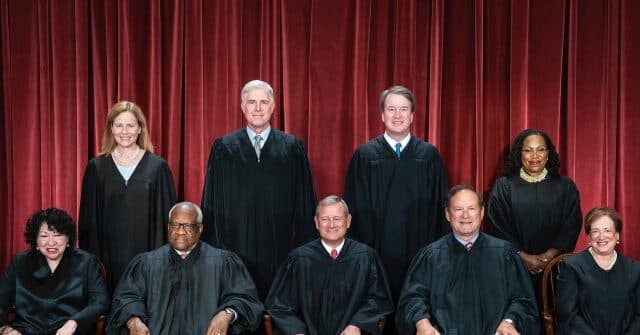
Supreme Court to Decide Trump's Power to End Migrant Protections
Left says
- •Hundreds of thousands of people from Haiti and Syria face deportation to countries experiencing ongoing violence, natural disasters, and humanitarian crises that make return unsafe
- •Lower courts found evidence that anti-immigrant bias influenced the administration's decision-making process, making the terminations legally suspect
- •The Temporary Protected Status program serves as a crucial humanitarian tool that has protected vulnerable populations for decades when their home countries cannot safely receive them
- •Ending these protections would separate families and force people back to dangerous conditions, undermining America's role as a refuge for those fleeing extraordinary circumstances
Right says
- •The Department of Homeland Security has clear statutory authority to determine when countries no longer qualify for temporary protections without judicial interference
- •Federal courts are overstepping their constitutional role by second-guessing executive branch decisions on immigration enforcement and foreign policy matters
- •The program has evolved from truly temporary relief into a de facto permanent amnesty system, with some countries maintaining protected status for over 25 years
- •Presidential immigration powers must be preserved to allow effective border security and enforcement of immigration laws as intended by Congress
Common Take
High Consensus- The Supreme Court will hear expedited oral arguments in April with a decision expected by late June
- The case affects approximately 350,000 Haitians and 6,000 Syrians currently living and working legally in the United States
- Lower court orders currently block the immediate termination of protected status while the legal challenge proceeds
- The Temporary Protected Status program was created by Congress in 1990 to provide relief when extraordinary conditions make return to home countries unsafe
The Arguments
Right argues
The Department of Homeland Security has clear statutory authority under federal law to determine when countries no longer qualify for temporary protections, and courts are overstepping their constitutional role by second-guessing executive branch decisions on immigration enforcement and foreign policy matters.
Left counters
Lower courts found evidence that anti-immigrant bias influenced the administration's decision-making process, making judicial review necessary to ensure decisions are based on legitimate policy considerations rather than discriminatory animus.
Left argues
Hundreds of thousands of people from Haiti and Syria face deportation to countries experiencing ongoing violence, natural disasters, and humanitarian crises that make return unsafe, undermining America's role as a refuge for those fleeing extraordinary circumstances.
Right counters
The State Department's travel warnings don't automatically justify permanent immigration status, and DHS has determined that conditions no longer meet the statutory threshold for 'extraordinary and temporary conditions' that prevent safe return.
Right argues
The TPS program has evolved from truly temporary relief into a de facto permanent amnesty system, with some countries maintaining protected status for over 25 years, far beyond the 'temporary' nature Congress intended.
Left counters
The program serves as a crucial humanitarian tool that has protected vulnerable populations for decades when their home countries genuinely cannot safely receive them, and conditions in places like Haiti and Syria remain demonstrably dangerous.
Left argues
Ending these protections would separate families and force people back to dangerous conditions, violating fundamental humanitarian principles and potentially exposing vulnerable populations to violence and instability.
Right counters
Presidential immigration powers must be preserved to allow effective border security and enforcement of immigration laws as Congress intended, without judicial interference that undermines executive authority over foreign policy and national security decisions.
Challenge Questions
These questions target genuine internal contradictions — meant to provoke honest reflection.
Right asks Left
“If courts can override executive determinations about country conditions based on perceived bias, what prevents this judicial review from becoming a de facto veto power over all immigration enforcement decisions that advocates disagree with?”
Left asks Right
“If the 'temporary' in Temporary Protected Status has no meaningful time limit and countries can maintain protection for decades regardless of changing conditions, how does this differ from creating a parallel permanent immigration system outside congressional authorization?”
Outlier Report
Left Fringe
Progressive immigration activists like Julián Castro and Alexandria Ocasio-Cortez who advocate for permanent status conversion and complete TPS expansion represent approximately 15-20% of the left coalition.
Right Fringe
Immigration hardliners like Stephen Miller and Tom Cotton who seek immediate termination of all TPS programs without court review represent roughly 25-30% of the right coalition.
Noise Assessment
Moderate noise ratio - most discourse reflects genuine policy positions rather than performative politics, though Trump's social media comments and activist group statements amplify rhetoric beyond typical public engagement levels.
Sources (9)
<p>The Supreme Court of the United States (SCOTUS) will soon decide if President Donald Trump's administration can end Temporary Protected Status (TPS) for hundreds of thousands of nationals from Haiti and Syria living in the United States.</p> <p>The post <a href="https://www.breitbart.com/politics/2026/03/16/scotus-to-decide-if-trump-can-end-temporary-amnesty-haiti-syria/" rel="nofollow">SCOTUS to Decide if Trump Can End ‘Temporary’ Amnesty for Haitians, Syrians in U.S.</a> appeared first on <a href="https://www.breitbart.com" rel="nofollow">Breitbart</a>.</p>
The Supreme Court will review Trump's effort to unwind legal protections for migrants from Haiti and Syria, and will hear arguments in the case next month.
The Supreme Court agreed Monday to hear a major immigration case concerning whether President Donald Trump's administration can end temporary protected status for migrants from Syria and Haiti while leaving lower court orders in place for now.
The court temporarily blocked the Trump administration from deporting some 6,000 Syrians and 350,000 Haitians who were granted Temporary Protected Status.
The Supreme Court will hear arguments over the Trump administration's push to end legal protections for people fleeing war and natural disaster from countries around the world, including Haiti and Syria.
<p>The Supreme Court announced Monday it will hear the Trump administration’s appeal to end Temporary Protected Status for certain immigrants, including those from Syria and... <a class="call-to-action" href="https://www.dailysignal.com/2026/03/16/supreme-court-takes-up-trump-bid-to-curb-temporary-protections-for-immigrants/">Read More</a></p> <p>The post <a href="https://www.dailysignal.com/2026/03/16/supreme-court-takes-up-trump-bid-to-curb-temporary-protections-for-immigrants/">SCOTUS Agrees to Hear Trump Bid to Rein in Temporary Protected Status</a> appeared first on <a href="https://www.dailysignal.com/">The Daily Signal</a>.</p>
The Supreme Court agreed on Monday to review the Trump administration’s power to curtail temporary protections for migrants from countries experiencing extraordinary conditions, setting the stage for a high-stakes battle over the president’s immigration crackdown this spring.  Until they hear oral arguments the week of April 27, the justices will keep intact lower rulings that block the administration from terminating Syria and Haiti’s designations for the Temporary…
A decision by the Supreme Court could affect other challenges to the government’s efforts to end temporary protected status for hundreds of thousands of migrants.
The Supreme Court said Monday it will take up two cases involving President Trump's attempt to end deportation amnesties for hundreds of thousands of unauthorized immigrants -- but ruled they can remain here while the case is pending.