Suspect's Anti-AIPAC Rant Reignites Fight Over Israel Lobby Criticism
Intra-Party Split Detected
Daily Wire highlights that criticism of AIPAC comes from both progressive Democrats (Tlaib, Omar, AOC, Sanders) and some mainstream Democrats (Moulton, Newsom), as well as a libertarian-leaning Republican (Massie), suggesting intra-party tension on the left over support for AIPAC specifically, distinct from broader party unity on Israel policy.
Left says
- •A violent threat from one disturbed individual should not be used to delegitimize years of mainstream, bipartisan criticism of AIPAC's political influence and spending on elections.
- •Progressive lawmakers who have questioned AIPAC's role have done so through policy debate and electoral advocacy, not incitement, and conflating the two unfairly smears legitimate dissent.
- •Mental health and access to firearms, not political rhetoric about a lobbying organization, are the more direct explanations for why an individual escalated to planning violence.
- •Attempts to blame Squad members or progressive critics for this suspect's actions risk chilling legitimate debate over U.S. Middle East policy and the influence of any lobbying group.
Right says
- •Heated rhetoric describing AIPAC and its supporters as needing to be 'exterminated' reflects a dangerous escalation of anti-Israel and antisemitic sentiment that has moved from political criticism into dehumanizing language.
- •Lawmakers on both the left and the horseshoe right who have made AIPAC a recurring target of suspicion bear some responsibility for normalizing hostility toward a mainstream pro-Israel advocacy organization.
- •Quick, coordinated action by Texas DPS, the FBI, and state leadership prevented a potential mass-casualty attack and deserves public recognition rather than distraction over the suspect's politics.
- •The case underscores a broader pattern of threats against Jewish and pro-Israel institutions that demands more serious scrutiny from political leaders who have fueled anti-AIPAC narratives.
Common Take
High Consensus- Law enforcement identified a credible threat against the Texas State Capitol and arrested Benny Caldera Jr. before any attack occurred.
- Caldera allegedly told a friend he intended to 'shoot up' the Capitol and expressed anger at AIPAC, calling for its members to be 'exterminated.'
- Texas DPS and the FBI collaborated effectively to track down and arrest the suspect without incident.
- Officials agree that threats of political violence, regardless of ideological motivation, are unacceptable and warrant serious criminal consequences.
The Arguments
Right argues
The suspect's own words—calling for AIPAC supporters to be 'exterminated'—show rhetoric about the organization has moved beyond policy critique into dehumanizing language that can inspire violence, and this pattern deserves scrutiny regardless of who normalizes it.
Left counters
One unstable individual's extermination rhetoric is not representative of mainstream criticism of AIPAC's lobbying influence, which has always focused on campaign spending and policy accountability, not violence against people.
Left argues
Progressive lawmakers who have criticized AIPAC's spending and influence have done so through legislation, public statements, and electoral organizing—legitimate democratic tools entirely distinct from incitement to violence.
Right counters
Even well-intentioned political rhetoric can be weaponized by unstable actors, and lawmakers who repeatedly single out a specific pro-Israel organization as uniquely corrupt or malevolent contribute to an atmosphere where such language escalates.
Left argues
The suspect's documented history (prior firearms arrest) and the immediate, specific nature of his threat point to individual psychological instability and access to weapons as the proximate causes, not abstract political discourse about lobbying influence.
Right counters
Mental instability and rhetoric are not mutually exclusive explanations—unstable individuals often latch onto whatever hostile narratives are most prevalent in public discourse, which is precisely why the target of his rage matters.
Right argues
The successful, rapid interagency response by Texas DPS and the FBI prevented a potential mass-casualty attack on a state capitol and deserves recognition as a law enforcement success story, separate from the political debate it has triggered.
Left counters
Praising the operational response doesn't require simultaneously using the case to broadly delegitimize years of bipartisan criticism of a politically influential lobbying organization.
Right argues
This incident fits a broader, documented pattern of threats against Jewish and pro-Israel institutions, which warrants political leaders across the spectrum reflecting on how their anti-AIPAC framing may contribute to a hostile climate.
Left counters
Treating every act of antisemitic violence as evidence against policy criticism of a specific lobbying group risks conflating legitimate concerns about foreign policy influence with hatred of Jewish people, which are not the same thing.
Challenge Questions
These questions target genuine internal contradictions — meant to provoke honest reflection.
Right asks Left
“If rhetoric and political climate are irrelevant to why this suspect escalated to violence, why does the left routinely argue that heated right-wing rhetoric contributes to other acts of political violence, such as attacks tied to anti-immigrant or anti-government sentiment?”
Left asks Right
“If isolated violent rhetoric from one individual is sufficient to assign some responsibility to lawmakers who criticize AIPAC, why shouldn't the same standard apply to politicians and pundits whose heated rhetoric about immigrants, Muslims, or political opponents has preceded other acts of violence?”
Outlier Report
Left Fringe
Figures like Rep. Rashida Tlaib and some DSA-aligned commentators who frame AIPAC criticism as entirely separate from any violence concerns represent a vocal minority, roughly 15-20% of the left, that may push back hard against any narrative connecting anti-AIPAC rhetoric to this incident.
Right Fringe
Commentators like those at outlets amplifying claims that progressive 'Squad' rhetoric directly incites violence, and some pro-Israel advocacy accounts on X, represent an edge (perhaps 20-25% of the right) that extends blame broadly to any AIPAC critic, including horseshoe-right figures like Rep. Thomas Massie, rather than focusing narrowly on the individual suspect.
Noise Assessment
High noise ratio - this story is quickly being used as a political football by partisan media and X commentators on both sides, with the actual suspect's mental state and motives likely more idiosyncratic than either political narrative suggests, and most ordinary Americans probably view it simply as a concerning isolated threat stopped by effective policing.
Sources (6)
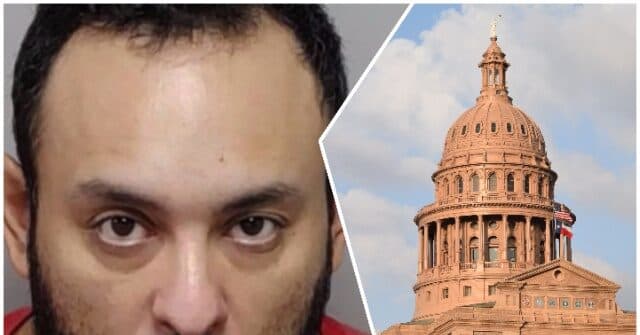
<p>The Texas Department of Public Safety (DPS) and the Federal Bureau of Investigation worked frantically to locate and arrest a suspect connected to a “credible threat” to attack the Texas State Capitol in Austin, Texas on October 1. The suspect, 40-year-old Benny Caldera Jr., was taken into custody early Wednesday morning after a DPS SWAT team located him at his residence in Converse, a suburban city 13 miles northeast of San Antonio. </p> <p>The post <a href="https://www.breitbart.com/border/2026/10/01/texas-feds-stop-planed-terror-attack-on-capitol-in-austin/" rel="nofollow">Texas, Feds Stop Planned Terror Attack on Capitol in Austin</a> appeared first on <a href="https://www.breitbart.com" rel="nofollow">Breitbart</a>.</p>
A lone-wolf extremist plotted a bloody, armed assault on the Texas State Capitol before SWAT cops and federal agents arrested him at his doorstep, authorities revealed Thursday. Benny Caldera Jr., 40, was nabbed by Texas DPS SWAT officers at 3 a.m. Wednesday at his home in Converse, just outside San Antonio. Law enforcement swooped in ...
The FBI worked in conjunction with the Texas Department of Public Safety on the matter.
A man was arrested after making “verbal threats” toward the Texas Capitol, the Lone Star State’s governor, Greg Abbott (R), confirmed Wednesday evening. On Wednesday, the Texas Department of Public Safety told NBC Dallas-Fort Worth that authorities had stopped a plot on the state’s Capitol building in Austin. Per the outlet, the Department of Public…
A 40-year-old man was arrested early Wednesday on suspicion of plotting to attack the Texas Capitol, authorities said.