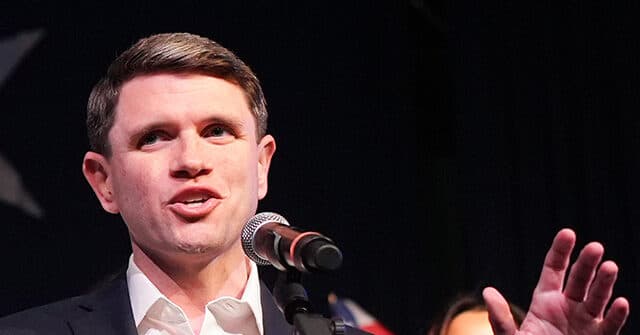
Talarico's Post-9/11 Mosque Visit at Age 12 Sparks Criticism
Left says
- •The mosque visit reflects an interfaith gesture organized by his mother in response to a nationwide surge in anti-Muslim hate crimes and rhetoric following 9/11, teaching a 12-year-old the value of standing with a targeted community rather than scapegoating it.
- •Talarico's religious journey, including drawing lessons from Islamic poets like Rumi, reflects an inclusive, ecumenical approach to faith common among progressive Christians rather than a rejection of Christianity.
- •His church's interfaith partnerships, including hosting Ramadan iftar dinners, represent standard interfaith outreach practiced by many mainline Protestant congregations nationwide.
- •Critics resurfacing a childhood act of solidarity 25 years later, attributed to his mother's initiative rather than his own political calculation, is seen as a bad-faith attempt to smear a candidate for something he did as a preteen.
Right says
- •Voters are right to scrutinize how a Senate candidate frames his personal history with Islam, especially given his own description of himself as a 'Christian who hates Christianity' and his public praise of Islamic mystics over Christian authors.
- •His church's documented partnership with CAIR, an organization some conservatives associate with concerning ties, raises legitimate questions about the network and values shaping the candidate's worldview.
- •The near-silence from Talarico's campaign on the 25th anniversary of 9/11, focusing instead on issues like insulin costs and a Jimmy Kimmel appearance, suggests a lack of seriousness about honoring the attack's victims.
- •As a sitting legislator who sponsored a bill allowing imams to perform weddings in Texas, Talarico's record shows a consistent pattern of prioritizing Islamic community engagement that voters deserve to weigh.
Common Take
High Consensus- James Talarico visited a mosque with his mother, sister, and friends the weekend after the September 11, 2001 attacks as an act of solidarity with the Muslim community.
- Talarico was a preteen (12 or 13 years old) at the time of the visit and the trip was organized by his mother.
- Talarico's church, St. Andrew's Presbyterian in Austin, has hosted annual Ramadan iftar dinners and partnered with CAIR.
- Talarico is the Democratic nominee running against Republican Ken Paxton for the open Texas U.S. Senate seat.
The Arguments
Left argues
The mosque visit was an act of interfaith solidarity organized by Talarico's mother in response to a real, documented surge in anti-Muslim hate crimes after 9/11, teaching a 12-year-old empathy rather than scapegoating an entire religious community for the acts of terrorists.
Right counters
Whatever its merits as a childhood lesson, voters are entitled to view it as part of a broader, adult-chosen pattern — from sponsoring imam-officiated marriage legislation to hosting CAIR partnerships — that shows a consistent political orientation toward Islamic community engagement, not an isolated one-off from youth.
Right argues
A sitting legislator's self-description as a 'Christian who hates Christianity,' his public preference for Islamic mystic poets over Christian authors, and his church's formal partnership with CAIR form a coherent pattern that voters can legitimately weigh in assessing the values and networks shaping his worldview.
Left counters
Drawing spiritual insight from Rumi and other mystics is common among progressive and ecumenical Christians and doesn't constitute rejection of Christianity; conflating personal theological pluralism with a sinister ideological network is an inferential leap not supported by the underlying facts.
Right argues
The near-silence of Talarico's campaign on the 25th anniversary of 9/11 — juxtaposed against active promotion of a Jimmy Kimmel appearance and insulin-cost messaging — suggests a lack of seriousness about honoring the day's victims from a candidate seeking a U.S. Senate seat.
Left counters
Talarico's campaign did release a statement honoring 'the lives lost' and the communities forever changed by 9/11; expecting a candidate to subordinate all other campaign activity on a single day to prove sincerity sets an arbitrary and selectively applied bar that isn't demanded of other candidates.
Left argues
Resurfacing a childhood act from age 12, initiated entirely by his mother, 25 years later as a campaign attack reflects a bad-faith attempt to manufacture scandal out of an act of compassion rather than any decision the candidate himself made.
Right counters
The story isn't really about blaming a 12-year-old — it's about how that formative episode fits into a documented adult record, including specific legislative and church actions Talarico chose as a grown politician, which is fair game for scrutiny.
Left argues
His church's Ramadan iftar dinners and interfaith outreach mirror standard practices at many mainline Protestant congregations nationwide, making them unremarkable rather than evidence of a hidden agenda.
Right counters
Standard or not, CAIR is a specific organization with a controversial reputation among many conservatives, and a formal, publicized partnership with it is a legitimate detail for voters to factor in, regardless of how common general interfaith outreach may be elsewhere.
Challenge Questions
These questions target genuine internal contradictions — meant to provoke honest reflection.
Right asks Left
“If childhood actions taken at a parent's initiative are truly off-limits for scrutiny, does that same standard apply consistently to how the left treats other candidates' formative associations and family influences, or only when it's politically convenient?”
Left asks Right
“If the standard being applied is that any interfaith engagement with Muslim communities or sponsorship of religiously inclusive legislation constitutes evidence of a concerning worldview, would the same scrutiny be applied to a candidate who partnered similarly with Christian or Jewish organizations, and if not, why not?”
Outlier Report
Left Fringe
Figures like Ilhan Omar or CAIR spokespeople might frame any criticism of Muslim outreach as inherently Islamophobic, a position likely held by a small slice (~10-15%) of the left that sees no legitimate grounds for scrutiny of Talarico's religious framing.
Right Fringe
Commentators like Laura Loomer or fringe accounts pushing 'civilizational' framing of Islam as uniquely threatening represent an extreme (~15-20%) of the right that would go further than the Daily Wire/Federalist framing, casting the mosque visit itself as suspicious rather than just questioning CAIR ties or 9/11 messaging.
Noise Assessment
High noise ratio — this is largely a manufactured opposition-research story amplified by conservative outlets during a competitive Senate race; most swing voters are unlikely to weigh a candidate's actions at age 12 heavily, making much of the discourse performative political point-scoring rather than reflecting deep public concern.
Sources (5)
<p>Democrat Texas U.S. Senate hopeful James Talarico visited a mosque as a teen in "solidarity" with the Muslim community the weekend after the September 11, 2001, terrorist attacks, according to a resurfaced interview.</p> <p>The post <a href="https://www.breitbart.com/politics/2026/09/10/james-talarico-visited-mosque-9-11-solidarity-muslims/" rel="nofollow">James Talarico Visited Mosque After 9/11 in ‘Solidarity’ with Muslims</a> appeared first on <a href="https://www.breitbart.com" rel="nofollow">Breitbart</a>.</p>
The Democratic Party’s great white hope in Texas, Senate candidate James Talarico, visited a mosque in the days after the 9/11 Islamic terror attacks — a move that he now defends as being in the interest of “solidarity.” Talarico’s mother was behind the trip — he was 12 years old at the time — and ...
The interview received amplified attention after the late-night host claimed threats from the FCC forced him to only make the interview available online.
<img alt="A bizarre and reptilian young man named James Talarico walks through a restaurant carrying a plate like a waiter." class="webfeedsFeaturedVisual wp-post-image" src="https://thefederalist.com/wp-content/uploads/2026/09/talarico-insulin-1200x675.jpg" style="display: block; margin: auto; margin-bottom: 5px;" />On YouTube, the Talarico campaign posted a new video late on the afternoon of September 11. It focuses on topics like insulin costs.
<p>Mike Rogers has also helped kill other bills that would have provided healthcare to responders and survivors</p><p>Mike Rogers, a Michigan Republican US Senate candidate, has sought in recent weeks to create controversy over old tweets his Democratic opponent, Abdul El-Sayed posted about 9/11. He has for example, <a href="https://www.theguardian.com/us-news/2026/aug/29/michigan-senate-candidate-mike-rogers-osama-bin-laden">falsely suggested</a> El-Sayed, who is Muslim, said the US deserved the attack.</p><p>But, as critics have noted, Rogers has twice voted against healthcare and other benefits for 9/11 first responders and survivors, congressional records show. He has also helped kill other bills that would have provided benefits and healthcare to first responders nationwide. Rogers, a former member of Congress, is vying for Michigan’s open US Senate seat in a tight race that could decide control of Congress during the next session.</p> <a href="https://www.theguardian.com/us-news/2026/sep/10/mike-rogers-911-first-responders-votes-abdul-el-sayed">Continue reading...</a>