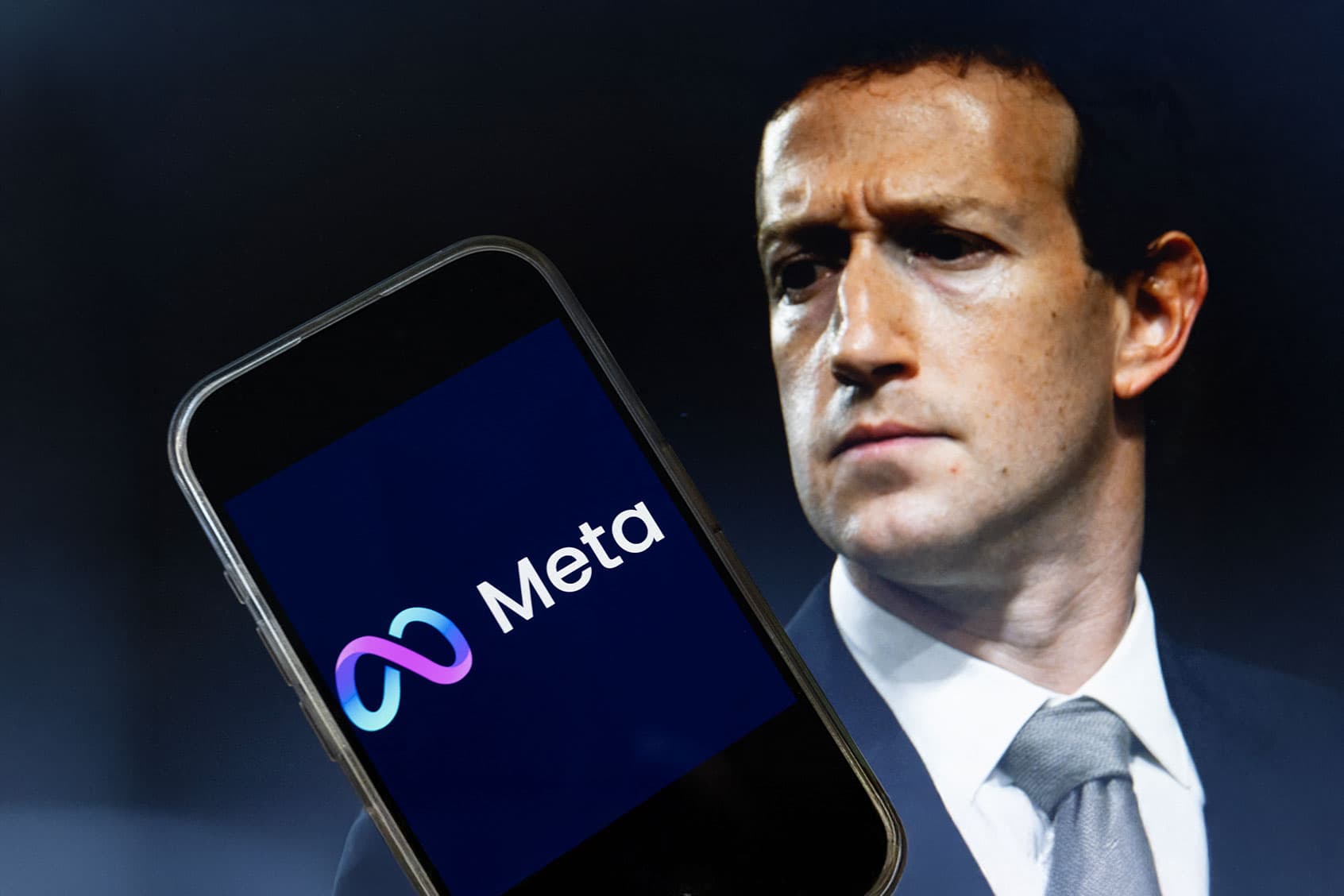
 Mark Zuckerberg with Meta logo on smartphone screen
Tech Giants Found Liable for Knowingly Addicting Children to Social Media
Left says
- •Internal documents revealed tech companies deliberately exploited children's underdeveloped brain chemistry and need for validation to maximize profits
- •Companies ignored warnings from their own employees about harm to children and misled the public about platform safety
- •The verdicts establish crucial legal precedent that psychological harm from addictive design constitutes actionable personal injury
- •This represents a watershed moment for accountability that could open floodgates for thousands of similar cases against Big Tech
Right says
- •The $6 million total damages represent a tiny fraction of these companies' daily profits and may not meaningfully change business practices
- •Tech companies maintain they work hard to protect users and remove harmful content, with Meta planning to appeal the verdicts
- •The legal precedent could lead to excessive litigation that stifles innovation and technological progress
- •Parents and users bear significant responsibility for how social media platforms are used, particularly regarding children's online activities
Common Take
High Consensus- Juries in California and New Mexico found Meta and Alphabet liable for knowingly causing harm to children through their social media platforms
- The cases involved a 20-year-old woman who suffered mental health issues including anxiety, body dysmorphia, and suicidal thoughts
- Thousands of similar lawsuits against social media companies are pending in courts
- Protecting children from online harm is a shared priority that requires ongoing attention and solutions
The Arguments
Left argues
Internal documents prove tech companies deliberately exploited children's underdeveloped brain chemistry and need for validation, designing addictive features while ignoring employee warnings about harm to maximize profits.
Right counters
Companies maintain they work hard to protect users and remove harmful content, and the responsibility for children's online activities ultimately lies with parents who should monitor and control their children's social media use.
Right argues
The $6 million in total damages represents a fraction of these companies' daily profits and may not meaningfully change business practices, while excessive litigation could stifle technological innovation and progress.
Left counters
The verdicts establish crucial legal precedent that psychological harm from addictive design constitutes actionable personal injury, opening the door for thousands of similar cases that could create meaningful financial pressure for change.
Left argues
Companies used casino-like tricks such as infinite scroll and auto-playing videos to keep children compulsively engaged, leading to documented harms including anxiety, body dysmorphia, and suicidal thoughts.
Right counters
These platforms provide valuable services and connectivity, and users retain agency over their engagement choices, with many safety features and parental controls already available to mitigate potential harms.
Right argues
Parents and users bear significant responsibility for how social media platforms are used, particularly regarding children's online activities, and excessive legal liability could lead to over-regulation that hampers beneficial technological development.
Left counters
When companies deliberately design products to exploit children's psychological vulnerabilities for profit while misleading the public about safety, they cannot shift responsibility to parents who lack knowledge of these manipulative design tactics.
Challenge Questions
These questions target genuine internal contradictions — meant to provoke honest reflection.
Right asks Left
“If tech companies are truly responsible for children's social media addiction, how do you account for the millions of children who use these platforms without developing severe mental health issues or addictive behaviors?”
Left asks Right
“If parents truly bear primary responsibility for their children's online activities, how can they effectively protect their children from deliberately designed psychological manipulation tactics that even the companies' own employees warned were harmful?”
Outlier Report
Left Fringe
Progressive activists like Cathy O'Neil and some Democratic lawmakers like Alexandria Ocasio-Cortez who call for breaking up Big Tech entirely or treating social media like tobacco represent about 15% of the left with more extreme regulatory positions.
Right Fringe
Libertarian-leaning figures like Rand Paul and tech industry defenders like Marc Andreessen who oppose virtually any tech regulation as government overreach represent about 20% of the right, arguing for pure free market solutions.
Noise Assessment
Moderate noise level - while tech executives and some partisan commentators amplify extreme positions, the core child safety concern generates genuine grassroots sentiment rather than manufactured outrage.
Sources (6)
Juries in California and New Mexico have found the tech giants Alphabet and Meta liable for knowingly causing harm to children and teens who used their social media platforms. Over the course of the trials, documents revealed that tech companies were well aware of the addictive properties of their social media products and exploited these properties to increase their profits. “They take advantage of the undeveloped frontal cortex of young people and their emotional need for validation by showing them things, not that they want to see, but what they can’t look away from,” says attorney Matthew P. Bergman, who represented the plaintiffs in the California case. Youth advocate Zamaan Qureshi, who testified in the New Mexico case against Meta, says the verdicts indicate that “Meta’s house of cards is falling, and it is absolutely clear that they will be held accountable.”
The companies were ordered to pay $3 million in damages to a 20-year-old woman who brought the lawsuit.
A jury in New Mexico found that the Facebook parent company enabled the sexual exploitation of minors
Is a $6 million penalty enough to make a difference to companies worth billions?
<p>In a court of law, tech titans will be judged not for who they are, but what they do. We should take comfort in that</p><p>Jury verdicts <a href="https://press.uchicago.edu/ucp/books/book/chicago/L/bo3644479.html">are meant to speak the truth</a>, and today’s verdict in a California courtroom <a href="https://www.washingtonpost.com/technology/2026/03/25/meta-youtube-verdict-social-media-addiction/">spoke the truth about the pernicious effects</a> of platforms such as Instagram and YouTube on young people in the United States and around the world. The jury found two social media giants, Meta and YouTube, responsible for injuries incurred by a 20-year-old woman over the course of her childhood.</p><p>The plaintiff, referred to in court as KGM, claimed that her social media use had begun when she was six years old. Her suit alleged that the sites she regularly used had features designed to hold her attention and keep her coming back.</p> <a href="https://www.theguardian.com/commentisfree/2026/mar/26/meta-youtube-verdict-children-justice-system">Continue reading...</a>
<p>David Futrelle</p> <div><img alt="" src="https://www.thenation.com/wp-content/uploads/2026/03/AICompanion-275x173.jpg" /></div> <div> <div class="wp-block-the-nation-dek article-title__dek"> <p>A jury finds big tech liable for programming addictive features into platforms—and that’s basically the business model for companion bots.</p> </div> </div> <p>The post <a href="https://www.thenation.com/article/society/meta-youtube-ai-litigation/">A Landmark Suit Against Meta and YouTube Opens the Floodgate for AI Litigation</a> appeared first on <a href="https://www.thenation.com">The Nation</a>.</p>