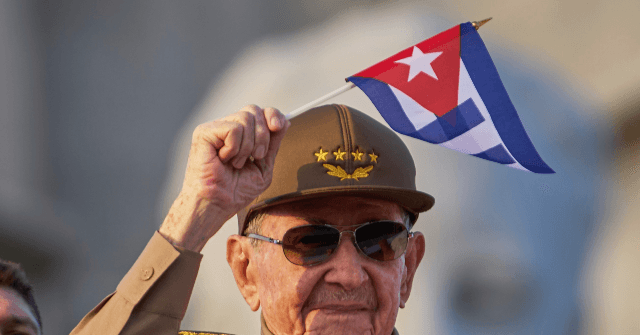
 Cuban official with Cuban flag at what appears to be a diplomatic event
Trump Administration Holds Secret Talks with Castro Regime in Cuba
Left says
- •The diplomatic engagement represents a necessary attempt to address Cuba's humanitarian crisis and prevent a catastrophic collapse that could create refugee flows and regional instability
- •The U.S. is offering constructive solutions like Starlink internet access while maintaining longstanding conditions for embargo relief including political prisoner releases and democratic reforms
- •Cuba's economic free fall requires urgent international intervention to prevent human suffering, making diplomatic outreach a moral imperative despite past policy differences
Right says
- •The Castro regime remains a dangerous adversary that has enabled thousands of Cuban fighters to support Russia's war against Ukraine, demonstrating continued hostility to American interests
- •Cuba's communist leadership shows no genuine willingness to implement democratic reforms or compensate Americans for confiscated property, making concessions premature and potentially counterproductive
- •The regime's proximity to the U.S. homeland while harboring foreign intelligence and terror groups poses an unacceptable national security threat that requires firm pressure rather than diplomatic accommodation
Common Take
High Consensus- Cuba's economy is in severe crisis and approaching potential societal collapse
- The current situation poses legitimate national security concerns for the United States given Cuba's geographic proximity
- Both countries have acknowledged that official diplomatic talks between U.S. and Cuban officials have taken place
- Raúl Castro remains actively involved in Cuba's decision-making process despite his advanced age
The Arguments
Right argues
Cuba's provision of up to 5,000 fighters to support Russia's war in Ukraine demonstrates the regime's continued hostility to American interests and alignment with adversaries. This military support for an enemy actively threatening U.S. allies makes diplomatic engagement premature and potentially dangerous.
Left counters
The Cuban fighters appear to be recruited individually by Russia rather than officially dispatched by Havana, and Cuba has prosecuted cases of human trafficking related to this recruitment. Diplomatic engagement is precisely what's needed to address such problems and prevent Cuba from drifting further into adversarial relationships.
Left argues
Cuba's economic collapse poses an imminent humanitarian crisis that could generate massive refugee flows to the U.S. and create regional instability. Diplomatic engagement offering practical solutions like Starlink internet access represents responsible crisis prevention rather than ideological accommodation.
Right counters
The regime's economic failures are the direct result of their communist policies and authoritarian control, and bailing them out through diplomatic concessions only perpetuates the system that created the crisis. Pressure, not accommodation, is what's needed to force genuine change.
Right argues
The Castro regime continues to harbor foreign intelligence and terror groups less than 100 miles from the U.S. homeland while showing no genuine commitment to democratic reforms or compensation for confiscated American property. These fundamental security and justice issues must be resolved before any meaningful engagement.
Left counters
The Trump administration is maintaining all longstanding conditions for embargo relief including political prisoner releases and democratic reforms, while using engagement to directly address security concerns. Diplomatic contact allows the U.S. to clearly communicate consequences and requirements rather than operating in isolation.
Left argues
The U.S. delegation's direct communication of requirements for democratic reforms and economic freedoms, backed by clear consequences, represents principled engagement that maintains American leverage while preventing humanitarian catastrophe. This approach combines moral responsibility with strategic pressure.
Right counters
The regime has had decades to implement reforms and has consistently chosen repression over freedom, with Raúl Castro still controlling decision-making behind the scenes. Offering assistance like Starlink while the regime actively supports Russia's war effort sends mixed signals that undermine American credibility and deterrence.
Challenge Questions
These questions target genuine internal contradictions — meant to provoke honest reflection.
Right asks Left
“If diplomatic engagement is truly about preventing humanitarian crisis rather than accommodating the regime, why offer technological assistance like Starlink to a government that you acknowledge harbors foreign intelligence services and has enabled thousands of fighters to support America's adversaries?”
Left asks Right
“If the Castro regime poses such a fundamental national security threat through its support for Russia and harboring of hostile intelligence services, how can continued isolation and pressure be justified when it has demonstrably failed to produce democratic change over six decades?”
Outlier Report
Left Fringe
Progressive foreign policy activists like CodePink's Medea Benjamin and some Democratic Socialists of America members who advocate for immediate embargo lifting without preconditions represent roughly 15% of the left coalition.
Right Fringe
Hardline Cuba hawks like Senator Marco Rubio and Representative Mario Diaz-Balart who push for regime change operations and complete isolation represent about 25% of the right, though their influence is amplified by their positions in government.
Noise Assessment
Moderate noise level - the Cuba issue generates passionate advocacy from both Cuban-American communities and anti-embargo activists, but most Americans have limited engagement with Cuba policy details beyond basic security concerns.
Sources (3)
<p>U.S. State Department officials met in Havana with Cuban apparatchiks —including the grandson of aging strongman <a href="https://www.axios.com/2026/02/13/cuba-trump-raul-castro-indict" target="_blank">Raul Castro</a>— to urge democratic and economic freedoms and warn of the risks of not heeding their advice, Axios has learned.</p><ul><li>The U.S. delegation also offered to help restore internet services by setting up Starlink satellite services.</li></ul><p><strong>Why it matters: </strong>The meeting last Friday itself marks a diplomatic breakthrough because it's the first time a U.S. government plane has touched down since President Obama visited a decade ago in an effort for rapprochement.</p><hr /><ul><li>This time, Cuba is closer to societal collapse than ever, President Trump is in office with Secretary of State Marco Rubio, and they're far less inclined to make concessions.</li></ul><p><strong>Zoom in</strong>: A senior State Department official told Axios that multiple meetings took place but would not name the participants, except for one —Raul Guillermo Rodriguez Castro, the grandson of Castro.</p><ul><li>Known as Raulito and nicknamed "El Cangrejo" ("the crab"), the younger Castro is seen by the U.S. as a de facto spokesman for his grandfather, who remains the real power in Cuba, as <a href="https://www.axios.com/2026/02/18/marco-rubio-cuba-secret-talks" target="_blank">Axios </a>first reported. </li><li>The U.S. officials impressed on the Castro regime that "the Cuban economy is in free fall and that the island's ruling elites have a small window to make key U.S. backed reforms before circumstances irreversibly worsen," the official told Axios.<strong> </strong></li></ul><p><strong>The big picture: </strong>Aside from the offer of Starlink access and a discussion of Cuba's need to reform its economic and governing system, the State Department officials also reiterated longstanding U.S. policy to help eliminate the Cuban embargo. They include:</p><ul><li>Compensating U.S. residents and corporations whose assets and properties were confiscated after the 1959 Revolution.</li><li>The release of political prisoners.</li><li>Ensuring the Cuban people greater political freedoms, which would eventually include free and fair elections.</li></ul><p><strong>Friction point</strong>: U.S. officials also expressed "concerns about foreign intelligence, military, and terror groups operating with Cuban governmental permission less than 100 miles from the American homeland," the official said.</p><p><strong>The bottom line</strong>: Without directly threatening the Cuban officials, the U.S. also made clear that Trump's government will not allow a disaster to occur on the island 90 miles south of Key West.</p><ul><li>"President Trump is committed to pursuing a diplomatic solution, if possible, but will not let the island collapse into a major national security threat if Cuba's leaders are unwilling or unable to act," the official said.</li></ul><p><em>This is a developing story, check for updates.</em></p>
<p>The Trump administration has informed Congress that Cuba has contributed up to 5,000 fighters for <a href="https://www.axios.com/2026/03/30/zelensky-russia-iran-war-ukraine" target="_blank">Russia's war in Ukraine</a>, while also providing "diplomatic and political support for Moscow," according to an official transmission from the State Department.</p><p><strong>Why it matters: </strong>The U.S. is directly suggesting that the current Cuban regime is complicit in supplying <a href="https://www.axios.com/world/russia" target="_blank">Russia</a> with troops.</p><hr /><ul><li>"The public record does not prove Havana officially dispatched all Cuban fighters," the five-page unclassified report states.</li><li>"However, there are significant indicators that the regime knowingly tolerated, enabled, or selectively facilitated the flow."</li><li>"The Cuban regime has failed to protect its citizens from being used as pawns in the Russia-<a href="https://www.axios.com/world/axios-explains-ukraine" target="_blank">Ukraine</a> war," a State Department spokesperson told Axios.</li></ul><p><strong>The big picture:</strong> The report comes as the White House has increased <a href="https://www.axios.com/2026/03/18/cuba-humanitarian-crisis-trump-strikes" target="_blank">its pressure campaign</a> to force a change in <a href="https://www.axios.com/2026/02/18/marco-rubio-cuba-secret-talks" target="_blank">leadership in Havana</a> and has effectively blockaded oil shipments to the communist-led country.</p><ul><li>"Cuban nationals have emerged as one of the largest identifiable groups of foreign fighters supporting Russian military operations in Ukraine," states the report, sent to key congressional committees on April 8.</li><li>"Estimates vary, but most open-source information suggests between 1,000 and 5,000 Cuban citizens are fighting in Ukraine at any given time."</li><li>"Ukrainian intelligence sources estimate several thousand are deployed directly to the Ukrainian front."</li></ul><p><strong>What they're saying:</strong> "The Cuban regime undermines American interests all over the world," Sen. Ted Cruz (R-Texas) told Axios. </p><ul><li>"If and when President <a href="https://www.axios.com/politics-policy/donald-trump" target="_blank">Trump</a> gets around to replacing them, and I believe that will happen sooner rather than later, it will be a very good day for the U.S. and our allies."</li></ul><p><strong>Zoom out:</strong> The presence of Cuban nationals fighting in Ukraine was first <a href="https://www.nytimes.com/2023/09/05/world/europe/cuba-russia-war-human-trafficking.html" target="_blank">exposed in 2023</a>, when <a href="https://www.themoscowtimes.com/2023/09/05/russian-recruiters-lure-cubans-to-fight-in-ukraine-with-promises-of-money-citizenship-a82360" target="_blank">The Moscow Times</a> reported that Russia was actively recruiting Cubans for the front.</p><ul><li>Cuba's government launched a criminal investigation and claimed that human trafficking is clearly prohibited under its laws. It later announced it had prosecuted nine criminal cases involving 40 defendants.</li><li>But the State Department remains unconvinced. "The regime's opaque judicial system leaves those assertions unverifiable," the report states.</li></ul><p><strong>Zoom in:</strong> In October of last year, the State Department cited the presence of Cuban fighters to build diplomatic opposition to a U.N. resolution that would have lifted the U.S. embargo on Cuba.</p><ul><li>In that lobbying effort, the department told other countries there were up to 5,000 Cuban fighters in Ukraine, <a href="https://www.reuters.com/world/americas/citing-cuban-fighters-ukraine-us-urges-allies-shun-havana-un-2025-10-05/" target="_blank">Reuters reported</a>.</li><li>More recently, the Trump administration has been working to remove President Miguel Díaz-Canel from power, The New York Times <a href="https://www.nytimes.com/2026/04/12/world/americas/cuba-president-meet-the-press.html" target="_blank">reported</a>.</li><li>"We'll defend ourselves, and if we need to die, we'll die," Díaz-Canel said on NBC's <a href="https://www.washingtonexaminer.com/news/world/4525718/cuba-president-die-us-invasion/" target="_blank">Meet the Press</a> on Sunday.</li></ul>
<p>Mariela Castro, daughter of Cuba’s nonagenarian communist dictator Raúl Castro, said Thursday that her father is actively involved in the "decision-making" of the Cuban regime's negotiations with the United States.</p> <p>The post <a href="https://www.breitbart.com/latin-america/2026/04/17/raul-castro-involved-in-decision-making-of-cuba-u-s-talks-daughter-says/" rel="nofollow">Castro Heiress Says Dictator Raúl Involved in Cuba-U.S. Talks</a> appeared first on <a href="https://www.breitbart.com" rel="nofollow">Breitbart</a>.</p>