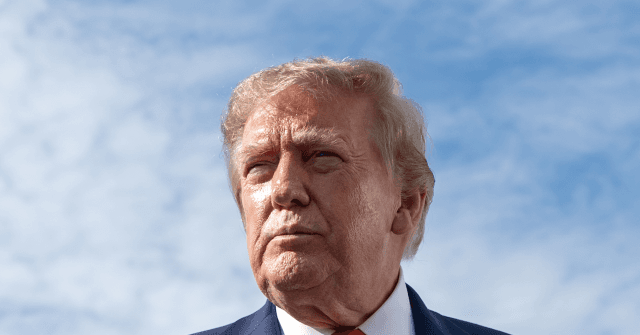
Trump Becomes First Living President Pictured on U.S. Coin
Intra-Party Split Detected
While Breitbart celebrates the coin as a historic milestone, National Review and The Economist (lean-right outlets) criticize it as tacky and question the optics of tying money to presidential power.
Left says
- •The coin's design, celebrating a 1776-2026 milestone alongside Trump's face, strikes many as a self-aggrandizing gesture rather than a genuine tribute to the nation's history.
- •Federal law generally bars living persons from appearing on U.S. currency, and critics argue this commemorative loophole was exploited specifically to gratify Trump's ego.
- •Selling the coins at steep markups (up to 150% over face value) is seen as another avenue for profiteering tied to the presidency, echoing broader concerns about monetizing access to Trump, such as steep fees for photo ops at party events.
- •Social media mockery, including jokes about the coin marking liberty's 'death' in 2026, reflects deeper unease about normalizing a cult-of-personality style of governance.
Right says
- •The coin is framed as a fitting and celebratory tribute to America's 250th birthday, honoring the sitting president as part of a broader patriotic milestone.
- •Supporters see nothing improper about the design since it was authorized under the Circulating Collectible Coin Redesign Act of 2020, which permits temporary commemorative coins.
- •The coin is viewed as a collectible novelty item that fans and history buffs can purchase, similar to past commemorative currency tied to national anniversaries.
- •Some conservative commentators, however, express discomfort with the coin as tacky or overly self-promotional, showing the right isn't unanimous in praising it.
Common Take
High Consensus- The coin marks the first time a living president has appeared on U.S. currency since Calvin Coolidge in 1926.
- The coin was issued by the U.S. Mint to commemorate America's 250th anniversary and went on sale September 3, 2026.
- The coins are sold in rolls and bags at prices well above face value, with special 'July 4th' privy-marked coins randomly included.
- Federal law normally prohibits depicting living persons on currency, with this coin made possible through a specific commemorative exception.
The Arguments
Left argues
Putting a sitting president's face on circulating currency, even via a commemorative loophole, cuts against the long-standing norm that living presidents shouldn't be memorialized this way, and critics see it as feeding a self-aggrandizing, cult-of-personality style of governance.
Right counters
The coin is explicitly authorized by the Circulating Collectible Coin Redesign Act of 2020 for the semiquincentennial, and honoring the sitting president alongside America's 250th birthday is a legitimate, one-time patriotic gesture rather than a permanent change to currency norms.
Right argues
The coin is a limited-time collectible tied to a genuinely historic milestone — America's 250th anniversary — and collecting commemorative currency around national anniversaries is a well-established, apolitical tradition.
Left counters
The framing as a neutral historical tribute is undercut by the fact that Trump's face, not a generic national symbol, is the centerpiece, and the timing conveniently allows him to be the first living president on U.S. currency in a century — a distinction critics say was sought rather than incidental.
Left argues
Selling the coins at markups of 50% to nearly 150% over face value looks like another mechanism for monetizing Trump's image and presidency, echoing other pay-to-access schemes like six-figure photo-op fees at party events.
Right counters
Markups on collectible coins are standard practice across the entire commemorative coin industry and reflect production costs and collector demand, not a scheme unique to Trump; the U.S. Mint routinely prices special editions above face value.
Right argues
Even some conservative commentators find the coin tacky or overly self-promotional, showing that support for the coin isn't a partisan reflex but a genuine, if contested, judgment call about taste and tradition.
Left counters
The fact that even sympathetic voices on the right are uncomfortable suggests the criticism isn't merely partisan sniping but reflects a real and widely shared concern about elevating a living political figure onto national currency.
Left argues
The social media mockery — including jokes about the coin marking liberty's 'death' in 2026 — reflects a broader public unease that a legalistic technicality is being used to normalize honoring a sitting, still-controversial president in a way past presidents avoided.
Right counters
Online jokes and mockery are an unreliable barometer of the coin's actual significance or legality; every modern presidential action generates viral snark regardless of merit, and the coin still operates squarely within the law Congress passed.
Challenge Questions
These questions target genuine internal contradictions — meant to provoke honest reflection.
Right asks Left
“If the coin is legally authorized as a temporary, one-year commemorative tied to a nonpartisan national milestone, what specific evidence — beyond distaste for Trump — establishes that this is ego-driven self-promotion rather than a good-faith application of a law Congress already passed in 2020?”
Left asks Right
“If some conservatives themselves call the coin 'tacky' and self-promotional, doesn't that suggest the discomfort isn't just partisan opposition but a legitimate concern about breaking a century-long norm against putting living presidents on currency — and if so, why should the legal technicality settle the question?”
Outlier Report
Left Fringe
Progressive commentators and some X users framing the coin as authoritarian 'cult of personality' imagery akin to autocratic regimes (e.g., comparisons circulating on social media); roughly 15-20% of the left takes this most extreme view versus milder mockery.
Right Fringe
National Review and some traditionalist conservatives (e.g., the 'Trump's Tacky Coin' commentary) who find the coin gauche or overly self-promotional despite otherwise supporting Trump; likely 15-20% of the right.
Noise Assessment
High noise ratio—much of the reaction is driven by viral social media jokes and outlet-specific framing rather than deep public concern; most Americans likely view this as a minor curiosity rather than a major political issue.
Sources (8)
<p>President Donald Trump's face is officially on U.S. currency with the rollout of the official Semiquincentennial President Donald J. Trump 2026 $1 Coin.</p> <p>The post <a href="https://www.breitbart.com/pre-viral/2026/09/03/president-donald-trumps-face-officially-on-u-s-currency/" rel="nofollow">President Donald Trump’s Face Officially on U.S. Currency</a> appeared first on <a href="https://www.breitbart.com" rel="nofollow">Breitbart</a>.</p>
The U.S. Mint is selling rolls and bags of its new Trump $1 coin starting Wednesday.
The design “appears to show the birth date of liberty as 1776, and its death as 2026,” one X user said.
Nearly everything is for sale at next week’s unusual event.
Republicanism is a habit, and habits require constant reinforcement. <img src="https://i0.wp.com/www.nationalreview.com/wp-content/uploads/2026/09/trump-coin.jpg?fit=617%2C360&ssl=1" />
Canadian Prime Minister Mark Carney pushed back Thursday against Commerce Secretary Howard Lutnick's claim that Canada derailed trade negotiations with the United States for political reasons, saying Ottawa will continue to defend the country's interests.
Money and power belong together
The coins, meant to mark America’s 250th birthday, will also be sold on the Mint website at markups spanning roughly 50 percent to nearly 150 percent over their face value.