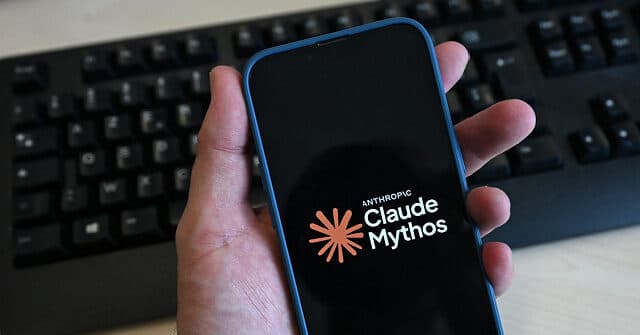
Trump Blocks Foreign Access to Advanced AI, Sparking Tech Backlash
Left says
- •The administration's broad export controls effectively shut down access for all users globally, demonstrating how national security justifications can be weaponized to stifle innovation and harm American tech competitiveness
- •Trump's ongoing feud with Anthropic stems from the company's ethical stance against allowing military use for mass surveillance and autonomous weapons, positioning this as retaliation against a company that won't compromise its safety principles
- •The restrictions were triggered by a narrow jailbreaking vulnerability that Anthropic says exposes only limited, previously known weaknesses that exist in other publicly available models, making the response disproportionate to the actual risk
Right says
- •The administration is properly treating advanced AI systems as national security assets that could be exploited by foreign adversaries for military, economic, or technological advantage
- •Export controls on cutting-edge technology represent standard practice for protecting American technological superiority and preventing sensitive capabilities from falling into the wrong hands
- •The Commerce Department acted responsibly after receiving credible evidence of successful jailbreaking attempts that could compromise the models' safety guardrails and create genuine security risks
Common Take
High Consensus- Anthropic complied immediately with the government directive by shutting down access to Fable 5 and Mythos 5 models for all users globally
- The restrictions were triggered by reports of successful jailbreaking attempts on the Mythos model that raised security concerns
- Advanced AI models pose legitimate questions about balancing innovation, safety, and national security interests
- The situation reflects broader tensions between AI companies and government oversight of frontier AI development
The Arguments
Right argues
Advanced AI systems represent critical national security assets that could be exploited by foreign adversaries for military, economic, or technological advantage, making export controls a standard and necessary practice to protect American technological superiority.
Left counters
These broad export controls effectively shut down global access and demonstrate how national security justifications can be weaponized to stifle innovation and harm American tech competitiveness in the global marketplace.
Left argues
The restrictions were triggered by a narrow jailbreaking vulnerability that Anthropic says exposes only limited, previously known weaknesses that exist in other publicly available models, making the response disproportionate to the actual risk.
Right counters
The Commerce Department acted responsibly after receiving credible evidence of successful jailbreaking attempts that could compromise the models' safety guardrails and create genuine security risks that warrant immediate protective action.
Left argues
Trump's ongoing feud with Anthropic stems from the company's ethical stance against allowing military use for mass surveillance and autonomous weapons, positioning this as retaliation against a company that won't compromise its safety principles.
Right counters
The administration is applying consistent national security standards regardless of any corporate disputes, focusing on protecting sensitive capabilities from falling into the wrong hands rather than targeting specific companies.
Right argues
If this standard of blocking models due to jailbreaking vulnerabilities was applied across the industry, it would essentially halt all new model deployments for all frontier AI providers, as watertight jailbreak protection is not currently possible for any model provider.
Left counters
The government has a responsibility to err on the side of caution when dealing with cutting-edge technologies that could pose national security risks, even if it means temporary disruptions to commercial deployment.
Challenge Questions
These questions target genuine internal contradictions — meant to provoke honest reflection.
Right asks Left
“If you argue that this is retaliation against Anthropic for its ethical stance, how do you reconcile this with the fact that the action was specifically triggered by a third-party company successfully jailbreaking the models, suggesting the security concerns may be legitimate regardless of any corporate disputes?”
Left asks Right
“If national security truly requires protecting these AI capabilities from foreign access, why did the administration allow voluntary compliance with its AI executive order rather than mandatory licensing, and how does this sudden export control action align with the stated goal of not wanting to hurt the industry?”
Outlier Report
Left Fringe
Tech libertarians like Glenn Greenwald and some progressive activists who view any export controls as corporate authoritarianism represent about 15% of the left. They frame this as surveillance state overreach regardless of the China angle.
Right Fringe
Isolationist figures like Tucker Carlson and some America First hardliners who want to ban ALL AI exports to focus purely on domestic development represent about 20% of the right. They view any foreign AI access as inherently threatening.
Noise Assessment
Moderate noise level. Most discourse reflects genuine policy disagreement rather than performative positioning, though some tech industry criticism appears amplified beyond actual public concern about innovation impacts.
Sources (7)
<ul><li>The Trump administration is blocking foreign governments, companies and individuals from accessing Anthropic's <a href="https://www.axios.com/2026/06/09/anthropic-mythos-class-safeguards" target="_blank">most advanced AI models</a> — leading the company to cut off all customer access altogether. </li></ul><p><strong>Why it matters: </strong>The move marks an escalation in Washington's effort to treat cutting-edge AI systems as national security assets.</p><hr /><ul><li>Anthropic now finds itself on a <a href="https://www.axios.com/2026/05/19/anthropic-trump-administration-court-arguments" target="_blank">Pentagon blacklist</a> deeming it too dangerous for the government's own use, and in a Commerce Department licensing regime deeming it too dangerous for foreign use. </li></ul><p><strong>Driving the news: </strong>Commerce Secretary Howard Lutnick on Friday sent a letter to Anthropic CEO Dario Amodei saying that the Mythos 5 and Fable 5 models would be subject to export controls to any location outside of the U.S. and to all foreign persons within the country. </p><ul><li>An administration official told Axios the Commerce Department decided to take the action after another company claimed it was able to jailbreak Mythos, alarming the administration about possible national security risks.</li><li>The administration tried to get Anthropic to pause releasing the latest models but was unsuccessful, the official said, prompting the export control letter.</li><li>The model needs to remain locked down until the U.S. government's national security apparatus is hardened, the official said, adding that could happen in the next few weeks. </li></ul><p><strong>Zoom in:</strong> Per Commerce's letter, a license will be required for the export, re-export or domestic transfer of those Anthropic models.</p><ul><li>Furthermore, Anthropic will have to submit an additional application for individually validated licenses.</li><li>Failure to comply would result in financial and civil penalties.</li></ul><p><strong>The other side: </strong>To ensure compliance, Anthropic said late Friday night it had to <a href="https://x.com/AnthropicAI/status/2065597531644743999" target="_blank">cut off</a> access to Mythos and Fable for all customers.</p><ul><li>"We believe this is a misunderstanding and are working to restore access as soon as possible," the company said in a post to X.</li></ul><p><strong>Context: </strong>The Trump administration earlier this month released an executive order to test the most advanced AI models before they are deployed. </p><ul><li>Anthropic has a partnership with the Center for AI Standards and Innovation at Commerce for pre-deployment testing. </li></ul><p><strong>Yes, but: </strong>The executive order is voluntary and explicitly avoids a licensing regime — something White House chief AI adviser David Sacks was able to secure to avoid what he considers the "regulatory capture" of the biggest labs. </p><ul><li>An administration official said that Trump "does not want to hurt the industry and wants innovation to continue."</li></ul><p><strong>The bottom line: </strong>Anthropic's running fight with the government just got more complicated. </p><p><em>Editor's note: This story has been updated with Anthropic's statement. </em></p>
<p>The Trump administration has moved to restrict foreign access to some of the most advanced artificial intelligence technology developed in the United States, according to a report published Friday.</p> <p>The post <a href="https://www.breitbart.com/tech/2026/06/12/report-trump-administration-imposes-export-restrictions-anthropic-ai/" rel="nofollow">Report: Trump Administration Imposes Export Restrictions on Anthropic AI Systems</a> appeared first on <a href="https://www.breitbart.com" rel="nofollow">Breitbart</a>.</p>
On Friday night, the AI giant Anthropic said that the US government had ordered it to suspend foreign nationals, including employees, from all use of its most advanced products.  To comply with the Friday directive, the company announced that it disabled access to Fable 5 and Mythos 5, the latest models of Claude, for all […]
The company has blocked all access to its Fable 5 and Mythos 5 models after the government ordered a suspension for foreigners.
The administration’s surprise restrictions Friday cut off foreign access to Anthropic’s latest models and sparked another round of finger pointing.
Anthropic said Friday it will remove access to two AI models, Fable 5 and Mythos 5, to comply with a Trump administration directive restricting foreign nationals from using its latest systems due to security concerns. Details of the government’s request, including the length of the restrictions, have not been made public. The company said it…