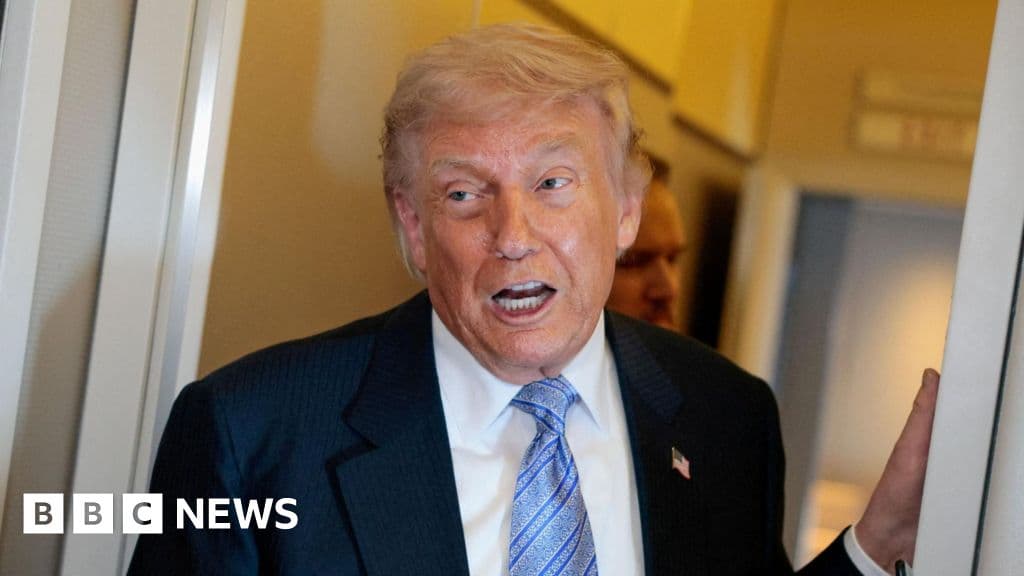
Trump Calls Off Iran Strike After Gulf Allies Intervene
Left says
- •Trump's pattern of repeatedly threatening and then postponing attacks on Iran undermines American credibility and creates dangerous uncertainty in an already volatile region
- •The president's erratic decision-making process, influenced by last-minute calls from allies, demonstrates poor strategic planning and raises questions about who is actually directing U.S. foreign policy
- •Trump's declining approval ratings and growing public opposition to the Iran war show Americans are weary of military engagement and want diplomatic solutions
- •The Gulf states' intervention highlights legitimate concerns about regional escalation and the economic consequences of further military action
Right says
- •Trump's willingness to pause military action shows strategic restraint and respect for key regional allies who understand the complexities of Middle Eastern geopolitics
- •The president's firm ultimatum that Iran must abandon nuclear weapons while keeping military options ready demonstrates strength through diplomacy backed by credible force
- •Gulf allies' request for more time indicates serious negotiations are finally progressing toward a deal that could prevent Iranian nuclear capabilities without further warfare
- •Trump's measured approach of extending deadlines while maintaining military readiness gives diplomacy the best chance to succeed while keeping pressure on Iran
Common Take
High Consensus- Trump announced he postponed a planned Tuesday military strike on Iran at the request of Qatar, Saudi Arabia, and the UAE
- All parties agree that preventing Iran from obtaining nuclear weapons remains the primary objective of any potential deal
- Regional Gulf allies expressed concerns about Iranian retaliation against their energy infrastructure and civilian facilities
- Negotiations between the U.S. and Iran are ongoing through Pakistani mediators, with both sides exchanging revised proposals
The Arguments
Right argues
Trump's decision to pause the attack at the request of Gulf allies demonstrates strategic wisdom and respect for regional partners who understand Middle Eastern complexities better than Washington bureaucrats. This shows strength through restraint rather than reckless escalation.
Left counters
This is the sixth time Trump has extended deadlines and postponed attacks on Iran, creating a pattern of empty threats that undermines American credibility and emboldens adversaries who no longer take U.S. ultimatums seriously.
Left argues
Trump's erratic decision-making process, where last-minute phone calls from allies can completely reverse major military operations, raises serious questions about who is actually directing U.S. foreign policy and whether there's any coherent strategic planning.
Right counters
Consulting with key regional allies before major military action is exactly what responsible leadership looks like, especially when those allies will bear the brunt of Iranian retaliation and understand the regional consequences better than distant Washington officials.
Right argues
The Gulf states' intervention indicates that serious diplomatic progress is finally being made, with regional leaders confident enough to stake their credibility on the possibility of a deal that prevents Iranian nuclear weapons without further warfare.
Left counters
Trump has repeatedly claimed progress toward deals since the war began with no actual breakthroughs, and his declining approval ratings show Americans are increasingly skeptical of his Iran strategy and want diplomatic solutions, not more military threats.
Left argues
With 64% of voters believing the Iran war was wrong and Trump's approval at just 37%, his continued threats of military action ignore clear public opposition to further Middle Eastern entanglements and risk electoral consequences for Republicans.
Right counters
Effective foreign policy cannot be dictated by polling numbers, and Trump's approach of maintaining credible military pressure while pursuing diplomacy gives negotiations the best chance of success by showing Iran the consequences of rejecting reasonable terms.
Left argues
The Gulf states' fear of Iranian retaliation against their oil facilities and infrastructure reveals the dangerous regional escalation risks that Trump's military threats create, potentially destabilizing global energy markets and the broader Middle East.
Right counters
The Gulf allies' concerns about retaliation actually validate the effectiveness of Trump's pressure campaign, as it demonstrates that Iran's capacity for regional disruption makes a negotiated solution preventing their nuclear weapons program even more urgent.
Challenge Questions
These questions target genuine internal contradictions — meant to provoke honest reflection.
Right asks Left
“If Trump's repeated postponements truly undermine American credibility as you claim, why would Gulf allies specifically request another delay unless they genuinely believed diplomatic progress was possible - wouldn't they instead be pushing for decisive action to restore that credibility?”
Left asks Right
“If consulting with regional allies before military action demonstrates wise leadership as you argue, how do you reconcile this with your simultaneous claim that Trump's firm ultimatums and military readiness show strength - isn't there a fundamental contradiction between projecting unwavering resolve and being swayed by last-minute ally requests?”
Outlier Report
Left Fringe
Progressive anti-war activists like CodePink's Medea Benjamin and some Squad members who would argue any military threats against Iran are illegitimate regardless of circumstances. Represents roughly 15% of the left.
Right Fringe
Hardline hawks like John Bolton and some America First isolationists who either demand immediate strikes regardless of ally concerns or complete withdrawal from Middle East engagement. Represents roughly 20% of the right.
Noise Assessment
Moderate noise level - most discourse reflects genuine policy disagreements about diplomatic strategy versus military action, though some partisan framing amplifies the 'erratic' versus 'strategic' narratives beyond what average Americans focus on.
Sources (13)
<p>President Trump said Monday that he'd planned to strike <a href="https://www.axios.com/world/iran" target="_blank">Iran</a> "tomorrow" but was holding off to give negotiations another chance. He claimed he made the decision at the request of several Arab leaders.</p><p><strong>Why it matters:</strong> The White House saw an <a href="https://www.axios.com/2026/05/18/iran-peace-deal-offer-nuclear-unacceptable" target="_blank">updated peace proposa</a>l Iran sent on Sunday as insufficient, leading to a growing expectation —including inside the White House — that <a href="https://www.axios.com/2026/05/17/trump-iran-warning-harder-strikes" target="_blank">Trump was about to strike</a>.</p><hr /><ul><li>Trump has <a href="https://www.axios.com/2026/03/26/trump-iran-talks-deadline-extended-energy-strikes-pause" target="_blank">extended deadlines</a> and postponed planned attacks on Iran at least half a dozen times since the war began.</li></ul><p><strong>Driving the news:</strong> <a href="https://www.axios.com/politics-policy/donald-trump" target="_blank">Trump</a> was expected to convene his top national security team in the Situation Room on Tuesday to discuss military options, two U.S. officials told Axios.</p><ul><li>A senior U.S. official told Axios on Monday morning that if Iran didn't shift its position, the U.S. would have to continue the negotiations "through bombs."</li></ul><p><strong>What he's saying:</strong> "I have been asked by the Emir of Qatar, the Crown Prince of Saudi Arabia and the President of the United Arab Emirates to hold off on our planned Military attack of the Islamic Republic of Iran, which was scheduled for tomorrow," Trump wrote on Truth Social. </p><ul><li>He added that the Arab leaders told him "serious negotiations are now taking place, and that, in their opinion, as Great Leaders and Allies, a Deal will be made, which will be very acceptable to the United States of America, as well as all Countries in the Middle East, and beyond."</li><li>Trump claimed the deal will make sure that Iran doesn't have nuclear weapons. </li><li>He has made repeated claims about progress toward a deal since the war began, but there have been no recent breakthroughs.</li></ul><p><strong>Behind the scenes:</strong> Trump spoke on the phone with the leaders of Saudi Arabia, Qatar and the UAE in the 24 hours before his announcement, two sources with knowledge said. It's not entirely clear whether all three countries urged Trump not to strike.</p><ul><li>One U.S. official claimed there'd been "a unified message from Doha, Abu Dhabi, and Riyadh. It was along the lines of 'give negotiations a chance because if you hit Iran, we will all pay the price for it.''"</li><li>A second source with knowledge said Trump told some of his hawkish political allies the three Arab leaders told him "they don't want their oil and energy facilities blown up" due to Iranian retaliation.</li><li>Trump told reporters the Arab leaders had asked him to hold off "for two or three days," and said he'd informed Israel ahead of time of his decision.</li></ul><p><strong>What to watch: </strong>The President said he had instructed Secretary of Defense Pete Hegseth and Joint Chiefs Chairman Gen. Dan Caine to suspend the attack plans but to be prepared to go forward "with a full, large scale assault of Iran, on a moment's notice, in the event that an acceptable Deal is not reached."</p>
The US president says he is holding off on a US attack planned for Tuesday as "serious negotiations are now taking place".
Trump previously backed off a threat to destroy Iranian civil infrastructure due to the advent of a ceasefire brokered by Pakistan.
President Donald Trump said he is calling off an attack on Iran planned for Tuesday because regional leaders had urged him to allow negotiations to continue and a “very acceptable” deal for the U.S. was at hand.
President Donald Trump said on Monday there was a "very good chance" the United States could reach an agreement with Iran to prevent Tehran from obtaining a nuclear weapon, hours after saying he had postponed a planned military attack at Gulf allies' request to allow...
In our news wrap Monday, President Trump said he called off a strike on Iran planned for Tuesday at the request of Gulf allies, a brush fire north of Los Angeles is forcing thousands to flee, commuters were left scrambling after negotiators failed to settle the Long Island Rail Road strike and an investigation is underway into the collision of two Navy jets during an air show in Idaho.
Trump made the announcement in a social media post on Monday after threatening the clock was ticking for Iran to strike a deal or fighting would renew after a fragile ceasefire.
President Trump will hold off on attacking Iran again at the request of leaders from Qatar, Saudi Arabia and the United Arab Emirates, he announced on Monday. Trump in a Truth Social post, said the strike was scheduled for Tuesday, but he was asked to hold off because “serious negotiations are now taking place, and…
<p>The president says the strikes were set for tomorrow, but it's one of many times Trump made grand threats then supposedly pulled back at the last moment. </p> <p>The post <a href="https://www.twz.com/news-features/trump-claims-he-called-off-immanent-iran-bombing-campaign-at-behest-of-allies">Trump Claims He Called Off Imminent Iran Bombing Campaign At Behest Of Allies (Updated)</a> appeared first on <a href="https://www.twz.com">The War Zone</a>.</p>
President Trump on Monday called off imminent military strikes on Iran, citing requests from Middle East allies and the prospects for a deal that finally meets U.S. demands to end the war.