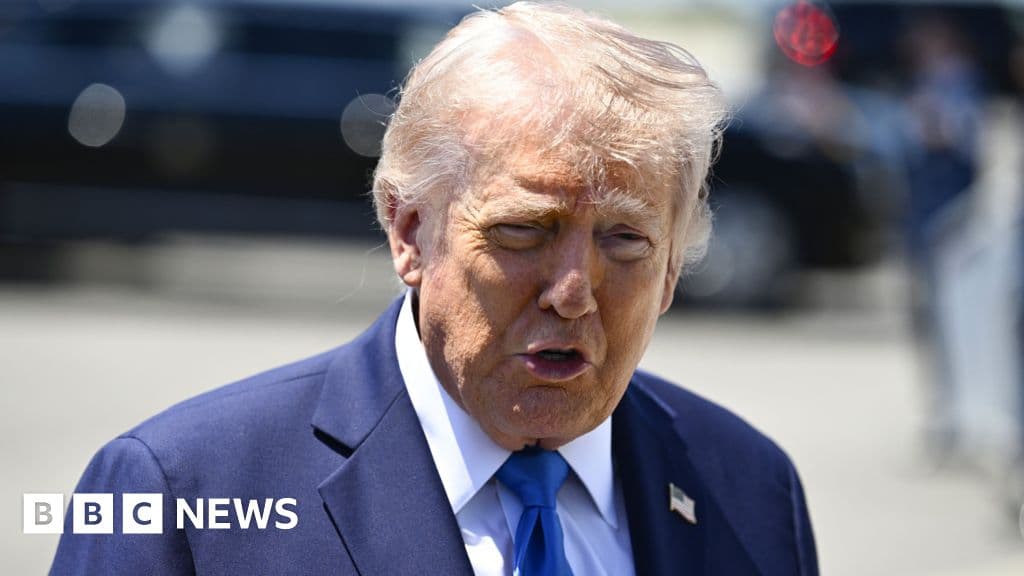
Trump Cancels Iran Peace Talks: 'We Have All the Cards'
Left says
- •Trump's abrupt cancellation undermines diplomatic efforts and signals a preference for military pressure over negotiated solutions
- •The decision comes despite Iran showing willingness to engage through Pakistani mediators and making revised proposals
- •Canceling talks while claiming to hold 'all the cards' risks escalating tensions and prolonging a conflict that has already disrupted global oil supplies and increased inflation
- •The move abandons a potential path to peace just as diplomatic momentum was building through extended ceasefire negotiations
Right says
- •Trump demonstrated strong leadership by refusing to waste time on unproductive negotiations with a fractured Iranian regime
- •Iran's internal chaos and inability to present serious proposals shows they are not negotiating in good faith
- •The cancellation maintains U.S. leverage by forcing Iran to come to America rather than the other way around
- •Trump's position that Iran can simply call if they want to talk shows confidence in America's superior negotiating position
Common Take
High Consensus- The ceasefire between the U.S. and Iran remains in effect despite the cancelled talks
- Pakistan has been serving as an intermediary to facilitate negotiations between the two sides
- The conflict has disrupted global shipping through the Strait of Hormuz, affecting oil prices and supply chains
- Both Iranian Foreign Minister Araghchi and U.S. envoys Witkoff and Kushner were prepared to participate in negotiations
The Arguments
Right argues
Trump demonstrated strategic strength by refusing to waste American resources on unproductive negotiations with a fractured Iranian regime that cannot present coherent proposals or even determine who has negotiating authority.
Left counters
Canceling talks just as Iran was submitting revised proposals and showing flexibility through Pakistani mediators abandons diplomatic momentum and signals a preference for military confrontation over negotiated solutions.
Left argues
The abrupt cancellation undermines months of diplomatic progress and risks escalating a conflict that has already disrupted global oil supplies, increased inflation, and destabilized the Middle East when a peaceful resolution was within reach.
Right counters
Iran's inability to commit to direct talks and their demand for lifting the naval blockade as a precondition shows they were not negotiating in good faith, making continued diplomatic efforts futile.
Right argues
By maintaining that Iran can simply call if they want serious negotiations, Trump preserves maximum American leverage and forces Iran to come to the U.S. from a position of weakness rather than treating them as equals.
Left counters
This approach treats diplomacy as a zero-sum game and ignores that successful peace negotiations require both sides to feel they can engage with dignity, not just capitulation from one party.
Left argues
Trump's decision to cancel talks based on Iran's internal divisions contradicts his own stated goal of ending the war, as fractured leadership makes negotiated settlements more urgent, not less viable.
Right counters
Negotiating with a regime that doesn't know who is in charge is pointless and potentially dangerous, as any agreement could be immediately undermined by competing Iranian factions.
Right argues
The immediate improvement in Iran's proposal after Trump canceled the trip proves that firm pressure tactics work better than accommodating Iranian stalling and demonstrates American negotiating strength.
Left counters
If Iran's position improved immediately after the cancellation, this suggests the talks were actually productive and that continued engagement could have yielded even better results rather than abandoning the process.
Challenge Questions
These questions target genuine internal contradictions — meant to provoke honest reflection.
Right asks Left
“If diplomatic momentum was truly building and Iran was showing flexibility as you claim, why did Iranian officials refuse to commit to direct talks and instead insist on using Pakistan as a mere message conduit?”
Left asks Right
“If Trump's goal is to end the war and Iran immediately offered better terms after he canceled the talks, doesn't this suggest that continued pressure through negotiation rather than abandoning talks entirely would be more effective?”
Outlier Report
Left Fringe
Progressive foreign policy voices like Trita Parsi of the National Iranian American Council and some Squad members like Ilhan Omar who consistently advocate for immediate diplomatic engagement regardless of Iranian behavior represent about 15% of the left, viewing any cancellation of talks as inherently escalatory.
Right Fringe
Hawks like Senator Lindsey Graham calling for immediate military action to control the Strait of Hormuz and some neoconservative commentators pushing for regime change operations represent about 20% of the right, viewing any talks as weakness and preferring immediate military solutions.
Noise Assessment
Moderate noise level - most discourse reflects genuine policy preferences, though some amplification occurs from foreign policy establishment figures and Iran hawks on both sides who have institutional interests in their preferred approaches.
Sources (17)
<p><a href="https://www.axios.com/politics-policy/donald-trump" target="_blank">President Trump</a> canceled the trip by his envoys Steve Witkoff and Jared Kushner to Islamabad due to the Iranian position in peace negotiations, he told Axios.</p><p><strong>Why it matters: </strong>The envoys had been expected to meet with Iranian Foreign Minister Abbas Araghchi, in a trip designed to break a diplomatic stalemate and build momentum for a deal.</p><hr /><p><strong>What they're saying: </strong>"I see no point of sending them on an 18-hour flight in the current situation [of the negotiations]. It's too long. We can do it just as well by telephone. The Iranians can call us if they want. We are not gonna travel just to sit there," the president told Axios on Saturday.</p><ul><li>Asked whether it means he is going to resume the war, Trump said: "No. It doesn't mean that. We haven't thought about it yet."</li><li>"We have all the cards. We are not going to go there to sit around talking about nothing."</li></ul><p><strong>The latest: </strong>Trump later told reporters Saturday afternoon that the meeting with the Iranians wasn't going to happen until Tuesday, and that therefore he thought it was a waste of time to travel to Pakistan. </p><ul><li>He also said a counteroffer Araghchi gave the Pakistanis on Saturday wasn't good enough.</li><li>"They gave us a paper that should have been better and interestingly the minute I cancelled it, within 10 minutes, we got a new paper that was much better …they offered a lot but not enough," Trump said.</li></ul><p><strong>The big picture: </strong>While <a href="https://www.axios.com/politics-policy/donald-trump" target="_self">Trump</a> extended the ceasefire with <a href="https://www.axios.com/world/iran" target="_self">Iran</a> earlier this week, the diplomatic efforts haven't <a href="https://www.axios.com/2026/04/23/iran-strait-hormuz-mines-trump" target="_self">made any progress</a> in recent days.</p><ul><li>U.S. officials had <a href="https://www.axios.com/2026/04/22/trump-iran-war-power-struggle-ceasefire" target="_blank">said</a> Iran's divided factions had a short window to come together on an offer. </li><li>"[T]here is tremendous infighting and confusion within their 'leadership.' Nobody knows who is in charge, including them," Trump said in a Truth Social <a href="https://truthsocial.com/%40realDonaldTrump/posts/116466283877725023" target="_blank">post</a> Saturday after calling off the trip.</li></ul><p><strong>Zoom in: </strong>Araghchi met on Saturday in Islamabad with Pakistan's prime minister, army commander, and foreign minister, who have been mediating between the sides. </p><ul><li>But the talks ended with no significant progress. Araghchi left Islamabad without committing to meet Witkoff and Kushner if they traveled to Pakistan. </li><li>The Iranian foreign minister expressed in his meetings that Iran demands the lifting of the U.S. naval blockade as a pre-condition for talks.</li><li>About an hour after Araghchi left Islamabad, Trump decided to cancel the trip.</li><li>"Have yet to see if the U.S. is truly serious about diplomacy," Araghchi said in a <a href="https://x.com/araghchi/status/2048078742627488207" target="_blank">post</a> on X thanking the Pakistanis for their efforts. </li></ul><p><strong>What to watch: </strong>What comes next isn't clear, though Trump allies called on the president to continue pressure on the Iranians — even if that means resuming military operations. </p><ul><li>"In my view, the top priority of the United States and the world is to establish firm control over the Strait of Hormuz, ensuring freedom of navigation under international law," Sen. Lindsey Graham (R-S.C.) said in a <a href="https://x.com/LindseyGrahamSC/status/2048086147830526448" target="_blank">post</a> on X. </li><li>"When it comes to achieving that goal, US military engagement may be required in the short term. It is more than worth the risk associated with regaining freedom of navigation of the strait."</li></ul><p><em>Editor's note: This story has been updated with fresh comments from President Trump.</em></p>
Iran had earlier said there were no plans for a direct meeting with a US delegation led by Steve Witkoff and Jared Kushner.
<p>President Donald Trump announced Saturday that he has canceled a planned trip by U.S. representatives, including Special Envoy Steve Witkoff and adviser Jared Kushner, to Pakistan for talks with Iranian officials, citing time wasted on traveling and work and describing what he called “infighting” and “confusion” within Iran’s so-called “leadership.”</p> <p>The post <a href="https://www.breitbart.com/national-security/2026/04/25/trump-cancels-witkoff-kushner-islamabad-trip-for-iran-talks-nobody-knows-who-is-in-charge/" rel="nofollow">Trump Cancels Witkoff, Kushner Islamabad Trip for Iran Talks: ‘Nobody Knows Who Is in Charge’</a> appeared first on <a href="https://www.breitbart.com" rel="nofollow">Breitbart</a>.</p>
U.S. envoys Steve Witkoff and Jared Kushner were expected to head to Islamabad Saturday, but President Trump said later that his "representatives" would not be going.
President Trump said the U.S. has all the cards in the war with Iran after he told his envoys, Steve Witkoff and Jared Kushner, not to take a trip to Pakistan to break a diplomatic stalemate over negotiations to end the war. Imtiaz Tyab reports.
President Trump cited wasted time and confusion over leadership, adding, "we have all the cards."
'not gonna travel just to sit there'
Trump reveals he canceled a U.S. delegation's trip to Pakistan for Iran negotiations, saying Iran can call anytime and that the U.S. holds all the cards.
On Friday, Trump said Iran was "making an offer and we'll have to see."
<p>Trump: "There is tremendous infighting and confusion within their 'leadership.' Nobody knows who is in charge, including them."</p> The post <a href="https://legalinsurrection.com/2026/04/iran-talks-president-trump-calls-off-witkoff-kushner-islamabad-trip/">Iran Talks: President Trump Calls Off Witkoff-Kushner Islamabad Trip</a> first appeared on <a href="https://legalinsurrection.com">Le·gal In·sur·rec·tion</a>.
In a Truth Social post, President Trump announced that he is canceling Steve Witkoff and Jared Kushner’s planned trip to Pakistan for potential talks with Iran.
President Donald Trump said he canceled a planned trip by U.S. envoys to Pakistan after Iran's top diplomat departed the country without agreeing to direct talks, effectively shutting down the opportunity for face-to-face negotiations.
<p>Steve Witkoff and Jared Kushner were to travel to Islamabad to attempt to revive ceasefire negotiations</p><p><a href="https://www.theguardian.com/us-news/donaldtrump">Donald Trump</a> said he has told US envoys not to go to <a href="https://www.theguardian.com/world/pakistan">Pakistan</a> for more talks with <a href="https://www.theguardian.com/world/iran">Iran</a>, shortly after Tehran’s top diplomat left Islamabad late on Saturday.</p><p>Trump added to Fox News: “They can call us anytime they want.” The White House on Friday said Steve Witkoff and Jared Kushner would travel to Pakistan’s capital to attempt to revive ceasefire negotiations.</p> <a href="https://www.theguardian.com/world/2026/apr/25/trump-cancels-envoys-pakistan-trip-iran-talks">Continue reading...</a>
President Trump announced that he has called off plans for U.S. negotiators to travel to Pakistan for peace talks with Iran, saying that if the Iranians want to deal, they can pick up the phone.