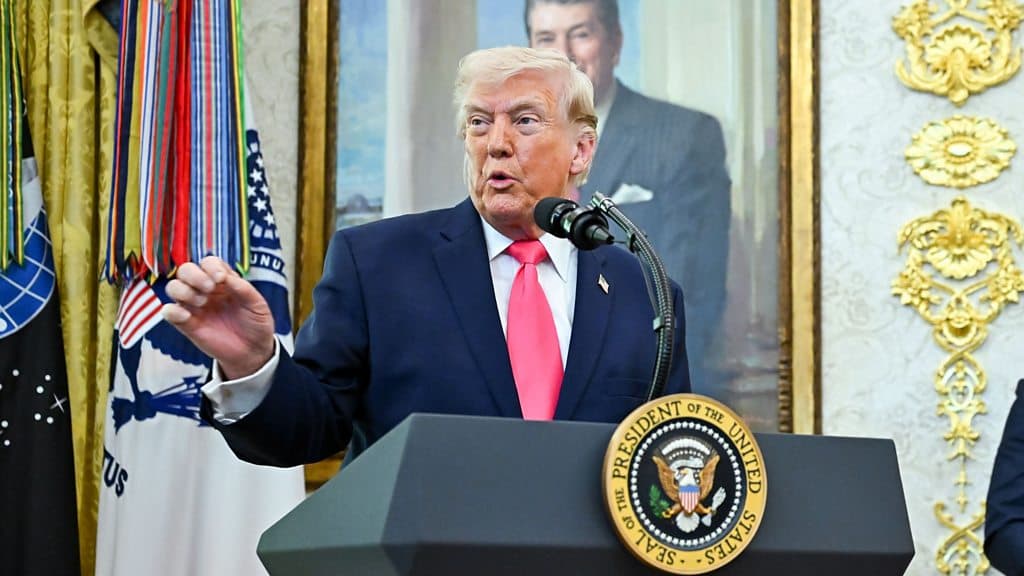
 Trump speaking at presidential podium in the Oval Office
Trump Claims Iran Wants Deal While Iran Denies Talks
Left says
- •Trump's contradictory statements about Iranian negotiations reveal a chaotic foreign policy approach that undermines diplomatic credibility
- •The ultimatum threatening to bomb Iranian power plants represents dangerous escalation that could drag America into another Middle East war
- •Trump's vague claims about receiving a 'very big present' from Iran without providing details suggests either fabrication or reckless disclosure of sensitive negotiations
Right says
- •Trump's tough stance and ultimatum are forcing Iran to the negotiating table after years of ineffective diplomacy
- •Iran's public denials while privately engaging in talks demonstrate the effectiveness of Trump's maximum pressure strategy
- •The president's hints about receiving concessions from Iran show his deal-making approach is already producing results for American interests
Common Take
High Consensus- Iran officially denies any talks with the US are taking place through state media
- Trump claims his envoys Steve Witkoff and Jared Kushner held discussions with Iranian representatives
- The Strait of Hormuz remains a critical chokepoint for global energy supplies
- Both countries have strategic interests in resolving tensions in the Middle East
The Arguments
Right argues
Trump's ultimatum threatening to bomb Iranian power plants has forced Iran to engage in negotiations after years of failed diplomatic approaches, demonstrating that maximum pressure tactics work where traditional diplomacy has failed.
Left counters
Threatening to bomb civilian infrastructure represents a dangerous escalation that could trigger a wider regional war and violates international norms, potentially making America less secure rather than more.
Left argues
Trump's contradictory statements about receiving a 'very big present' from Iran while providing no verifiable details suggests either fabrication to appear successful or reckless disclosure of sensitive diplomatic information.
Right counters
Strategic ambiguity about ongoing negotiations is standard diplomatic practice, and Trump's hints about Iranian concessions demonstrate his deal-making approach is already producing tangible results for American interests.
Left argues
Iran's categorical denials through official channels including the Revolutionary Guard-linked Fars news agency directly contradict Trump's claims, indicating either no talks are occurring or Trump is undermining negotiations by publicizing them prematurely.
Right counters
Iran's public denials while privately engaging in talks is a face-saving measure typical of authoritarian regimes, allowing them to negotiate while maintaining domestic credibility and avoiding appearing weak to their population.
Right argues
Trump's approach of combining pressure with negotiation offers has created the first genuine opportunity for a breakthrough with Iran in years, as evidenced by his claims of 'major points of agreement' with Iranian representatives.
Left counters
This chaotic approach of public ultimatums followed by unsubstantiated claims of progress undermines diplomatic credibility and makes it harder for both sides to find face-saving compromises necessary for lasting agreements.
Challenge Questions
These questions target genuine internal contradictions — meant to provoke honest reflection.
Right asks Left
“If Trump's pressure tactics are genuinely ineffective and dangerous, why would Iran be engaging in any form of communication at all rather than simply ignoring American overtures entirely?”
Left asks Right
“If Trump's maximum pressure strategy is working so effectively, why does Iran feel confident enough to publicly and categorically deny that any talks are taking place through multiple official channels?”
Outlier Report
Left Fringe
Progressive anti-war activists like CodePink's Medea Benjamin and some Squad members like Rashida Tlaib who view any pressure tactics as warmongering represent about 15-20% of the left coalition.
Right Fringe
Hardline hawks like Senator Tom Cotton and John Bolton who would prefer immediate military action over any negotiations represent about 10-15% of the right coalition.
Noise Assessment
Moderate noise level - most discourse reflects genuine policy preferences, though some amplification occurs around Trump's vague claims about 'presents' from Iran which generate more speculation than substantive debate.