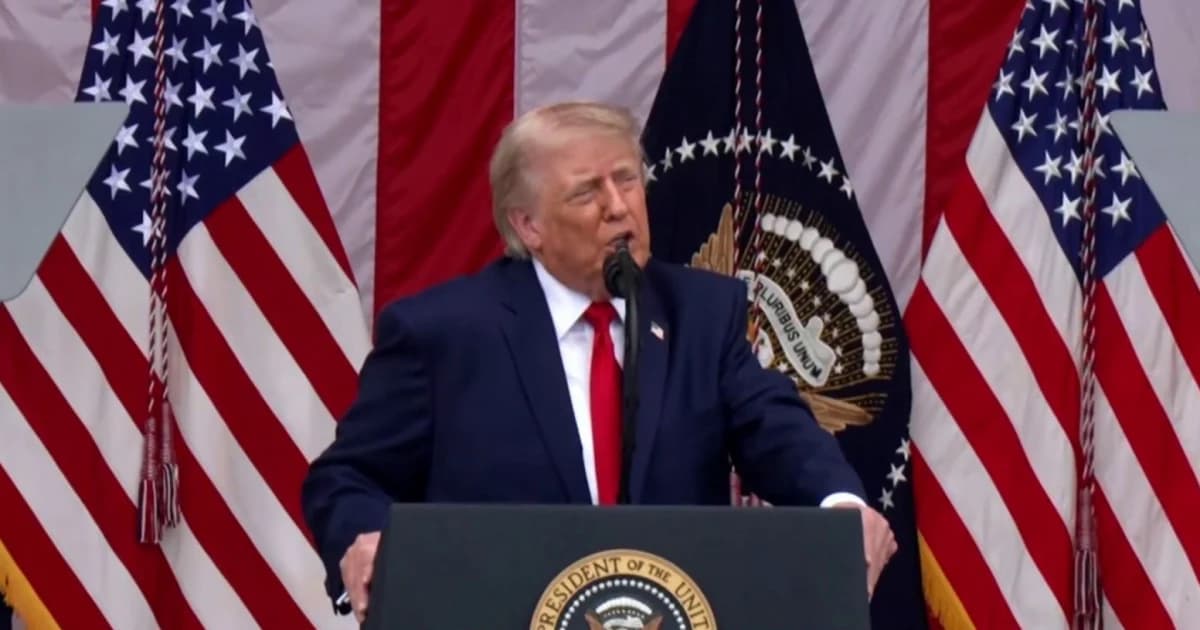
Trump Close to Iran Deal Despite Netanyahu's Concerns
Intra-Party Split Detected
Netanyahu and pro-Israel hawks express concerns about Trump's Iran deal, particularly regarding ending Israel-Hezbollah conflict
Left says
- •The proposed deal offers a diplomatic path to prevent further military escalation and reduce global oil supply pressures that hurt American consumers
- •A 60-day ceasefire framework provides breathing room for substantive negotiations on Iran's nuclear program while avoiding the costs and risks of prolonged military conflict
- •The agreement includes concrete Iranian commitments to never pursue nuclear weapons and dispose of enriched uranium stockpiles under verified mechanisms
- •Reopening the Strait of Hormuz would restore critical global shipping lanes and provide economic relief to both Iran and the international community
Right says
- •Netanyahu's concerns about the deal reflect legitimate Israeli security interests that must be carefully considered given Iran's history of supporting regional terrorism
- •The agreement may provide Iran with significant economic benefits through sanctions relief and oil sales without sufficient guarantees of lasting behavioral change
- •Iran's past violations of international agreements raise questions about whether they can be trusted to honor commitments on nuclear restrictions and regional de-escalation
- •The deal's success depends on Iran's willingness to make fundamental strategic choices about its role in the region, which remains uncertain given their current trajectory
Common Take
High Consensus- The draft agreement includes a 60-day ceasefire extension and commitments from Iran to reopen the Strait of Hormuz
- Iran would commit to never pursuing nuclear weapons and disposing of its enriched uranium stockpile under the proposed deal
- The agreement aims to reduce tensions while providing a framework for broader negotiations on nuclear and regional security issues
- Multiple regional leaders including those from UAE, Saudi Arabia, Qatar, Egypt, Turkey and Pakistan have expressed support for the diplomatic approach
The Arguments
Left argues
The 60-day ceasefire framework provides immediate relief from military escalation while creating space for substantive nuclear negotiations, with Iran committing to never pursue nuclear weapons and dispose of enriched uranium stockpiles under verified mechanisms.
Right counters
Iran's history of violating international agreements, including previous nuclear deals, raises serious questions about whether these commitments can be trusted without ironclad enforcement mechanisms that aren't yet defined.
Right argues
Netanyahu's security concerns reflect legitimate Israeli interests given Iran's continued support for regional terrorism through proxies like Hezbollah, and any deal that constrains Israel's ability to defend itself against these threats undermines regional stability.
Left counters
The deal explicitly allows Israel to take action if Hezbollah attempts to rearm or instigate attacks, maintaining Israel's security while preventing broader regional escalation that could draw in multiple nations.
Left argues
Reopening the Strait of Hormuz and allowing Iranian oil sales would provide critical relief to global energy markets and American consumers facing high oil prices, while the 'relief for performance' principle ensures Iran must deliver concrete actions before receiving benefits.
Right counters
Providing Iran with immediate economic benefits through oil sales and sanctions relief gives them resources to continue funding regional destabilization before any lasting behavioral change has been demonstrated or verified.
Right argues
The deal's success fundamentally depends on Iran making strategic choices about abandoning its regional ambitions and proxy warfare, but there's no evidence Iran is prepared to make such fundamental changes to its decades-long strategic approach.
Left counters
Iran's severe economic constraints create powerful incentives for genuine engagement, and the phased approach allows the US to test Iranian commitment while maintaining leverage through continued military presence and conditional sanctions relief.
Challenge Questions
These questions target genuine internal contradictions — meant to provoke honest reflection.
Right asks Left
“If Iran has repeatedly violated previous international agreements and continues supporting regional terrorism, how can you justify providing immediate economic benefits through oil sales and sanctions relief before any verified behavioral change, especially when the enforcement mechanisms for uranium disposal remain undefined?”
Left asks Right
“If Israel's security concerns are paramount and Iran's regional proxy network remains intact, how does constraining Israel's defensive capabilities while potentially strengthening Iran economically actually enhance regional stability rather than simply postponing a larger conflict?”
Outlier Report
Left Fringe
Progressive anti-war activists like CodePink's Medea Benjamin and some Squad members like Rashida Tlaib who would support almost any deal to avoid military action, representing roughly 15% of the left coalition.
Right Fringe
Hardline hawks like John Bolton and some House Freedom Caucus members like Matt Gaetz who would oppose any negotiated settlement with Iran regardless of terms, representing about 20% of the right coalition.
Noise Assessment
Moderate noise level - most discourse reflects genuine policy disagreements rather than performative positioning, though some amplification occurs around Israeli security concerns and Iran's trustworthiness.
Sources (4)
There are new questions over how close the US is to a deal that would end the war with Iran. President Trump, who is working to open the Strait of Hormuz, says the negotiations are proceeding nicely - but Iran is sending a different message. NBC News’ Garrett Haake has the story.
The agreement the U.S. and Iran are close to signing involves a 60-day ceasefire extension during which the Strait of Hormuz would be reopened, Iran would be able to freely sell oil, and negotiations would be held on curbing Iran's nuclear program, according to a U.S. official.
<p>The agreement the U.S. and Iran are <a href="https://www.axios.com/2026/05/23/us-iran-trump-deal-war" target="_blank">close to signing</a> involves a 60-day ceasefire extension during which the Strait of Hormuz would be reopened, <a href="https://www.axios.com/world/iran" target="_blank">Iran</a> would be able to freely sell oil, and negotiations would be held on curbing Iran's nuclear program, according to a U.S. official. </p><p><strong>Why it matters: </strong>The deal would avoid an escalation of the war and decrease the pressure on the global oil supply. However, it's unclear whether it will lead to a lasting peace agreement that also addresses President Trump's nuclear demands.</p><hr /><p><strong>State of play:</strong> Both Trump and the mediators have indicated the deal could be announced on Sunday, though it has not been finalized and could still fall apart.</p><ul><li>The U.S. official provided a detailed outline of the draft as it stands, much of which was verified by other sources close to the talks. </li><li>Those details have not been confirmed by the Iranian side, though Tehran has also indicated a deal is getting close.</li></ul><h2>What's in the deal</h2><p><strong>Both sides would sign</strong> a memorandum of understanding (MOU) that would last 60 days and could be extended by mutual consent.</p><ul><li>During the 60-day period, the Strait of Hormuz would be open with no tolls and Iran would agree to clear the mines it deployed in the strait to let ships pass freely. </li><li>In exchange, the U.S. would lift its blockade on Iranian ports and issue some sanctions waivers to allow Iran to sell oil freely. </li><li>The U.S. official acknowledged that would be a boon to Iran's economy, but said it would also give significant relief to the global oil market.</li></ul><p><strong>The U.S. official said the faster</strong> the Iranians clear the mines and let shipping resume, the faster the blockade will be lifted.</p><ul><li>The official said Trump's key principle in the agreement is "relief for performance."</li><li>Iran wanted funds unfrozen immediately and permanent sanctions relief, but the U.S. side said that would only happen after tangible concessions were made, according to the official.</li></ul><h2>Nuclear issues still to be negotiated</h2><p><strong>The draft MOU includes</strong> commitments from Iran to never pursue nuclear weapons and to negotiate over a suspension of its uranium enrichment program and the removal of its stockpile of highly enriched uranium, the U.S. official said.</p><ul><li>According to two sources with knowledge, Iran gave the U.S. through the mediators verbal commitments about the scope of the concessions it's willing to make on suspending enrichment and giving up the nuclear material.</li><li>The U.S. would agree to negotiate over lifting sanctions and unfreezing Iranian funds during the 60-day period — though those steps would only be implemented as part of a final agreement that is verifiably implemented.</li><li>U.S. forces that were mobilized in recent months would stay in the region during the 60-day period and only withdraw if a final deal is reached.</li></ul><p><strong>The intrigue: </strong>The draft MOU also makes clear that the war between Israel and Hezbollah in Lebanon would end.</p><ul><li>Israeli Prime Minister Benjamin <a href="https://www.axios.com/2026/05/20/trump-netanyahu-call-iran-peace-plan" target="_blank">Netanyahu expressed concern</a> about that condition during a phone call with Trump on Saturday, an Israeli official said. He also expressed concerns about other aspects of the deal, but made his case in a respectful and deferential way, a U.S. official said.</li><li>The U.S. official said it would not be a "one-sided ceasefire" and if Hezbollah tried to rearm or instigate attacks, Israel would be allowed to take action to prevent it. "If Hezbollah behaves, Israel will behave."</li><li>"Bibi has his domestic considerations, but Trump has the interests of the U.S. and the global economy to think about," the U.S. official said, referring to Netanyahu by his nickname.</li></ul><h2>How it happened</h2><p><strong>President Trump sounded</strong> out several Arab and Muslim leaders about the deal in a conference call on Saturday, and all said they support it, three sources familiar with the call said. </p><ul><li>That included the UAE's hawkish president, Mohammed bin Zayed, according to the U.S. official. Also on the call were the leaders of Saudi Arabia, Qatar, Egypt, Turkey and Pakistan, all of which have been involved in the mediation efforts.</li><li>The Pakistanis have been the primary mediator, led by Field Marshal <a href="https://www.axios.com/2026/05/22/pakistan-munir-iran-deal-trump" target="_blank">Asim Munir</a>, who was in Tehran on Friday and Saturday in an effort to get the deal across the line.</li><li>Trump has been wavering in recent days between pushing forward with the deal and launching a massive wave of strikes against Iran. As of Saturday evening, he was leaning toward a diplomatic solution.</li></ul><p><strong>What to watch:</strong> The White House hopes the final differences will be resolved in the coming hours and that a deal will be announced on Sunday, the U.S. official said. </p><ul><li>The official said it's possible the deal won't even last the full 60 days if the U.S. believes Iran is not serious about nuclear negotiations. On the other hand, the U.S. believes Iran's economic crunch provides an incentive to reach a full deal to remove sanctions and unfreeze its cash.</li><li>"It will be interesting to see how far Iran will be truly willing to go, but if they are capable of and want to change their trajectory, this next phase will force them to make some critical decisions on what they want to be as a country," the U.S. official said.</li><li>If Trump's demands regarding the Iranian nuclear program are met, the president is ready to go to great lengths to reset relations with Iran and give them the opportunity to pursue their full economic potential, which Trump thinks is "huge," his advisers say.</li></ul>
A draft memorandum includes a 60-day ceasefire extension and the halt of fighting on all fronts, sources say.