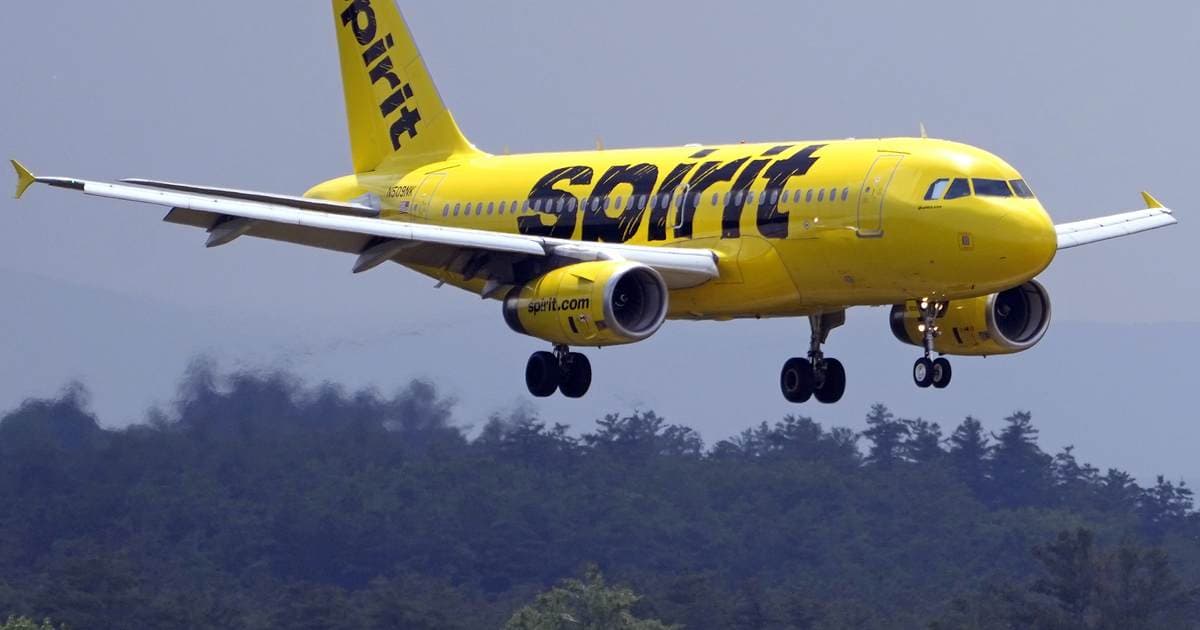
 Spirit Airlines aircraft approaching for landing with distinctive yellow livery
Trump considers taxpayer bailout for Spirit Airlines amid shutdown
Intra-Party Split Detected
Several Trump allies in Congress opposed the $500 million bailout plan despite Trump's support
Left says
- •The government should not use taxpayer money to rescue a private airline that failed due to poor business decisions and market forces
- •Corporate bailouts create moral hazard by rewarding companies for taking excessive risks while socializing their losses
- •The Biden administration's decision to block the JetBlue-Spirit merger protected consumers from airline consolidation and higher prices
- •Other airlines are already stepping in with capped prices and job opportunities, demonstrating the market can solve this problem without government intervention
Right says
- •Saving 17,000 American jobs and maintaining airline competition justifies government intervention when market disruptions threaten workers
- •The Biden administration's blocked merger directly contributed to Spirit's collapse by preventing a private sector solution
- •Trump's tough negotiating approach ensures taxpayers get a good deal with 90% government ownership in exchange for the bailout
- •The administration quickly mobilized relief efforts with partner airlines offering capped fares and preferential hiring for displaced workers
Common Take
High Consensus- Spirit Airlines officially shut down operations after 34 years, affecting thousands of employees and passengers
- The Trump administration negotiated relief measures with major airlines to cap ticket prices for stranded Spirit customers
- High fuel costs, the pandemic, and engine defects contributed to Spirit's financial distress
- Major airlines are offering preferential employment interviews to displaced Spirit workers
The Arguments
Right argues
The Biden administration's decision to block the JetBlue-Spirit merger directly caused Spirit's collapse by preventing a private sector solution that would have saved the airline without taxpayer involvement. Government intervention is now necessary to protect 17,000 American jobs that were put at risk by regulatory overreach.
Left counters
The merger would have reduced competition and led to higher prices for consumers, which is exactly why antitrust enforcement exists. Spirit's failure reflects poor business decisions and market forces, not regulatory interference—other budget airlines continue to operate successfully.
Left argues
Corporate bailouts create dangerous moral hazard by socializing losses while privatizing profits, encouraging companies to take excessive risks knowing taxpayers will rescue them. The market is already providing solutions through other airlines offering capped prices and hiring displaced workers.
Right counters
This bailout includes tough terms with 90% government ownership, ensuring taxpayers get value rather than just giving away money. When market disruptions threaten thousands of jobs, temporary government intervention can bridge the gap until conditions improve.
Left argues
Spirit's collapse demonstrates that the airline industry can function without failed carriers—competitors are already stepping in with job opportunities and reasonable fares for stranded passengers. Using taxpayer money to prop up unsuccessful businesses distorts market efficiency and rewards failure.
Right counters
Losing Spirit reduces competition in the budget airline sector, potentially leading to higher prices long-term as remaining carriers face less competitive pressure. The government's negotiated relief plan shows proactive leadership in protecting both workers and consumers during the transition.
Right argues
Trump's administration quickly mobilized a comprehensive relief effort with partner airlines offering capped fares and preferential hiring, demonstrating effective crisis management. The proposed bailout terms with 90% government ownership ensure taxpayers benefit if the airline recovers when fuel costs normalize.
Left counters
These relief measures prove the market can handle Spirit's closure without a bailout—if other airlines can absorb passengers and workers, there's no justification for risking taxpayer money on a fundamentally troubled business model.
Challenge Questions
These questions target genuine internal contradictions — meant to provoke honest reflection.
Right asks Left
“If market forces are truly efficient at reallocating resources, why do you support antitrust enforcement that blocks mergers—isn't preventing the JetBlue-Spirit merger itself a form of government market intervention that contradicts your free-market principles?”
Left asks Right
“If the bailout terms include 90% government ownership and you believe taxpayers will profit from reselling the airline, how is this different from the government picking winners and losers in the market—a practice conservatives typically oppose?”
Outlier Report
Left Fringe
Progressive figures like Alexandria Ocasio-Cortez and Bernie Sanders who might argue any bailout should come with permanent government ownership and worker control, representing roughly 15% of the left coalition.
Right Fringe
Libertarian-leaning Republicans like Rand Paul and Thomas Massie who oppose any government intervention regardless of job losses, representing about 20% of the right coalition.
Noise Assessment
Moderate noise level - most discourse reflects genuine policy disagreement rather than performative positioning, though some politicians may amplify opposition for political gain.
Sources (6)
Speaking to reporters before departing the White House for Florida, Trump emphasized that a deal to rescue the financially strapped airline remained under review. The president did not provide details but said an announcement could come as soon as later Friday or Saturday.
Spirit Airlines on Saturday announced that it shut down all operations after failing to not reach a deal for a government bailout. The Trump administration drafted a $500 million bailout plan to save Spirit from ceasing operations, a plan that several Trump allies in Congress opposed. The plan was opted in exchange for warrants to…
The Trump administration on Saturday announced a relief plan for travelers impacted by Spirit Airlines shutting down operations after a deal to receive a government bailout failed to materialize. Transportation Secretary Sean Duffy announced that the airlines United, Delta and Southwest will cap their ticket prices for Spirit customers seeking to rebook their cancelled flights.…
President Trump on Friday said the White House is looking at a deal to rescue Spirit Airlines amid reports that talks between the government and the carrier have fallen apart. “I guess we’re looking at it,” Trump told reporters at the White House. “If we could do, we’d do it, but only if it’s a…
President Trump confirmed the White House is considering a deal to bail out financially distressed Spirit Airlines.