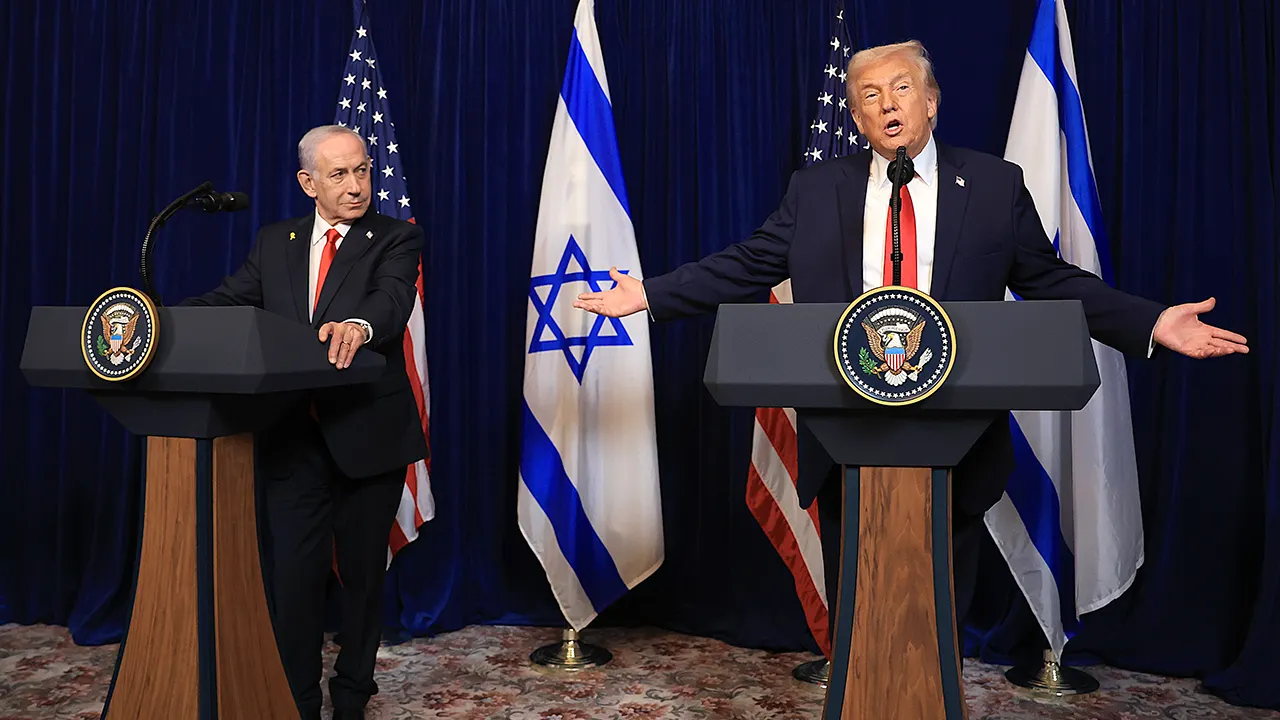
Trump demands Arab nations join Abraham Accords for Iran deal
Left says
- •Linking Iran negotiations to Israeli normalization could undermine diplomatic progress by introducing unrelated conditions that complicate an already delicate process
- •Several of the targeted countries have legitimate concerns about Israeli policies that make immediate normalization politically difficult for their leaders
- •The ultimatum approach risks alienating key regional partners whose cooperation is essential for Middle East stability and counterterrorism efforts
Right says
- •The Abraham Accords have already delivered significant economic and security benefits to participating nations, demonstrating their value as a foundation for regional peace
- •Countries seeking to benefit from U.S.-brokered Iran agreements should demonstrate good faith by normalizing relations with America's key regional ally Israel
- •Expanding the Abraham Accords alongside Iran negotiations creates a comprehensive framework that could bring unprecedented stability to the Middle East after millennia of conflict
Common Take
High Consensus- Trump is actively negotiating with Iran while simultaneously pushing for expanded participation in the Abraham Accords
- The Abraham Accords successfully normalized relations between Israel and several Arab nations during Trump's first term
- Regional stability and peace in the Middle East remain important goals for U.S. foreign policy
- Multiple Middle Eastern leaders participated in recent discussions about both Iran negotiations and the Abraham Accords
The Arguments
Right argues
The Abraham Accords have already delivered measurable economic and security benefits to participating nations like the UAE and Bahrain, proving their value as a foundation for regional stability. Countries that want to benefit from U.S.-brokered agreements should demonstrate good faith by normalizing relations with America's key regional ally.
Left counters
Forcing normalization as a precondition creates artificial linkages that could backfire by making regional leaders appear to capitulate to external pressure. This ultimatum approach risks undermining the organic diplomatic progress that made the original Abraham Accords successful.
Left argues
Several targeted countries like Saudi Arabia and Turkey face genuine domestic political constraints that make immediate normalization with Israel extremely difficult for their leaders to justify to their populations. Demanding this as a prerequisite could destabilize these governments and harm long-term U.S. interests in the region.
Right counters
These same countries have shown they can make pragmatic decisions when the benefits are clear, as evidenced by the UAE and Bahrain's successful normalization. Leadership requires making difficult but strategically sound choices, especially when offered comprehensive regional peace frameworks.
Right argues
Linking Iran negotiations to expanded Abraham Accords creates a comprehensive framework that addresses the root causes of Middle East instability by isolating Iran's destabilizing influence while building a coalition of normalized relationships. This holistic approach could deliver unprecedented regional peace after millennia of conflict.
Left counters
Introducing unrelated conditions into already delicate Iran negotiations risks overcomplicating the diplomatic process and providing Iran with excuses to withdraw from talks. The complexity of managing multiple simultaneous diplomatic tracks could cause the entire framework to collapse.
Left argues
The ultimatum approach risks alienating key regional partners whose cooperation is essential for Middle East stability, counterterrorism efforts, and containing Iranian influence. Diplomatic coercion could push these nations toward alternative partnerships that undermine U.S. strategic interests.
Right counters
These nations have benefited enormously from U.S. security guarantees and economic partnerships, making it reasonable to expect reciprocal commitments to regional peace initiatives. True partnership requires shared responsibility for achieving stability, not just receiving benefits.
Challenge Questions
These questions target genuine internal contradictions — meant to provoke honest reflection.
Right asks Left
“If these countries genuinely want regional peace and stability, why shouldn't they be willing to normalize relations with Israel as part of a comprehensive framework that could end decades of conflict - and doesn't this reluctance suggest they're more interested in maintaining tensions for domestic political gain than achieving actual peace?”
Left asks Right
“If the Abraham Accords are truly beneficial and represent organic diplomatic progress, why is coercion and ultimatums necessary to expand them - and doesn't this suggest the framework may not be as universally appealing or sustainable as claimed?”
Outlier Report
Left Fringe
Progressive foreign policy activists like those in the Democratic Socialists of America and some Squad members who oppose any normalization with Israel regardless of context represent about 15-20% of the left coalition.
Right Fringe
Hardline pro-Israel advocates like some members of Christians United for Israel who want immediate, unconditional normalization from all Arab states represent about 10-15% of the right coalition.
Noise Assessment
Moderate noise level - most discourse reflects genuine policy preferences rather than performative positioning, though some social media amplification occurs around Israel-Palestine dynamics.
Sources (6)
Trump says Muslim-majority nations should sign onto the Abraham Accords if they want to participate in a developing Iran agreement, per reports.
He told the leaders of Saudi Arabia, Qatar, Egypt, Pakistan, Turkey, and Jordan that he wants them all to normalize relations with Israel by agreeing to the 2020 Abraham Accords.
Middle Eastern countries with vested interests in the U.S. securing a deal with Iran should be required to "sign onto the Abraham Accords," President Donald Trump said Monday.
President Donald Trump said Monday that any agreement with Iran should include a requirement for several additional countries, including Saudi Arabia and Turkey, to join the Abraham Accords, the U.S.-brokered agreements aimed at normalizing relations with Israel that were forged during Trump's first term.
WASHINGTON, May 25 (Reuters) – U.S. President Donald Trump said on Monday it should be mandatory for countries including Qatar, Pakistan, Egypt, Jordan and Turkey to join the Abraham Accords en masse as part of an effort to reach a deal with Iran. Trump said he spoke on Saturday to leaders of those countries, as...
President Trump on Monday called for Gulf allies to join the Abraham Accords amid talks between the U.S. and Iran to bring an end to hostilities in the Middle East. The pressure comes as the two nations are reportedly working on a deal to extend the ceasefire in the region and reopen the Strait of…