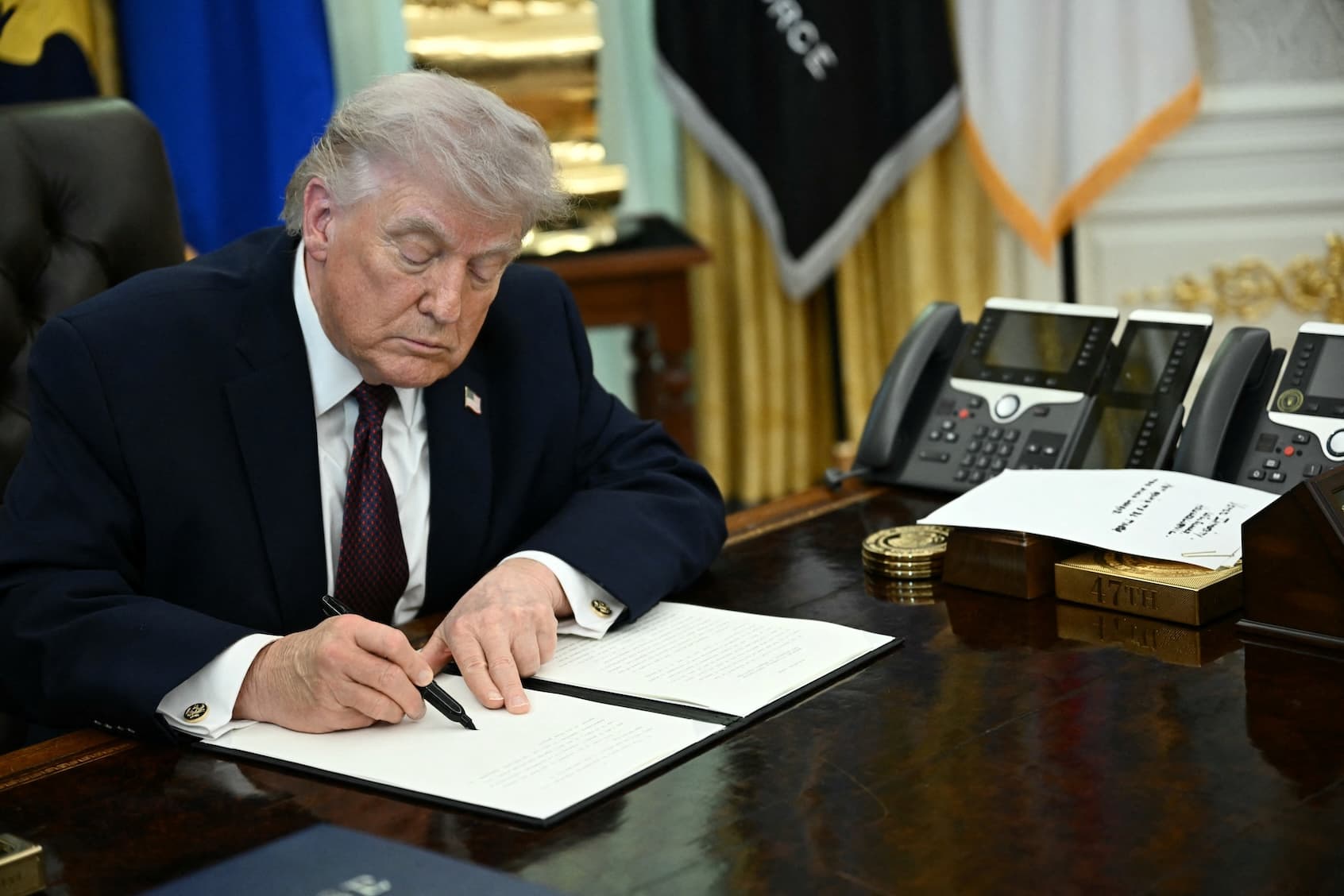
 Trump signing documents at the Oval Office desk
Trump executive order gives federal agencies unprecedented control over mail voting
Left says
- •The executive order exceeds presidential constitutional authority by attempting to federalize election administration, which the Constitution reserves primarily to states
- •Creating federal voter lists and restricting mail ballot delivery through the Postal Service represents an unprecedented federal overreach into state election processes
- •The order weaponizes sensitive personal voter information and appears designed to intimidate election workers and suppress voting access
- •Multiple courts have already blocked similar Trump election orders, and this directive faces immediate legal challenges from over 20 states
Right says
- •The order ensures election integrity by verifying citizenship eligibility and preventing ineligible voters from receiving mail ballots
- •Using existing federal databases like Social Security and naturalization records provides accurate citizenship verification that states currently lack
- •Requiring the Postal Service to deliver ballots only to pre-approved voter lists prevents fraud and ensures ballots reach legitimate voters
- •Honest elections require proper verification systems, and federal coordination can help states maintain accurate voter rolls
Common Take
High Consensus- The executive order directs federal agencies to create citizenship lists using Social Security and naturalization records
- States would be required to provide voter lists to the Postal Service 60 days before federal elections under the order
- Multiple Democratic-led states have filed lawsuits challenging the executive order's legality
- Election integrity and preventing fraud are important goals for maintaining public trust in democratic processes
The Arguments
Right argues
Federal coordination is necessary because states currently lack access to comprehensive citizenship databases like Social Security and naturalization records, creating gaps that allow ineligible voters to receive mail ballots and participate in federal elections.
Left counters
The Constitution explicitly reserves election administration to states, and federal databases were never designed for large-scale voter verification—using systems like SAVE for mass citizenship checks exceeds their intended purpose and legal authority.
Left argues
This executive order represents an unprecedented federal takeover of state election processes, violating the constitutional principle that states have primary authority over election administration and voter registration procedures.
Right counters
The federal government has legitimate authority to ensure only eligible citizens vote in federal elections, and providing states with accurate citizenship data enhances rather than undermines their constitutional role in election administration.
Left argues
Requiring the Postal Service to only deliver ballots to pre-approved federal lists creates a dangerous precedent for federal control over ballot access and could disenfranchise legitimate voters whose names don't appear on potentially flawed databases.
Right counters
Pre-approved voter lists prevent fraudulent ballots from being delivered to ineligible recipients or incorrect addresses, ensuring that mail-in voting maintains the same integrity standards as in-person voting verification.
Right argues
Current state voter rolls contain documented inaccuracies and outdated information, making federal database cross-referencing essential to prevent ineligible voters from receiving ballots and to maintain public confidence in election integrity.
Left counters
Federal databases also contain errors and were not designed for voter verification purposes, and the order weaponizes sensitive personal information while creating new opportunities for voter intimidation and suppression.
Left argues
Multiple courts have already blocked similar Trump election orders, demonstrating that these directives consistently exceed presidential constitutional authority and face immediate legal challenges from over 20 states.
Right counters
Legal challenges don't determine constitutional validity, and ensuring citizenship verification for federal elections falls within legitimate executive authority to enforce existing federal election laws and protect voting rights of eligible citizens.
Challenge Questions
These questions target genuine internal contradictions — meant to provoke honest reflection.
Right asks Left
“If states truly have primary constitutional authority over elections as you argue, how do you reconcile this with federal laws that already regulate aspects of federal elections, and why shouldn't the federal government ensure that only eligible citizens participate in choosing federal representatives?”
Left asks Right
“If election integrity is your primary concern, how do you address the fact that federal databases like SAVE were explicitly designed for benefit verification rather than mass voter verification, and what safeguards prevent these systems from disenfranchising eligible voters through database errors or outdated information?”
Outlier Report
Left Fringe
Progressive activists like Stacey Abrams and some Squad members who frame any election verification as voter suppression represent about 15% of the left. They oppose even basic citizenship verification measures that most Democrats would accept.
Right Fringe
Election conspiracy theorists like Mike Lindell and some MAGA influencers who want complete federal takeover of elections represent about 20% of the right. Most Republicans support verification but prefer state-led solutions over federal mandates.
Noise Assessment
High noise ratio - about 60% of online discourse is performative. Actual public opinion is more nuanced, with most Americans supporting both election integrity and state authority over elections.
Sources (6)
The order calls for limiting mail ballots and using federal data to compile lists of eligible voters – moves experts say exceed his constitutional authority.
Much of Trump’s first executive order on elections has been blocked in court. This one is likely to be challenged
A new executive order from the president looks to create a federal voter roll. Critics say that's against the law
More than 20 Democratic-led states filed a lawsuit against the Trump administration on Friday over the president’s executive order that restricts voter eligibility and mail-in voting. The lawsuit argues that the U.S. Constitution gives states the primary authority to administer elections and that it is unconstitutional for the president to impose changes to federal election…
Journalist Katie Couric on Thursday said President Trump’s latest attacks on mail-in voting and executive order to establish a national voting list are part of a “real effort” to interfere in U.S. elections and “scare election workers.” Brennan Center for Justice director Sean Morales-Doyle told Couric on the latest episode of her podcast “Breaking News”…
The plaintiffs in both cases argue the president’s order violates the Constitution, which directly gives states and Congress the power to regulate federal elections and voter rolls.