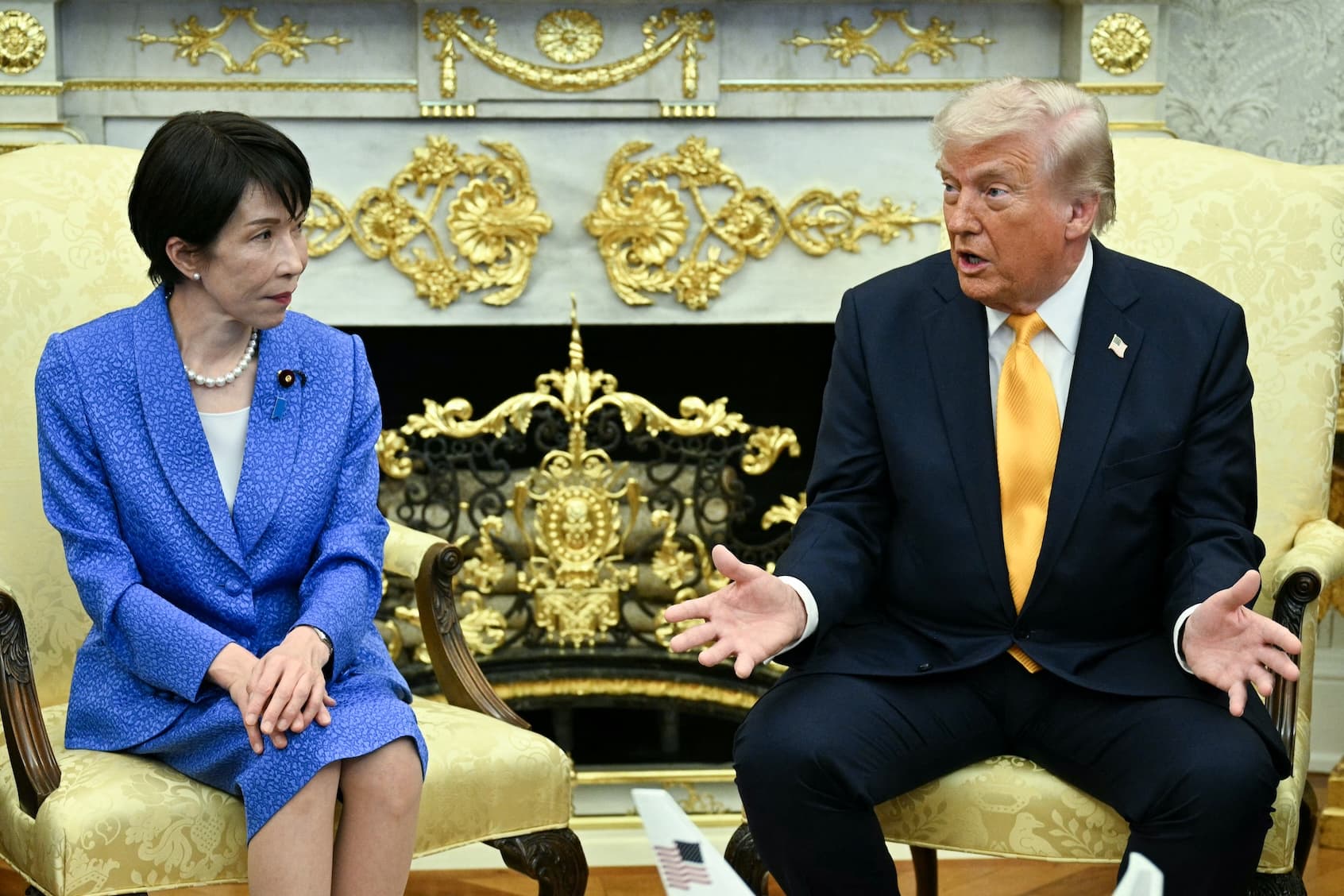
 Trump speaks while Japanese PM sits beside him in Oval Office
Trump Makes Pearl Harbor Joke to Japanese PM During Iran Discussion
Intra-Party Split Detected
Some conservatives like Bill Maher defended the comment as harmless humor, while others expressed concern about diplomatic appropriateness
Left says
- •The comment was historically insensitive and diplomatically inappropriate, invoking a devastating attack that killed over 2,400 Americans while sitting next to Japan's leader
- •Prime Minister Takaichi's visible discomfort and stiffening in her seat demonstrated the awkwardness of the moment
- •The remark reflects broader concerns about inconsistent messaging and improvised communication during an active military conflict
- •Using charged historical analogies risks collapsing important distinctions between past and present conflicts
Right says
- •The comment was an off-the-cuff remark about military strategy and the element of surprise, not intended as a serious diplomatic slight
- •Japan and the United States have been strong allies for over 70 years since the Treaty of San Francisco ended World War II
- •Political correctness and media overreaction often blow casual comments out of proportion during high-stakes diplomatic meetings
- •The focus should remain on current strategic cooperation rather than parsing every informal comment for offense
Common Take
High Consensus- The Pearl Harbor attack in 1941 killed over 2,400 Americans and led to the U.S. entering World War II
- Japan and the United States have been close allies since 1951 following the Treaty of San Francisco
- Prime Minister Takaichi was visiting the White House to discuss the ongoing Iran conflict and regional security cooperation
- The comment was made during a press availability while discussing military strategy and the element of surprise
The Arguments
Left argues
The comment was historically insensitive and diplomatically inappropriate, invoking a devastating attack that killed over 2,400 Americans while sitting next to Japan's leader, as evidenced by Prime Minister Takaichi's visible discomfort and stiffening in her seat.
Right counters
Japan and the United States have been strong allies for over 70 years since the Treaty of San Francisco, and political correctness often blows casual comments out of proportion during high-stakes diplomatic meetings where the focus should remain on current strategic cooperation.
Right argues
The comment was an off-the-cuff remark about military strategy and the element of surprise, not intended as a serious diplomatic slight, and media overreaction often distorts informal comments made during diplomatic meetings.
Left counters
Pearl Harbor occupies a singular place in American memory as a devastating, unprovoked attack, and invoking it in the context of a modern conflict risks collapsing crucial distinctions between past and present while undermining diplomatic relationships.
Left argues
The remark reflects broader concerns about inconsistent messaging and improvised communication during an active military conflict, where the use of charged historical analogies can feel more like improvisation than explanation.
Right counters
Casual remarks during informal press interactions should not be parsed for offense when the substantive diplomatic relationship and strategic cooperation between allies remains strong and productive.
Right argues
The focus should remain on current strategic cooperation rather than overanalyzing every informal comment, especially when both nations share vital security and economic interests that transcend historical grievances.
Left counters
The Japanese reaction, including editorial criticism from the Asahi newspaper and social media accusations of ignorance and rudeness, demonstrates that the comment had real diplomatic consequences that cannot be dismissed as mere media overreaction.
Challenge Questions
These questions target genuine internal contradictions — meant to provoke honest reflection.
Right asks Left
“If the U.S.-Japan alliance is truly strong enough to withstand casual historical references, why does your position suggest that informal comments pose such a significant threat to diplomatic relationships that have survived decades of much more serious challenges?”
Left asks Right
“If historical sensitivity is paramount in diplomatic settings, how do you reconcile your position with the fact that Japan itself has been criticized for insufficient acknowledgment of its wartime actions, and shouldn't allies be able to reference shared history without walking on eggshells?”
Outlier Report
Left Fringe
Progressive commentators like Keith Olbermann and some Democratic Twitter activists calling this grounds for impeachment or evidence of fundamental unfitness for office represent about 15% of the left. Most Democrats view it as inappropriate but not a constitutional crisis.
Right Fringe
Some Trump supporters like Charlie Kirk and certain MAGA influencers defending the comment as brilliant diplomatic trolling or claiming it shows strength represent about 20% of the right. Most conservatives acknowledge it was poorly timed even if defending Trump's overall approach.
Noise Assessment
Moderate performative outrage - late night TV and partisan Twitter amplified the story beyond typical public engagement levels, but the underlying discomfort with the comment appears genuine across party lines.
Sources (5)
“Who knows better about surprise than Japan?" he asked.
A charged historical comparison draws backlash, highlights deeper confusion around the administration’s war message
Sitting next to the Japanese prime minister, Trump made a surprising joke about the 1941 attack on Pearl Harbor
Comedian Bill Maher on Friday brushed off President Trump’s ribbing of Japanese Prime Minister Sanae Takaichi about Pearl Harbor amid the ongoing U.S. military operation in Iran. “He was in the Oval Office yesterday with the prime minister of Japan … and he was talking about our strike in Iran,” Maher said on his “Real…
Senior U.S. and Japanese officials tend to shy away from anything but very careful public comments about Japan's 1941 sneak attack on U.S. forces at Pearl Harbor. So there was embarrassment, confusion and unease on Saturday in Japan after President Donald Trump casually used the World War II attack to justify his secrecy before launching the war against Iran.