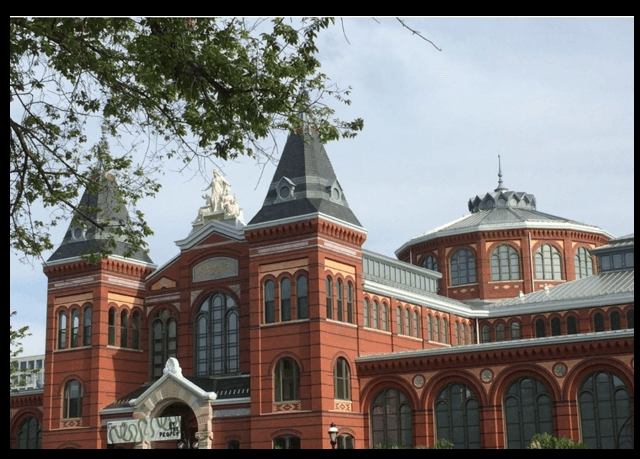
 The Smithsonian's Arts and Industries Building, part of the museum complex targeted.
Trump Orders Warning Signs at Smithsonian Over 'Biased' History
Left says
- •Museums should present a full and honest accounting of history, including painful chapters like slavery and segregation, rather than sanitizing the national narrative.
- •Placing government-mandated warning signs at a scholarly institution sets a troubling precedent for political interference in curatorial independence and academic freedom.
- •The move risks pressuring historians and curators to shape exhibits around a preferred political narrative rather than historical evidence and scholarly consensus.
- •Federal officials directing museums to promote a specific ideological interpretation of history raises concerns about government overreach into education and public memory.
Right says
- •The Smithsonian, funded largely by taxpayers, has a responsibility to present balanced history rather than what critics see as an ideologically slanted portrayal of America as fundamentally oppressive.
- •The White House report 'Saving America's Story' argues the museum has drifted from its founding mission of the 'increase and diffusion of knowledge' toward activism.
- •Signs directing visitors to alternative resources are framed as a modest, transparent corrective rather than censorship, since the exhibits themselves remain unchanged.
- •Supporters see this as restoring accountability to a major cultural institution that shapes how millions of Americans, including children, understand their country's history.
Common Take
High Consensus- The Smithsonian is a major cultural and educational institution that shapes how Americans understand their own history.
- James Smithson's original bequest called for the 'increase and diffusion of knowledge,' a mission both sides invoke to support their view.
- The dispute centers on the National Museum of American History and its framing of the nation's past.
- Both sides agree the debate carries significance beyond a single exhibit, touching on how public institutions should present contested history.
The Arguments
Right argues
As a taxpayer-funded institution founded for the 'increase and diffusion of knowledge,' the Smithsonian has a duty to present balanced history rather than a one-sided narrative that critics say frames America as fundamentally oppressive.
Left counters
Presenting slavery, segregation, and other painful chapters honestly is not bias but historical accuracy, and demanding 'balance' on settled facts risks pressuring curators to soften truths for political comfort.
Left argues
Government-mandated warning signs at a scholarly institution set a dangerous precedent of political interference in curatorial independence, potentially chilling historians from following evidence where it leads.
Right counters
The signs don't alter a single exhibit and simply point visitors to additional resources, making this a transparent corrective rather than censorship or interference with scholarship.
Right argues
Elected officials have legitimate standing to hold accountable an institution funded by public money that shapes how millions of Americans, including schoolchildren, understand their nation's history.
Left counters
That same public funding is precisely why the Smithsonian must remain insulated from the political whims of whichever administration is in power, rather than becoming a battleground for shifting official narratives.
Left argues
Directing federal signage toward a specific ideological interpretation of history risks turning public museums into vehicles for whatever narrative the sitting administration prefers, undermining the museum's independence long after this controversy fades.
Right counters
The 'Saving America's Story' report argues the museum already drifted from its neutral founding mission toward activism, so restoring balance is corrective, not partisan capture.
Right argues
Critics argue the Smithsonian's exhibits reflect a specific academic and political worldview that has displaced the institution's original neutral, knowledge-diffusing purpose, and pointing this out publicly is a legitimate check on that drift.
Left counters
Historical scholarship evolves through evidence and peer consensus, not political mandate, and treating unwelcome historical facts as 'ideological drift' conflates rigorous history with partisanship.
Challenge Questions
These questions target genuine internal contradictions — meant to provoke honest reflection.
Right asks Left
“If curatorial independence from political pressure is the core principle, does that same principle apply when museums face pressure from activists or funders pushing in the opposite direction, and if so, how should that be distinguished from this case?”
Left asks Right
“If the signs are truly a 'modest, transparent corrective' that leaves exhibits unchanged, why use the coercive apparatus of a presidential order and federal signage rather than simply publishing the White House report and letting the public judge the museum's content on its own?”
Outlier Report
Left Fringe
Activist-historians and figures like Ibram X. Kendi-aligned commentators who argue museums should center systemic oppression narratives explicitly and view any pushback as reactionary erasure; roughly 15-20% of the left holds this more absolutist stance.
Right Fringe
Figures like Christopher Rufo and some MAGA commentators who argue for aggressive restructuring or defunding of the Smithsonian entirely, going beyond warning signs to purges of curatorial staff; roughly 15-20% of the right holds this more maximalist position.
Noise Assessment
High performative noise: this is a symbolic gesture generating outsized media reaction relative to its practical impact, with both sides using it as a proxy battle in broader culture war debates rather than a substantive policy dispute most Americans are closely tracking.
Sources (5)
My earliest museum memory isn’t an artifact of the past. It often floats from its unlocked chamber in my mind and colors my understanding — what I believe to be true about myself and the world around and above me. It was winter in early grade school. We poured out of the bus and into ...
<p>The controversy over the Smithsonian’s National Museum of American History raises a direct question: has the institution remained faithful to that trust?</p> The post <a href="https://legalinsurrection.com/2026/07/can-the-smithsonian-be-saved-restoring-the-institutions-founding-mission/">Can the Smithsonian Be Saved? Restoring the Institution’s Founding Mission</a> first appeared on <a href="https://legalinsurrection.com">Le·gal In·sur·rec·tion</a>.
The organization, sadly, needs to heal itself by starting over, and so too the academic history profession.
An executive order from President Donald Trump may be laughable, but it shouldn't be laughed off.
The National Museum of American History, like so many aspects of the Smithsonian, has strayed far from its original purpose.