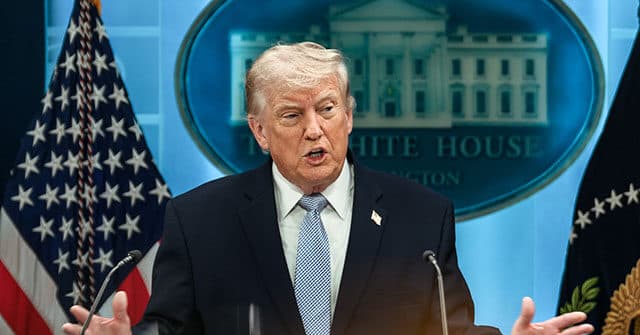
Trump Pledges Billions to Break China's Grip on Mining
Left says
- •Government intervention to correct market failures in critical mineral supply chains echoes the kind of industrial policy the left has long championed, though skepticism remains about whether these investments will include labor protections, environmental safeguards, and union jobs.
- •Critics note the plan's reliance on subsidizing private companies like Sila Nanotechnologies and defense contractors raises questions about corporate handouts versus genuine public investment in workforce training.
- •The push to expand domestic mining risks environmental and Indigenous land conflicts that deserve scrutiny alongside the national security framing.
- •Investment in mining education and workforce development is broadly positive, but some worry the administration is using the China threat to fast-track permitting in ways that could weaken environmental review processes.
Right says
- •Reducing dependence on China for critical minerals is a long-overdue national security priority, especially after supply shortages emerged during the Iran conflict.
- •Investing in American workforce training addresses a real skills gap, since the U.S. produces far fewer mining engineers annually than China despite the industry's importance to defense and manufacturing.
- •Public-private partnerships with companies developing battery technology, scandium production, and heat-resistant materials strengthen both economic competitiveness and military readiness.
- •The initiative reflects Trump's broader effort to revive American industrial capacity and correct decades of policy that allowed mining jobs and supply chains to move overseas or be neglected.
Common Take
High Consensus- China currently dominates global critical mineral production and processing capacity.
- The U.S. mining workforce is aging, with roughly half expected to retire within three years, creating a genuine skills and labor gap.
- Critical minerals are essential for defense systems, batteries, and advanced manufacturing, making supply chain security a shared concern.
- Investment in mining education programs and technical training is a reasonable response to workforce shortages regardless of political framing.
The Arguments
Right argues
Reducing dependence on China for critical minerals is an urgent national security necessity, underscored by supply shortages during the Iran conflict when the U.S. burned through missiles and interceptors that rely on these materials.
Left counters
National security framing can be used to justify fast-tracked permitting that bypasses meaningful environmental review and Indigenous consultation, trading long-term ecological and legal risks for short-term strategic gains.
Left argues
This kind of direct government investment in critical industries validates the case for industrial policy the left has long advocated, showing that markets alone won't secure supply chains vital to national interests.
Right counters
The difference is execution: these are targeted, results-oriented investments tied to specific national security outcomes and private-sector partnerships, not the open-ended bureaucratic spending programs the left typically champions.
Right argues
The U.S. faces a genuine and severe skills gap, graduating fewer than 170 mining engineers annually compared to China's 3,000-plus, with half the domestic workforce set to retire within three years, making the $180 million education investment a practical necessity rather than a political gesture.
Left counters
Investing in mining education is worthwhile, but without accompanying commitments to union representation, wage standards, and safety protections, the administration risks training workers for jobs that don't offer the stability or protections needed to sustain a long-term workforce.
Left argues
Billions of dollars flowing to specific private companies like Sila Nanotechnologies and defense contractors looks less like public investment in national capacity and more like targeted corporate subsidy, raising questions about accountability and who ultimately benefits.
Right counters
Public-private partnerships are the fastest and most efficient way to build actual production capacity and technological capability, since government agencies lack the expertise to build battery plants or scandium mines themselves — the private sector delivers the results taxpayers are paying for.
Right argues
Decades of policy neglect allowed mining jobs and critical supply chains to be offshored or abandoned, and this initiative represents a long-overdue correction that revives American industrial capacity and reasserts self-sufficiency.
Left counters
Reviving domestic mining without strong environmental safeguards risks repeating the same extractive harms to land, water, and Indigenous communities that made offshoring seem preferable in the first place, simply relocating the damage rather than solving it responsibly.
Challenge Questions
These questions target genuine internal contradictions — meant to provoke honest reflection.
Right asks Left
“If the left supports robust industrial policy and government intervention in strategic industries, why does subsidizing private mining and battery companies to counter China become objectionable specifically when done by this administration?”
Left asks Right
“If reducing dependence on foreign adversaries for critical minerals is truly a national security imperative, why does the plan rely so heavily on subsidizing specific private companies rather than building lasting public capacity, and how will fast-tracked permitting be reconciled with the environmental review processes meant to prevent long-term harm?”
Outlier Report
Left Fringe
Groups like the Center for Biological Diversity and figures such as Rep. Raul Grijalva-aligned environmental justice advocates who oppose expanded domestic mining outright over Indigenous land and ecological concerns represent roughly 15-20% of the left.
Right Fringe
Libertarian-leaning figures like Rand Paul or Cato Institute analysts who oppose government subsidies to private firms like Sila Nanotechnologies as corporate welfare represent roughly 10% of the right.
Noise Assessment
Moderate; most public discourse centers on national security framing which has broad appeal, while the more ideological critiques (environmental justice on the left, anti-subsidy purism on the right) are amplified mainly among activist and think-tank circles rather than reflecting mass public sentiment.
Sources (7)
<p>President Donald Trump holds a roundtable discussion on American mining at the State Department on Friday, August 7.</p> <p>The post <a href="https://www.breitbart.com/politics/2026/08/07/watch-live-donald-trump-holds-a-roundtable-discussion-on-american-mining/" rel="nofollow">Watch Live: Donald Trump Holds a Roundtable Discussion on American Mining</a> appeared first on <a href="https://www.breitbart.com" rel="nofollow">Breitbart</a>.</p>
The president is expected to announce $180 million in grant funding to boost education around mining, according to White House press secretary Karoline Leavitt.
The War Department will invest $80 million into multiple schools of mines and metallurgy, including the Colorado School of Mines, the South Dakota School of Mines, and Johns Hopkins University.
President Trump on Friday announced a slate of deals and investments that aim to bolster mining, something the administration has said will boost the economy and secure supply chains. Trump said during a mining roundtable that the Defense Department would sign a $1.4 billion loan agreement with Sila Nanotechnologies to build a battery facility in…
President Trump on Friday afternoon will host a roundtable at the State Department centered on the mining industry. “The mining industry has never had a greater champion than President Trump,” White House spokesperson Taylor Rogers said in a statement. “His unprecedented support has driven record investment, streamlined permitting, and delivered real results for American workers,…
<p>WASHINGTON, D.C.—President Donald Trump unveiled deals worth more than $2 billion and funding announcements worth millions of dollars more aimed at bolstering America’s mineral supply chain during a roundtable at the State Department on Friday, alongside a group of prominent mining executives. The moves are designed, according to Trump and senior administration officials, to claw […]</p> <p>The post <a href="https://freebeacon.com/trump-administration/raw-materials-of-american-strength-trump-announces-flurry-of-mining-deals-at-state-department-to-dominate-the-future/">‘Raw Materials of American Strength’: Trump Announces Flurry of Mining Deals at State Department To ‘Dominate the Future’</a> appeared first on <a href="https://freebeacon.com"></a>.</p>
President Trump told executives from some of the world's leading mining companies that his administration will dole out $180 million in grants, intensifying his efforts to boost the U.S. supply of critical minerals.