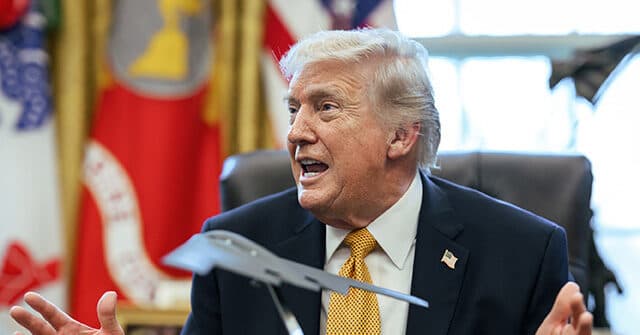
Trump Ready to 'Unleash Hell' on Iran if No Deal Reached
Left says
- •Escalating military threats against Iran risks drawing America into another costly Middle East war that could destabilize the entire region
- •Diplomatic solutions should be prioritized over military action, as negotiations can achieve lasting peace without the human and economic costs of warfare
- •The aggressive rhetoric may provoke Iran into more extreme actions rather than bringing them to the negotiating table
Right says
- •Iran's continued nuclear ambitions and threats against American allies require decisive action to prevent a nuclear-armed regime
- •Military pressure has already significantly degraded Iran's offensive capabilities and brought them closer to meaningful negotiations
- •Strong deterrence prevents larger conflicts by demonstrating American resolve and making clear the consequences of Iranian aggression
Common Take
High Consensus- Both sides want to prevent Iran from obtaining nuclear weapons
- Diplomatic negotiations are currently ongoing between the United States and Iran
- Iran has suffered significant military losses including damage to its navy, air force, and air defense systems
- The situation involves high stakes for regional stability and American national security interests
The Arguments
Right argues
Iran's military capabilities have been severely degraded through Operation Epic Fury, with over 9,000 targets struck and missile attacks reduced by 90%, creating the strongest negotiating position the U.S. has had with Iran in decades.
Left counters
Military escalation risks provoking Iran into more desperate and unpredictable actions, potentially including acceleration of their nuclear program or attacks on civilian targets, making the region less stable rather than more secure.
Left argues
Diplomatic engagement without military threats has historically proven more effective at achieving lasting agreements, as seen in previous nuclear negotiations, while aggressive rhetoric tends to harden positions and make compromise more difficult.
Right counters
Previous diplomatic approaches failed to prevent Iran from advancing its nuclear program and supporting proxy groups across the region, demonstrating that negotiations without credible military pressure are ineffective against a regime that only responds to strength.
Right argues
Strong deterrence prevents larger conflicts by demonstrating clear consequences for Iranian aggression, potentially saving lives by avoiding the need for more extensive military action later if Iran develops nuclear weapons.
Left counters
Military threats create a cycle of escalation that could draw the U.S. into another prolonged Middle East conflict, repeating the costly mistakes of Iraq and Afghanistan with potentially devastating regional consequences.
Left argues
The current approach risks destabilizing global energy markets and creating humanitarian crises, as evidenced by the closure of the Strait of Hormuz and ongoing strikes affecting civilian infrastructure across the region.
Right counters
Iran's control over critical shipping lanes and support for terrorist proxies already threatens global stability and American allies, making decisive action necessary to restore regional security and protect vital economic interests.
Right argues
Iran has repeatedly violated international agreements and used previous negotiations as cover to advance their nuclear program, making military pressure essential to ensure any future deal is genuine and enforceable.
Left counters
Military coercion undermines the legitimacy of any agreement reached under duress and creates incentives for Iran to secretly rebuild capabilities while publicly complying, leading to less durable and trustworthy outcomes.
Challenge Questions
These questions target genuine internal contradictions — meant to provoke honest reflection.
Right asks Left
“If diplomatic engagement is preferable, how do you reconcile this position with Iran's documented history of using negotiations to buy time while advancing their nuclear program and regional proxy network?”
Left asks Right
“If military pressure is necessary to bring Iran to meaningful negotiations, how do you ensure that the resulting agreement will be seen as legitimate rather than coerced, and what prevents Iran from simply rebuilding capabilities once pressure is reduced?”
Outlier Report
Left Fringe
Progressive anti-war activists like Medea Benjamin of CodePink and some Squad members like Rashida Tlaib who categorically oppose any military pressure on Iran, representing roughly 15-20% of the left coalition.
Right Fringe
Neoconservative hawks like John Bolton and some Republican senators like Tom Cotton who advocate for immediate regime change in Iran regardless of negotiations, representing about 25-30% of the right coalition.
Noise Assessment
Moderate noise level - the 'unleash hell' rhetoric generates significant social media engagement and cable news coverage, but the underlying Iran policy debate reflects genuine public divisions rather than manufactured controversy.
Sources (4)
The White House issued a stark warning to Iran Tuesday, saying President Donald Trump is prepared to "unleash hell" if Tehran refuses to step back from its nuclear ambitions and its ongoing threats against the United States and its allies. "President Trump does not bluff, and he is prepared to unleash hell," White House press secretary Karoline Leavitt said at the beginning of Wednesday's White House press briefing. "Iran should not miscalculate again. Their last miscalculation cost them their senior leadership, their navy, their air force and their air defense system...
<p>President Donald Trump is “prepared to unleash hell” if Iran refuses to “come to a deal,” the White House warned Wednesday, cautioning that the regime “should not miscalculate again” after suffering devastating battlefield losses, as U.S. forces — including Marines and elements of the 82nd Airborne Division — deploy to the Middle East to support combat operations against Iran.</p> <p>The post <a href="https://www.breitbart.com/politics/2026/03/25/white-house-warns-trump-will-unleash-hell-if-iran-fails-to-understand-that-they-have-been-defeated/" rel="nofollow">White House Warns: Trump Will ‘Unleash Hell’ if Iran ‘Fails to Understand That They Have Been Defeated’</a> appeared first on <a href="https://www.breitbart.com" rel="nofollow">Breitbart</a>.</p>
White House press secretary Karoline Leavitt said talks between Washington and Tehran were ongoing, hours after Iran's state media said the regime rejected proosals by the Trump administration.
President Donald Trump is prepared to "unleash hell" if Iran balks at a deal with the U.S., White House press secretary Karoline Leavitt said Wednesday.